Equity Finance 2026
Spain
Authors
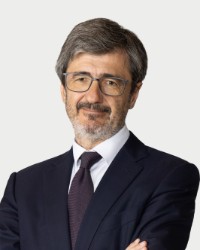





Gibson, Dunn & Crutcher LLP is a leading global law firm with more than 2,200 lawyers across 23 offices. Its Spanish Capital Markets practice comprises eight lawyers across Madrid and London, working closely with the firm’s wider Capital Markets, M&A, Private Equity and Finance practices. The team has deep experience across the full range of equity and debt capital markets transactions, including IPOs, rights issues, accelerated bookbuilds, secondary block trades, PIPEs, convertible bonds, investment-grade and high-yield issuances, debt programmes and liability management exercises. Recent work includes advising SpaceX on the European retail tranche of its global IPO, Merlin Properties on its c.USD900 million accelerated capital increase, Neinor Homes on equity and debt financing supporting its c.EUR1.07 billion tender offer for AEDAS Homes, and Barcelona-headquartered Wallbox on a cross-border PIPE transaction. The team combines extensive Spanish market experience with Gibson Dunn’s pre-eminent international equity financing capabilities.
1. Equity Finance Techniques and Structures
1.1 Early-Stage Venture Capital Financing
Spain’s venture market has grown significantly over the past decade, and the documents used now follow international practice closely. An early-stage company will usually be a private limited company (sociedad de responsabilidad limitada, or SL), which is cheap to set up and flexible to structure. Converting into a public limited company (sociedad anónima, or SA) is generally needed only before a listing.
In its simplest form, a “round” is a capital increase in which investors subscribe for new shares. The increase is signed before a notary and registered at the Commercial Registry. The investors’ preferred economic rights and protections, such as a liquidation preference, anti-dilution protection, the right to invest in future rounds, board representation and restrictions on transfers, come partly from a special class of shares set out in the bylaws and partly from the shareholders’ agreement (see 1.5 Corporate Governance).
Hybrid instruments are standard at the earliest stages, when the value of the company is hardest to agree. Convertible loans are the norm for pre-seed, seed and bridge funding, because they put cash into the company straight away and leave the valuation to be fixed at the next significant round, usually with a discount and a ceiling on the conversion price. An SL cannot issue convertible bonds, so the loan is converted by agreeing in advance to a future capital increase subscribed by setting off the loan. Instruments modelled on the US SAFE are increasingly being used, but they must be adapted to Spanish formalities, and no market-standard form has yet emerged.
Spain also has its home-grown quasi-equity instrument, the participating loan (see 2.1 Types of Equity Finance). It is a fixture of the ecosystem, largely because public lenders, among the most active funders of Spanish start-ups, provide much of their money this way alongside private rounds.
The Start-Ups Law has standardised practice further. It created a certification regime for “emerging companies”, made employee share options easier to use and improved the tax incentives for investors at this stage.
1.2 Growth and Private Equity Financing
Growth and private equity financings in Spain follow a more settled playbook than venture rounds. The business is more mature and its financial metrics more reliable, so investors focus less on downside protection and more on governance, leverage and the path to exit.
In a typical growth transaction, a fund acquires a significant minority or a modest majority stake through a capital increase, a secondary purchase from existing shareholders, or both. The founders or existing management keep running the business day to day, while the investor obtains governance, information and exit rights (see 1.5 Corporate Governance).
Buyouts follow the international model. The sponsor sets up a special purpose acquisition vehicle and funds it with its own equity and third-party debt, in a classic leveraged buyout structure. Spanish law shapes these structures in two important respects. First, the target may not fund, guarantee or grant security for the purchase of its own shares (the financial assistance prohibition), which limits how the acquisition debt can be pushed down to the target and secured on its assets. Second, if a company that borrowed to acquire control of another merges with it within three years (the leveraged merger rule), the merger plan must explain how the debt will be repaid and an independent expert must confirm that no unlawful financial assistance is involved. Careful structuring around both rules is standard market practice.
The fund usually invests through a mix of shares and loans to the company, often participating loans (see 1.6 Mix of Debt and Equity Financing). Managers typically reinvest part of their proceeds and receive incentive shares whose value rises if targets are met, subject to rules on what happens if they leave.
The difference from venture financing is therefore one of control and instruments: venture investors rely on minority preferred positions and downside protections, whereas growth and private equity investors rely on governance rights or outright control, leverage and a clear exit route.
1.3 Public Equity Markets
Spain’s stock markets are run by Bolsas y Mercados Españoles (BME), part of the SIX Group. The four Spanish stock exchanges are regulated markets that trade on a single electronic platform (the “Mercado Continuo”), where the large companies, including the IBEX 35, are listed. Smaller and growing companies typically list on BME Growth, a lighter market for small and medium-sized enterprises (SMEs) that also hosts Spanish REITs (SOCIMIs) with low free float, or they list on BME Scaleup, a newer market for earlier-stage companies. The regulator is the Spanish Securities Market Commission (CNMV), and the rules are the Securities Market Act and the EU Prospectus Regulation.
Preparation starts long before the offering. The company, which must be an SA, is made “IPO-ready”, with listed-company governance standards, audited accounts and sound internal financial controls. A regulated-market IPO then follows a familiar sequence: appointment of the banks and due diligence, analysts’ presentation and research, an announcement of the intention to float, pre-marketing by the banks’ analysts, CNMV approval of the prospectus, and a roadshow and bookbuilding leading to share pricing and allocation (see 2.9 Time Required for Equity Finance). BME Growth is simpler, requiring an information document instead of a prospectus, a registered adviser and a liquidity provider. A company whose market value stays above EUR1 billion for a sustained period must move up to a regulated market.
After a quiet 2022 and 2023, the IPO market has reopened, with a steady flow of main-market listings since 2024 and a couple of moves from BME Growth to the main market (see 2.4 Deal Flow and Size). Reform is expected to boost this trend further: the EU Listing Act has simplified prospectuses and, once transposed into Spanish law, will cut the minimum free float from 25% to 10%, and BME’s new Easy Access route allows admission before the shares are placed.
Whether to list remains a finely balanced decision. An IPO gives access to a large pool of capital, a full or partial exit for founders, families and financial sponsors, liquidity, visibility and liquid shares to use in acquisitions. Against that stand the cost, the ongoing disclosure and governance duties, market volatility, dependence on market windows and, for family businesses, concern about dilution and control.
1.4 Equity Restructurings
Equity restructurings are common in Spain, and company law itself pushes companies to recapitalise in good time. If losses cut net equity to less than half of the share capital, the company must either remedy its position or be wound up. Directors who fail to call a general meeting within two months become personally liable, alongside the company, for debts incurred after that point. Restoring equity is therefore often a legal obligation rather than a financing choice.
The usual tool is a capital increase, which frequently dilutes the ownership percentage of shareholders who do not take part. Existing shareholders have a right to subscribe first when the increase is paid in cash, but that right can be excluded where the company’s interest justifies it, on the basis of a directors’ report and also, in an SA, a report from an independent expert (for listed companies, only where the exclusion exceeds 20% of share capital or the issue price is not deemed a fair price). Where losses have built up, the classic technique is the “accordion operation” (operación acordeón): the capital is reduced, possibly to zero (in which case all existing shares are cancelled), and increased again at the same time by issuing new shares, wiping out the losses and recapitalising the company in one step. Here, the right to subscribe first cannot be removed.
Converting debt into shares is also well established. This is done through a capital increase in which the lender’s claim is set off against the new shares, so no one has a right to subscribe first, subject to the claim being liquidated, due and payable (in an SA, only 25% need be, provided the rest falls due within five years) and subject to reports from the directors and, in an SA, the auditors. Outside a formal restructuring, this needs a shareholders’ resolution, so a controlling shareholder can block it. Since the 2022 insolvency reform, a court-approved restructuring plan can impose the same conversion on dissenting creditors and, where the company is insolvent or close to it, on the shareholders themselves (see 5.4 Rescue or Reorganisation Procedures).
In the venture segment, down rounds are an accepted, if unwelcome, feature of the market, triggering anti-dilution protections and, increasingly, “pay-to-play” mechanics that penalise existing investors who do not participate. Across all of these techniques, the challenges lie less in technical feasibility than in practical execution: securing a shareholder resolution by the reinforced majority required, completing the notarial and registry formalities, and managing conflicts between stakeholders.
1.5 Corporate Governance
Spanish companies are governed by the Companies Act, which sets default rules for the two main forms, the SA and the SL. The general meeting decides structural matters, such as capital increases and reductions, mergers, changes to the bylaws and dissolution, while the directors run the business. The SL is the more flexible form: its bylaws may require larger majorities, give some shares more votes than others, restrict transfers and allow a shareholder to be expelled on stated grounds. The SA, compulsory for listed companies, has more fixed rules, including that votes must be proportional to the nominal value of the shares (save for loyalty shares in listed companies).
In companies with more than one shareholder, and in almost every venture- or private equity-backed company, the real constitution is the shareholders’ agreement. A purely contractual agreement binds the shareholders but not the company, so the key terms are also written into the bylaws as far as the Commercial Registry will accept them. A resolution that breaches those terms, if they are included in the bylaws, can be challenged in court. A typical agreement covers three areas in detail:
- Information: Regular management accounts and performance indicators, the annual budget and business plan, audited accounts, rights to audit and inspect and, often, the right to appoint an observer to the board so that the investor is informed of what is happening even without controlling the board.
- Decision-making: The size and composition of the board and who appoints its members (the majority investor, or the founders in minority deals), quorum and casting-vote rules, and a negotiated list of matters that need the investor’s consent at shareholder or board level, such as new share issues, borrowing above agreed limits, approval of and departures from the business plan, transactions with related parties, acquisitions and disposals, investments, changes to the bylaws, distributions and senior appointments.
- Transfers and exit: Lock-up periods, permitted transfers, rights of first refusal or first offer, tag-along and drag-along rights, the order in which sale proceeds are shared, and often express exit commitments such as agreed exit windows, an obligation to pursue a sale or IPO after a set period and, occasionally, put and call options.
1.6 Mix of Debt and Equity Financing
In Spain, it is common, especially in private equity, for the same investor to fund a company through both shares and loans. Loans give flexibility on returns and on getting cash out, because interest and repayments can be made without a formal distribution or capital reduction and the loan ranks ahead of the shares. Tax shapes the mix: interest is deductible only up to a limit linked to operating profit, and interest on participating loans between companies of the same group is treated as a return on equity and is not deductible at all. In early-stage companies, such a mix is less common. Venture investors take shares for the upside and use convertible instruments when they want to inject capital immediately but leave the valuation to a later round (see 1.1 Early-Stage Venture Capital Financing).
The key legal point is insolvency. Loans from shareholders above the relevant ownership thresholds and from group companies are automatically ranked behind all other creditors, lose any security and, if repaid before the insolvency, may be clawed back (see 5.2 Seniority of Investors in Distributions and 5.5 Risk Areas for Equity Investors). Because this ranking applies by law rather than through court reclassification, the outcome is at least predictable.
Being both lender and shareholder can also create conflicts of interest, which directors must manage, particularly when the company is close to insolvency. The ranking, tax, documentation and governance consequences of combining debt and equity should therefore be planned from the outset.
2. The Equity Finance Market
2.1 Types of Equity Finance
Features and Techniques
In Spain, “equity finance” generally means the injection of new capital into a company in exchange for an ownership interest, or a right to acquire one, typically to fund working capital, growth or acquisitions. The basic technique is a capital increase, by which an SA issues shares or an SL issues participations. By contrast, secondary purchases of existing shares, although central to private equity activity, pay the sellers rather than the company.
A capital increase requires a shareholders’ resolution (the general meeting of an SA, but not of an SL, may delegate the power to the board within certain statutory limits), and existing shareholders’ pre-emptive rights must be observed, waived or lawfully excluded in the interest of the company.
Control and Non-Control Investments
Control investments remain the core of the market, but the appetite for minority and structured-equity positions has grown. Founder-led and family-owned companies want institutional capital without giving up control, and since 2022, structured instruments have helped bridge valuation gaps. Because statutory minority protection is limited, these investments rely on a shareholders’ agreement granting the investor enhanced rights (see 1.5 Corporate Governance).
Hybrid Instruments
The main hybrid instruments are:
- Privileged and non-voting shares or participations, carrying a preferred dividend payable only out of distributable profits and a liquidation preference. In SLs, privileged participations may also carry multiple votes, which SAs may not grant except through loyalty shares in listed companies.
- Preferred securities, perpetual and deeply subordinated, remunerated out of distributable profits and in practice confined to credit institutions and listed groups.
- Participating loans, with interest linked to the borrower’s performance. These rank behind ordinary creditors and count as equity for the capital reduction and dissolution tests, which makes them a standard tool for shareholder funding, public development lending and venture debt.
- Convertible debt, whether loans or bonds, converting principal and capitalised interest into shares at a fixed or variable ratio. Only SAs may issue convertible bonds, so investors in SLs use convertible loans converted through a set-off capital increase.
- Subordinated debt, ranking behind all other creditors and paying interest based upon a fixed or step-up coupon.
- Warrants and options, granting the right to subscribe or purchase shares at a pre-agreed price, usually as the equity kicker on subordinated or mezzanine loans.
Their accounting, tax and insolvency treatment depends on their precise terms.
Market Segments
Private equity is the main provider of equity finance, with a substantial mid-market spanning buyouts of family-owned and founder-led companies, buy-and-build strategies and minority growth investments. Equity crowdfunding, search funds (Spain is among Europe’s most active markets) and family-office club deals complete the landscape.
2.2 Equity Finance Providers and Potential Restrictions on Them
Providers
Early-stage capital comes from founders, business angels, accelerators, corporate venture arms and seed and venture funds, complemented by public programmes. Established companies turn to domestic and international private equity houses, infrastructure and sovereign wealth funds, pension funds and other institutional investors. Listed companies raise equity from funds, insurers and retail investors through IPOs, placements and rights issues.
Record domestic fundraising has increased the relevance of Spanish managers, although international sponsors still provide most of the capital invested. In the public markets, according to BME, non-residents owned just over half of Spanish listed shares at the end of 2025, a record after two decades of steady increase.
Quantitative Limits
According to company law, a single shareholder, Spanish or foreign, may own 100% of an SA or SL. Shareholding limits arise from market and sector rules:
- A listing on a regulated market requires a 25% free float (10% once the EU Listing Act is transposed). The CNMV may accept less, and the BME Easy Access route allows larger companies to reach this percentage after admission. BME Growth requires EUR2 million of shares to be held by holders of under 5% each.
- Reaching 30% of the voting rights of a company listed on a regulated market, or appointing a majority of its board, triggers a mandatory bid. The bylaws of BME Growth companies must require anyone exceeding 50% of the capital to offer to buy out the other shareholders.
- Qualifying holdings of 10% or more in banks, insurers and investment firms require prior clearance (non-opposition) from the supervisor and a suitability assessment, with further thresholds at 20%, 30% and 50%.
Qualitative Restrictions
The principal qualitative restrictions stem from the foreign direct investment (FDI) screening regime, which is described in 3.1 Investment Restrictions.
In addition, merger control applies regardless of nationality where the CNMC thresholds are met (EUR240 million of combined Spanish turnover with at least two parties above EUR60 million each, or a 30% market share subject to a EUR10 million target de minimis). State-backed investors should also consider the EU Foreign Subsidies Regulation.
Beyond the financial-sector thresholds described above, sector rules add further limits. These include prior authorisation for non-residents in defence-related activities, caps on non-EEA holders of terrestrial television and radio licences, majority EU ownership and control as a licence condition for air carriers, and mandatory professional ownership of professional services companies and pharmacies, among others.
2.3 Equity Finance Seekers
Size and Stage of Development
Start-ups and scale-ups with limited collateral assets or uncertain cash flows rely on equity rounds and hybrid instruments, which may be complemented by public loans and co-investment programmes. Founders must balance funding needs against dilution and investor governance rights.
SMEs rely on bank lending for their ordinary needs and turn to equity or quasi-equity when a transformative step, such as a growth or acquisition strategy, a restructuring or another special situation, exceeds their borrowing capacity or calls for an investor’s expertise.
Larger companies have the widest choice, including IPOs and follow-on offerings to deleverage, fund growth or provide liquidity to shareholders.
Shareholder Composition
Family businesses make up the vast majority of Spanish companies and account for most private-sector employment. The drive for equity investment typically arises during generational succession, to fund the growth needed to remain competitive while allowing individual family members to exit. Because continued family control is a priority, families generally prefer debt unless such a need arises (see 2.8 Equity Finance Versus Debt Finance).
Sector and Most Active Segment
Research-intensive businesses (eg, technology, life sciences) need substantial equity before they generate revenues, capital-intensive ones (eg, renewables, infrastructure) need it during development and construction, and established businesses in fragmented sectors (eg, business services, defence) combine investor equity with acquisition debt to consolidate smaller operators. By number of deals, venture capital is by far the most active segment, while large-cap and mid-market buyouts and growth investments in sponsor-backed or family-owned businesses account for most of the value invested.
2.4 Deal Flow and Size
Private Capital
Spain has an established private capital market with substantial domestic and international participation. According to SpainCap, approximately EUR7 billion was invested in 2025 (up 11.5% on 2024) across a record 1,041 investments: EUR5.1 billion of private equity in 178 investments and EUR1.9 billion of venture capital in 863, with international investors providing 59% of the capital.
Investment sizes vary widely. Approximately 53% of investments were below EUR1 million. The mid-market, between EUR10 million and EUR100 million, accounted for 118 investments worth EUR3.0 billion in total. Above EUR100 million, 14 investments accounted for EUR2.6 billion. These figures measure equity invested rather than enterprise value.
Public Markets
According to BME, listed companies raised approximately EUR11.0 billion through capital increases in 2025, including Iberdrola’s EUR5 billion accelerated placement in July, whereas primary proceeds from IPOs were limited. HBX Group and Cirsa completed the year’s two main-market IPOs, both with a primary tranche, and BME Growth and BME Scaleup recorded 14 new admissions, not all of which raised new capital.
2026 to Date and Outlook
Preliminary SpainCap figures for the first half of 2026 show approximately EUR3.8 billion invested across 574 investments. The number of deals was stable, but the value invested fell by a mid-teens percentage compared with a year earlier. TSK in May and Digi Spain in July completed main-market IPOs, after market volatility earlier in the year had delayed several candidates.
International investors remain interested in Spanish mid-sized businesses, and family succession and sector consolidation keep generating opportunities. Large transactions and IPOs will remain dependent on valuations, volatility and market windows.
2.5 Private Equity Versus Public Equity
Private capital is the more important channel of equity finance for Spanish companies. In 2025, according to SpainCap, 645 companies received private capital investment, compared with two main-market IPOs and 14 admissions to the growth markets. Public equity remains a significant source of funding for established listed companies (see 2.4 Deal Flow and Size). However, the cost, the disclosure obligations and the uncertainty over pricing and timing deter many companies from a first listing or a large follow-on offering.
Liquidity for existing private capital investors is one of the current themes. Sales to other private capital investors and continuation vehicles managed by the same sponsor have become more popular routes to that liquidity recently. Open-ended (evergreen) funds, which offer investors limited liquidity and simplified access, are also expected to expand significantly.
In the public markets, several listed companies have recently become M&A targets soon after listing. Cirsa agreed in September 2026, 14 months after its IPO, to an all-share absorption by Lottomatica. Puig, Europe’s largest IPO of 2024, confirmed and then ended merger talks with Estée Lauder in 2026. Earlier, Opdenergy, Saeta Yield, Solarpack, Telepizza and Parques Reunidos were all taken private within one to three years of floating. A listing supplies a public valuation on which to set a premium, and shares that can be used as currency, so the IPO has often served as a staging post rather than a destination.
2.6 Deal Sourcing and Market Players
Spain is a heavily intermediated market. Most deals involving private equity sponsors, their portfolio companies and corporates originate in auctions or bilateral processes run by investment banks and independent advisers. Proprietary origination nevertheless still matters: succession-driven sales often begin with a family’s long-standing adviser or bank, sector-focused sponsors approach platform candidates directly, and search funds build pipelines by contacting owners one by one.
Venture deal flow comes from accelerators, business angel networks, corporate venturing programmes, universities, specialist funds and public-sector investment networks, with Madrid and Barcelona as the main centres.
Equity capital markets transactions are usually originated by financial advisers and corporate banking teams with close client relationships, who then bring in the investment banks that lead execution. The Spanish stock exchanges also run a pre-market programme and periodic forums, where prospective issuers meet investors and advisers.
Investors and companies can draw on an established network of domestic and international investment banks, M&A boutiques, accounting and law firms, valuation experts and transaction insurers.
2.7 Exit Considerations and Realisations
Value is mainly realised on exit, but it can also be taken out along the way through ordinary dividends or the preferred dividend attached to privileged instruments, through a dividend recapitalisation (a distribution funded with new debt) or through the sale of part of the stake to a new investor ahead of a full exit.
Private sales, whether trade sales to strategic buyers or secondary sales to other financial investors, account for most realised value. Trade sales led divestment volume in 2025, while sales to other private capital investors, including continuation vehicles, dominated the first half of 2026. An IPO offers a partial exit through the sale of existing shares, usually followed by further disposals once the shares are trading. Investors must therefore weigh lock-up periods, market liquidity and the prices achievable on those later sales.
Spanish listed equities have re-rated upwards over the past two years, while private equity multiples have remained broadly stable. The gap between public and private valuations is therefore likely to be at one of its lowest levels in a decade, which makes dual-track processes (preparing a sale and an IPO in parallel) and the IPO route more relevant in the near term.
Minority investors, who cannot force a sale of the company, depend on the exit mechanics agreed in advance in the shareholders’ agreement (see 1.5 Corporate Governance). Exit timing may also be affected by the potential buyers’ regulatory clearances and by the tax position of the seller.
2.8 Equity Finance Versus Debt Finance
Debt, and bank lending in particular, remains the main source of external finance for Spanish companies, which are mostly closely held and value the control that borrowing preserves. Equity becomes important where a company cannot borrow further, where a balance sheet recapitalisation is needed or where growth, acquisitions or a change of ownership require risk-bearing capital.
The rise in interest rates from 2022 made bank debt more expensive. Mid-sized companies have diversified their sources of finance and are increasingly borrowing from private debt funds and on MARF, the Spanish alternative fixed-income market; sponsors use hybrid instruments; and large companies have tapped the equity markets. Financing choices have broadened, but there has been no economy-wide shift from debt to equity.
Companies weigh the cost of financing, the predictability of their cash flows, their existing leverage and available security against the owners’ willingness to accept dilution and share control. Debt preserves ownership but brings interest, repayment obligations and covenants. Equity has no scheduled repayment and may bring investor expertise, but requires sharing future value and governance.
Investors choose according to mandate, horizon, risk appetite and target return: credit investors focus on repayment capacity, security and ranking, while equity investors accept performance risk in exchange for upside and governance rights.
2.9 Time Required for Equity Finance
There is no standard timetable. Time to signing depends on investor appetite, competition, agreement on valuation, the availability of management and information for due diligence, corporate approvals and, where relevant, acquisition financing. Transaction documents are prepared as negotiations progress, at a pace set by the parties’ sophistication and alignment. Where regulatory clearances are needed, closing may follow signing within one to three months or, in complex cases, more than a year later.
Processes are either bilateral, where one party has exclusivity, or auctions run by advisers in one or two rounds. Auctions take longer to prepare (vendor due diligence, information memorandum, data room) but compress negotiation into a fixed calendar, whereas bilateral deals can move faster but depend on the parties’ commitment.
A well-prepared regulated-market IPO takes four to six months from formal kick-off, and longer where accounts, reporting or governance must be brought up to listed-company standard. The public phase, from the intention-to-float announcement to first trading, lasts a few weeks. Accelerated bookbuilds can be priced overnight after a few days of preparation, whereas rights issues take six to eight weeks depending on existing authorised capital, the need for a prospectus and the offer timetable.
Valuation gaps, owner decision-making, the quality of financial information, regulatory approvals and market windows are the common sources of delay. Early preparation, including IPO-readiness work and vendor due diligence, together with a clear plan for regulatory and corporate approvals, helps avoid unrealistic timetables.
3. Regulation and Related Legal Issues
3.1 Investment Restrictions
The principal restriction is the FDI screening mechanism introduced in 2020. Separately, certain regulated sectors require prior authorisation for significant holdings or set limits to foreign shareholding.
Screening Mechanism for Non-EU/EFTA Residents
Investors from outside the EU and EFTA, including EU vehicles ultimately owned outside those areas, need prior authorisation to acquire 10% or control (per merger control criteria) of companies in the strategic sectors covered by the FDI screening regime. Until 31 December 2026, a deadline which has been extended several times since 2020, a transitional regime also captures EU and EFTA investors when the target in those sectors is listed on a Spanish regulated market or the investment exceeds EUR500 million.
Authorisation is also required, whatever the target’s business, if the investor is controlled by a non-EU government, faces proceedings for criminal or illegal activities or has invested in sensitive sectors in another EU member state.
Practical Application of the Screening Mechanism
According to the Secretary of State for Trade, of 181 applications resolved in 2025, 14 were cleared subject to commitments and none were refused; refusals in earlier years stayed below 1%. Intervention therefore means mitigation rather than prohibition, and timing is the practical constraint. The transaction has no effect until authorisation, and closing without it exposes the investor to a fine of up to the transaction value, with a EUR30,000 floor. Parties accordingly make clearance a condition precedent and set long-stop dates around it.
3.2 Repatriation of Money and Limitations on Capital Flows
There are no exchange controls in Spain and no restriction on the repatriation of capital or profits abroad, subject to the company law rules on distributions. A dividend may be paid only out of profits or distributable reserves, after 10% of the profit has been allocated to the legal reserve until it reaches one-fifth of the share capital, and never where net equity is or would fall below the share capital. A capital reduction is more onerous: in an SA, unsecured creditors may object unless an undistributable reserve is created and, in an SL, the shareholders repaid remain jointly liable for pre-existing debts for five years, up to the amount received, unless that reserve is funded or the bylaws provide otherwise. Directors may incur personal liability for distributions resolved in disregard of the company’s solvency. For information regarding withholdings, please see 4.1 Withholding/Capital Gains Tax.
The only outright prohibitions come from EU sanctions, which apply directly in Spain. If a shareholder is on an EU sanctions list, or is owned or controlled by someone who is, dividends or other payments due to it cannot be paid out. The money must instead be credited to a frozen account and can be released only with a licence from the Spanish Treasury.
3.3 AML and Sanctions Regulation
Spain’s anti-money laundering (AML) rules, which transpose the EU AML directives, apply to banks, investment firms, fund managers, notaries, commercial registrars, auditors and, in some circumstances, lawyers. These obliged entities must identify the customer and its beneficial owners, meaning the natural persons who hold more than 25% of the capital or voting rights or otherwise exercise control. They must also establish the purpose of the relationship and, on a risk basis, the source of the funds, and report suspicious transactions to SEPBLAC, the Spanish financial intelligence unit, without informing the customer. Enhanced measures apply where the investor is a politically exposed person, is resident in a high-risk third country or operates through an opaque ownership structure.
For equity financings, this typically affects transactions as follows:
- Incoming investors must produce corporate records, beneficial ownership declarations and evidence of the source of the funds.
- Where the investment changes who ultimately controls the target, the target must update its filing with the Central Register of Beneficial Ownership.
- The notary, whose intervention is required for capital increases and for transfers of participations, will not authorise the deed until the beneficial owners have been identified and declared.
- The banks handling the cash consideration, including any escrow, will not release funds until they have completed their own onboarding and sanctions screening.
These rules do not prevent investment, but they affect the timetable. Checks on investors with several layers of funds, nominee arrangements or a base in a high-risk jurisdiction routinely take weeks. Investor due diligence should therefore start sufficiently ahead of signing.
3.4 Choice of Law and Jurisdictions
Governing Law
The documentation for equity financing transactions involving a Spanish company is, in principle, governed by Spanish law. This is because the corporate elements of the deal are necessarily Spanish: the share capital, the rights attached to the shares, the bylaws and the mechanics of capital increases and reductions, and of transfers of participations, are governed by the Spanish Companies Act and must be recorded in a Spanish notarial deed. In cross-border deals, the documents shaped by international financial practice rather than by Spanish corporate law are commonly governed by English or, less frequently, New York law, which is most clearly the case for the underwriting and placement agreements.
Dispute Resolution
Spanish courts
Parties usually align the forum with the governing law. The main exception is that challenges to shareholder resolutions fall within the exclusive jurisdiction of the courts of the company’s registered office under the Brussels I bis Regulation, whatever the forum clause. Corporate and insolvency matters are heard by specialised commercial sections. Choice-of-court clauses are given effect under Brussels I bis, EU judgments are enforced without exequatur, UK judgments circulate under the Hague Convention and other foreign judgments require exequatur. The main litigation constraint is time: the first instance commonly takes 18 months to two years, and an appeal a further year or more. Since April 2025, a claim is admitted only on evidence of a prior attempt at an out-of-court settlement, a step intended to divert disputes from the courts.
Arbitration
International investors frequently prefer arbitration, which allows the dispute to be heard in English before arbitrators chosen for their expertise, on a shorter timetable and without the publicity of court proceedings. Challenges to shareholder resolutions may themselves be arbitrated, provided the bylaws contain an arbitration clause adopted by a two-thirds majority of the share capital and the arbitration is institutionally administered. Mediation is available but rarely agreed.
3.5 Noteworthy Regulatory Trends
Screening Mechanism
Regulation (EU) 2026/1386 on the screening of FDI, which will be fully applicable from 17 January 2028, replaces the voluntary co-operation framework with a harmonised and mandatory screening system, extending review to investments by EU subsidiaries controlled by third-country investors and imposing a two-phase national procedure. Spain has already begun the adaptation. A preliminary public consultation on the reform of Law 19/2003 contemplates a redefinition of the strategic sectors subject to prior authorisation, the formal incorporation of annual reporting obligations into the declaration regime and a general review of the sanctions procedure.
AML
The EU AML package adopted in 2024 moves the core obligations into a directly applicable regulation from 10 July 2027. In Spain, a draft bill approved on 28 July 2026, whose public hearing closed on 30 September 2026, would create a single independent supervisor (ANIFI), extend the range of obliged entities and reinforce the powers of the Central Register of Beneficial Ownership.
Capital Raising
The first wave of implementation of the EU Listing Act, applicable since 4 December 2024, simplified the prospectus requirements and raised from 20% to 30% the exemption threshold for issuances of shares fungible with those already admitted to trading over a 12-month period, with only a short exemption document being required where the shares are also offered to the public. The remaining provisions, including the EU Follow-on Prospectus, were phased in on 5 March and 5 June 2026. The effect is to shorten execution windows for follow-on equity raisings by listed Spanish issuers.
4. Tax
4.1 Withholding/Capital Gains Tax
When a Spanish company pays a dividend, it must withhold tax and pay it to the Spanish tax authorities.
- For Spanish-resident individuals and companies, the withholding is not an additional tax but a payment on account, credited against their final income or corporate tax and refunded if it exceeds it. Resident companies holding a significant stake (broadly, at least 5% for a year) are exempt on almost all of the dividend, with additional restrictions where the subsidiary is merely a passive holding company.
- For shareholders outside Spain, the tax deducted from the dividend is normally their only Spanish tax on it; there is no Spanish return to file and nothing to reclaim. The deduction is eliminated for EU parent companies with a qualifying holding under the EU Parent-Subsidiary Directive, and most tax treaties reduce it or, for companies with a substantial holding, remove it altogether. To benefit from a reduced treaty rate at the time of payment, the shareholder must give the paying company a certificate of tax residence issued for treaty purposes, which is valid for one year. Without it, the company deducts the full Spanish rate and the shareholder must claim the difference back from the tax authorities, which takes considerably longer.
Capital gains on a sale of shares are generally not subject to withholding, so the seller pays the tax itself. Resident individuals pay income tax at the savings income rates, and resident companies pay corporate tax at the general rate, with the same exemption for significant stakes as for dividends. Non-residents without a permanent establishment in Spain pay tax through their own Spanish return, unless they reside in another EU member state (save for real-estate-rich companies and certain substantial holdings), sell on a Spanish official market from a country with an information-exchange treaty, or rely on a treaty reserving taxation to their country of residence, as most treaties do.
Investors based in jurisdictions that Spain classifies as non-cooperative do not benefit from the exemptions for non-residents and face stricter anti-avoidance rules. Rates and thresholds change frequently, so current figures should be confirmed with tax advisers.
4.2 Other Taxes, Duties, Charges or Tax Considerations
Investing money into a Spanish company does not trigger any transaction tax. Incorporating a company, increasing its capital and making shareholder contributions are all exempt from corporate transaction tax. Tax is payable only when capital is returned to shareholders through a capital reduction or when the company is dissolved, and in those cases it is a small percentage of the amount returned, paid by the shareholders who receive it.
Buying or selling shares is generally free of VAT and transfer tax. One exception concerns unlisted companies whose main asset is Spanish real estate not used in a business. Where a buyer acquires or increases control of such a company, the tax a direct purchase of the property would have attracted is charged, unless the buyer proves no avoidance was intended. In addition, purchases of shares in Spanish listed companies whose market capitalisation exceeds EUR1 billion on 1 December of the preceding year are subject to a 0.2% financial transaction tax, irrespective of where the trade takes place and where the parties are resident. It applies only to purchases of existing shares, so subscribing for new shares in an IPO or a capital increase is not taxed.
Tax incentives are aimed at specific situations rather than at investment in general. Certified start-ups pay corporate tax at a reduced rate for the first four years in which they make a taxable profit, and individuals who invest in them can deduct a substantial part of the amount invested from their income tax, up to an annual limit. Managers of venture capital funds are taxed on only half of their share of the fund’s profits (carried interest), and venture capital vehicles are almost entirely exempt from tax on gains from qualifying investments. Research and development tax credits and the Canary Islands Special Zone regime are the other incentives most often relevant to investors. Rates and thresholds change frequently, so current figures should be confirmed with tax advisers.
4.3 (Double) Tax Treaties
Spain has double tax treaties with more than 90 countries, including every EU member state and most major economies, and an especially wide network across Latin America.
The treaties prevent the same income from being taxed twice: each treaty caps the tax Spain may charge on income paid to residents of the other country, which then credits the Spanish tax or exempts the income. For dividends, the treaty cap on withholding is usually lower than the domestic rate.
Whether a particular investor can rely on a treaty depends on its own circumstances, on the documentation it can provide and on anti-avoidance rules that allow treaty benefits to be refused where obtaining them was a main reason for the structure. Investors should therefore confirm the position with tax advisers before relying on a treaty.
5. Bankruptcy and Insolvency
5.1 Impact of Insolvency Processes on Shareholder Rights
The impact of the commencement of insolvency proceedings on shareholders depends on timing. Before a formal filing, the business is valued as a going concern and shareholders’ equity may still have value (see 5.4 Rescue or Reorganisation Procedures). Once a court opens insolvency proceedings, whether on the company’s own petition or on a creditor’s, the shareholders still own the company but lose almost all practical influence over it. General meetings continue to be held and the directors remain in office until the liquidation phase is opened, but a court-appointed insolvency administrator either supervises or takes over the management of the company’s assets. Any shareholder decision with a financial impact takes effect only if the administrator approves it and, where the administrator only supervises, any directors’ decision outside the ordinary course of business also requires its authorisation. In addition, court approval is generally needed to sell or encumber estate assets.
Shareholders have no formal role in how the proceedings are conducted. The agreement with creditors that may end the proceedings (the composition) is negotiated and voted on by the creditors alone, and shareholders may only intervene in specific disputes and appeals. They cannot even block a debt-for-equity swap: where a court-approved composition converts creditors’ claims into shares, the directors may issue the new shares without a shareholder vote and the existing shareholders have no right to subscribe first.
What shareholders keep is the right to attend general meetings, to be informed and to challenge corporate resolutions in court. Shares remain transferable, but claims arising from an exit right against the company are generally treated as subordinated.
5.2 Seniority of Investors in Distributions
Order of Payment
In a Spanish insolvency, shareholders are paid last. The statutory order applied in liquidation proceedings is as follows:
- First, the costs of the proceedings and the debts the company incurs to keep operating after the insolvency is declared, such as supplier invoices, wages and rent, together with half of any new money lent under a court-approved restructuring plan. These are paid as they fall due.
- Second, secured creditors, who are paid out of the proceeds of the specific asset over which they hold security.
- Third, creditors with a general preference, including certain employee, tax and social security claims, the other half of new money lent under a court-approved restructuring plan and part of the claim of the creditor that applied for the insolvency.
- Fourth, ordinary creditors, who share what is left in proportion to their claims. A secured creditor whose security did not cover its whole claim joins this group for the shortfall, unless the shortfall is itself subordinated.
- Fifth, subordinated creditors, including holders of debt agreed to rank last, participating loans and interest accrued on any claim.
- Finally, the shareholders, who receive whatever remains once all creditors have been paid in full.
The rule that most often surprises equity investors is that loans from significant shareholders rank as subordinated debt. This applies to loans, and to arrangements with the same purpose, made by a shareholder that held at least 5% of the share capital of a listed company or 10% of an unlisted one when the loan was made. Subordination also means that any security taken for the loan is cancelled and that the shareholder has no vote on the composition. Creditors that became shareholders by converting their debt into shares under a restructuring plan or a composition are not affected by this rule.
Uncalled Capital Commitments
Where a shareholder has not yet paid up the full amount of its shares, which is possible only in an SA, the insolvency administrator alone may demand the outstanding amount once the insolvency is declared, at the time and in the amount it considers appropriate and regardless of any later payment date agreed in the deed of incorporation or the bylaws. The same applies to any ancillary obligations the shareholder owes the company.
5.3 Length of Insolvency Process and Recoveries
Length of Insolvency Process
In Spain, insolvency proceedings are long and rarely leave anything for shareholders. Headline averages are misleading, because, according to the annual insolvency statistics of the Association of Registrars of Spain, roughly half of the company proceedings closed in 2025 involved companies with no assets worth realising, which are closed within weeks (a median of 59 days in 2025). Where there are assets to sell, the same statistics put the typical duration at nearly five years, and complex or contested cases, such as cross-border groups, disputed clawback claims or contested sales of a business, take longer still.
Recoveries
The outcome is equally predictable. Of the 1,322 proceedings that reached an outcome in 2025, only 3% ended in an approved composition. The rest ended in liquidation, and in the overwhelming majority of those cases, liquidation was opened directly, without any attempt at an agreement. In practice, shareholders almost never recover anything.
Shareholders are paid only after every creditor has been paid in full, in a process that begins because the company can no longer pay its debts as they fall due. In most cases, the assets are in fact insufficient: 45% of the companies that entered proceedings in 2025 already had negative net equity, meaning that accumulated losses had wiped out the shareholders’ investment before the filing. A surplus for shareholders is therefore exceptional. It occurs only where the company’s problem was a shortage of cash rather than a shortage of assets, for instance, because the business is sold as a going concern for more than the total debt, or because a contingent asset, such as a court claim or a tax refund, materialises late in the proceedings.
5.4 Rescue or Reorganisation Procedures
For mid-sized and larger companies, the rescue tools are, in order of importance:
- Out-of-court refinancing: The company may notify the court that it is negotiating with its creditors. The notice suspends its duty to file for insolvency and stops creditors from enforcing against the business for three months, extendable by a further three.
- Court-approved restructuring plans: These may cover financial and trade debt, may include corporate measures such as capital reductions and increases, debt-for-equity swaps, transfers of business lines and sales of key assets, and may be imposed on creditor groups and, where the company is actually or imminently insolvent, on shareholders that voted against it.
- Composition with creditors inside an insolvency proceeding: This allows debt to be converted into shares without a shareholder vote. Mergers and other structural changes may also form part of the composition.
- Sale of the business as a going concern: Under this, a court-appointed expert collects offers before the insolvency filing.
The debtor stays in possession during the pre-insolvency phase, but creditors may present their own plan and, where the company is actually or imminently insolvent, have it approved without the shareholders’ consent. An equity investor’s leverage typically lies in what it can bring: new money, which enjoys statutory protection if the rescue fails; continuity of management; and a consensual plan that saves creditors time and litigation. Investors that contribute usually keep or rebuild a meaningful stake, and in listed companies whoever takes control through such a plan is exempt from launching a mandatory takeover bid.
5.5 Risk Areas for Equity Investors
Equity investors in an insolvent Spanish company face risks that go beyond losing their stake:
- Uncalled capital: As explained in 5.2 Seniority of Investors in Distributions, the insolvency administrator may demand any unpaid part of the shares, and any other contribution the shareholder still owes, whenever it chooses and regardless of the deadline originally agreed.
- Shareholder loans: Loans from significant shareholders and group companies are subordinated, any security taken for them is cancelled and the lender has no vote on any composition (see 5.2 Seniority of Investors in Distributions).
- Clawback: Transactions in the two years before the insolvency was declared can be unwound if they harmed the company, with no need to prove fraud. Harm is presumed for gifts and, unless proven otherwise, for deals with significant shareholders. Administrators typically target repayments of shareholder loans, guarantees given for the parent’s debts and dividends funded with new debt. A shareholder that acted in bad faith recovers what it returned only after all other creditors. Transactions implementing a court-approved restructuring plan, including new money provided under it, are protected unless the plan itself is overturned.
In practice, purely financial minority investors are rarely sued for anything other than uncalled capital. Controlling shareholders, sponsors with board seats and parent companies are the usual targets, and the usual claims are clawback of pre-insolvency payments and guarantees, disputes over the ranking of shareholder loans and de facto director claims.
Gibson, Dunn & Crutcher LLP
Plaza Pablo Ruiz Picasso
11 Planta 1
Madrid
28020
+34 91 934 08 08
jfernandez-castano@gibsondunn.com www.gibsondunn.com
Trends and Developments
Authors
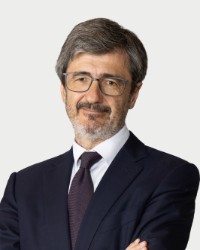





Gibson, Dunn & Crutcher LLP is a leading global law firm with more than 2,200 lawyers across 23 offices. Its Spanish Capital Markets practice comprises eight lawyers across Madrid and London, working closely with the firm’s wider Capital Markets, M&A, Private Equity and Finance practices. The team has deep experience across the full range of equity and debt capital markets transactions, including IPOs, rights issues, accelerated bookbuilds, secondary block trades, PIPEs, convertible bonds, investment-grade and high-yield issuances, debt programmes and liability management exercises. Recent work includes advising SpaceX on the European retail tranche of its global IPO, Merlin Properties on its c.USD900 million accelerated capital increase, Neinor Homes on equity and debt financing supporting its c.EUR1.07 billion tender offer for AEDAS Homes, and Barcelona-headquartered Wallbox on a cross-border PIPE transaction. The team combines extensive Spanish market experience with Gibson Dunn’s pre-eminent international equity financing capabilities.
Introduction
Spain enters the final quarter of 2026 as one of the faster-growing large economies in the euro area (GDP grew 0.7% quarter-on-quarter in the second quarter, according to Eurostat), with strong international investor participation in both its public and private equity markets. Private capital investment grew in 2025 compared to 2024, and fundraising by domestic private managers reached a record high. Substantial available capital now coexists with selective deployment and a changing exit market, in which sponsor-to-sponsor sales and continuation vehicles have become more relevant.
The public market has continued to provide equity financing, but strong equity raising by existing issuers has not resolved the difficulty of attracting new ones. Companies have more alternatives to an IPO, and many prefer to stay private for longer. Nevertheless, the IPOs completed this year show that listing remains a viable route to finance growth.
European and Spanish exchanges, regulators and governments are seeking to simplify access to the markets in order to attract issuers and institutional investors and to bring savers back to equities. The test for 2027 will be whether these efforts deliver more listings and deeper markets.
Tokenisation is also emerging as a way to issue and administer securities, although its contribution to equity fundraising and secondary-market liquidity remains to be demonstrated.
Private Markets
Investment activity and exits
According to SpainCap, private equity and venture capital investment in Spanish companies reached approximately EUR7 billion in 2025, up 11.5% on 2024. Growth was uneven, with venture investment rising strongly while private equity investment declined slightly. Domestic managers raised a record amount in the year, adding to the capital already available, although international managers still accounted for most of the value invested. Competition for high-quality businesses remains intense, and investors that build relationships early with family owners and their advisers are better placed to gain access before a formal sale process begins.
SpainCap’s preliminary figures for the first half of 2026 show investment of EUR3.78 billion, down 14% on the same period of 2025, while the number of investments remained broadly stable and domestic fundraising continued to grow. The decline in value has therefore not been matched by a comparable fall in the number of deals. Capital remains substantial, but putting it to work depends on agreement over valuation, financing terms and confidence in business plans.
Much of the investment value is concentrated in the mid-market and a limited number of larger transactions. Technology, healthcare and industrial businesses are leading destinations for capital, alongside the energy transition and the consolidation of fragmented sectors such as business services. Venture investment remains concentrated in Madrid and Barcelona, with international investors playing an important role in larger rounds alongside domestic investors.
Selling remains easier for some assets than for others. The average holding period for investments fully exited in 2025 was 5.9 years, broadly unchanged from 2024, although that figure does not capture assets still held in portfolios. The mix of exits is also changing. According to SpainCap, sales to strategic buyers were the largest category by value in 2025 (46%), while sales to other private capital investors took the largest share in the first half of 2026 (65%).
Alongside ordinary sales between sponsors, continuation vehicles offer a separate route to liquidity while allowing a manager to retain selected assets for a further phase of growth. Unlike in a sale between independent sponsors, the same manager is on both sides of the transaction. Fund investors therefore need to examine the commercial rationale, valuation, conflicts, costs and new fee and profit-sharing terms. An independent valuation can help, but does not replace proper engagement with investors and a meaningful choice between taking liquidity and remaining invested.
For an owner raising private capital, price is only part of the decision. The deal must also address how much of the money goes into the business and how much goes to selling shareholders, who controls the company afterwards, what rights the investor receives, and how and when it expects to exit. For investors, a demanding entry price places greater importance on growing and improving the business, rather than relying on a higher valuation multiple at exit.
Where the capital comes from
Three sources of capital stand out. The first is private wealth: family offices invest through private capital funds and also take direct positions in companies. Some offer flexible holding periods and minority capital, as an alternative to traditional sponsors or alongside them.
The second is individual investors. Since 2022, eligible retail investors have been able to invest a minimum of EUR10,000 in Spanish private equity and venture capital funds, subject to receiving advice and to limits linked to their overall financial assets. Alongside traditional closed-ended funds, the private-market offering now includes products allowing periodic, limited withdrawals. These can broaden the fundraising base but do not guarantee that investors can withdraw their money whenever they need it.
The third is public capital. State-backed programmes (including those run by ICO/Axis, CDTI, COFIDES and SETT) invest in funds and alongside private investors in companies, supporting strategic and innovative sectors. Their aim is to attract private money rather than replace it, although access depends on eligibility and available funding. Public participating loans, such as those granted by ENISA, also complement equity financing for innovative start-ups and SMEs.
Structured equity
Structured capital offers businesses more flexible financing than conventional debt or ordinary equity alone, and specialist providers may combine the two to fit each case. It is used for refinancing, acquisitions and growth, not only by companies in difficulty.
Much of the debt raised cheaply in 2020 and 2021 matures in 2027 and 2028, and refinancing it at today’s rates will often leave a shortfall. In many cases, the problem is not the business itself, which may be performing to plan, but a capital structure priced for a different rate environment that cannot simply be rolled over as it stands. Structured capital is designed to fill that gap.
The structure depends on the funding need and the owners’ priorities. Preferred equity can give the investor priority over ordinary shareholders on dividends and on the proceeds of a sale without diluting the voting rights of existing shareholders at the outset. Payment-in-kind debt preserves cash by adding interest to the outstanding balance, at the cost of a larger amount to repay later (typically funded through a sale and/or refinancing). Holding-company financing can provide additional capital without refinancing existing operating-company debt, provided the existing financing documents permit it. It is, however, structurally subordinated to operating-company creditors, and its repayment depends on available cash flows, permitted distributions or an eventual sale or refinancing.
Spanish law provides the tools, including shares with preferential rights and participating loans (which count as equity for the purposes of the capital-impairment and mandatory-dissolution rules), subject to the applicable rules on distributions, the protection of share capital and shareholder approvals.
These arrangements can also suit family-owned businesses seeking capital without selling a majority stake. The investor obtains a contracted return with a share of the upside if the business does well, and the owner a partner whose rights are deliberately set short of control. Those rights usually include reporting, board representation and vetoes over important decisions. They need careful negotiation, because retaining a majority of the shares does not necessarily mean keeping sole control of the business.
Negotiations centre on the return, the exit and the consequences of delay. Depending on the instrument, the return may combine cash payments, or amounts accumulated for later payment, with equity participation through warrants or a direct stake. The documents should establish the intended exit route and what happens if it is delayed, through maturities, put rights, agreed sale processes and rights to force a sale if the agreed return has not been delivered. Owners should also assess whether missed deadlines or milestones increase the investor’s return, ownership or influence over an eventual sale.
Owners should therefore weigh not only their position at the outset but what these terms would mean if an exit takes longer than planned, since deferring cash payments may buy time but does not remove the final repayment obligation. Competition among providers increasingly centres on flexibility of structure and lighter governance requirements rather than on headline pricing, and owners that once treated structured capital as a last resort are increasingly considering it earlier. The 2027 and 2028 maturities will test this market at scale.
Public Markets
Issuer base
Spain’s main market (the regulated market operated by BME) has experienced a long-term net loss of issuers, including established and profitable businesses. Over the last 12 years, it has recorded 58 delistings against 46 new listings.
In 2025, take-privates removed Corporación Financiera Alba, Borges Agricultural & Industrial Nuts and Minor Hotels Europe & Americas, followed by Grupo Catalana Occidente and Ercros in 2026. The flow of new issuers remains limited. In 2025, there were two main-market IPOs (HBX Group and Cirsa), and there have been two so far in 2026 (TSK and Digi Spain). Additional main-market admissions came from Izertis in 2025 and Arteche in 2026, both transferring from BME Growth rather than listing for the first time.
Companies already listed, by contrast, raised substantial equity, including Iberdrola (EUR5 billion in 2025), Merlin Properties (EUR768 million in March 2026) and ACS (approximately EUR680 million in May 2026). Accelerated secondary placements also gave selling shareholders liquidity, as in GIP/BlackRock’s exit from Naturgy, completed in March 2026, and CVC’s sale of its entire Naturgy stake in May 2026.
IPO activity
Companies stay private for several reasons. Regulatory costs, controlling shareholders’ preferences, business scale, access to private finance, achievable valuations and concerns about post-IPO performance and trading liquidity all influence the decision. Internationally oriented businesses also consider an overseas or dual listing where a foreign market offers a deeper pool of investors or a better-known platform for their sector.
Even so, sponsor-backed and family-owned businesses are again considering IPOs in Spain, with several candidates preparing to launch at the time of writing. The decision depends on headline valuation, certainty of completion, the prospects for sell-downs, how urgently growth capital is needed and how much dilution is acceptable. An IPO also remains sensitive to market conditions: preparation requires substantial management time and expense, and a change in investor sentiment can affect both valuation and completion.
Against this background, pre-committed demand has become an important execution tool, providing early visibility on demand and supporting aftermarket stability. In TSK’s and Digi Spain’s 2026 IPOs, anchor investors committed to a significant part of the offering before books opened. Support from existing shareholders has also been important in follow-on offerings, with core shareholders committing to subscribe at launch in Merlin Properties’ and ACS’s 2026 capital increases.
Reforms and Initiatives
The EU Listing Act
The EU Listing Act amends the Prospectus Regulation, the Market Abuse Regulation, MiFIR and MiFID II, and is accompanied by a new EU directive on multiple-vote share structures. Some of its measures apply directly across the EU, while others require Spanish legislation that is still pending.
Among the measures already in force, a listed company can issue new shares fungible with a class already admitted to trading, representing less than 30% of that class over a 12-month period, without a prospectus, and can do so irrespective of the size once the class has been admitted to trading for at least 18 months. In both cases, a short document must be filed with the Spanish Securities Market Commission (CNMV) but does not have to be approved by it. Prospectuses have also become shorter and more standardised, with a general limit of 300 pages for a share prospectus and 50 pages for the new EU follow-on prospectus, subject to some exclusions.
Spain published its draft implementing legislation for public consultation in March 2026. Consultation closed in April 2026, but the following measures remain pending at the time of writing:
- The draft regulation reduces the minimum free float on admission to a regulated market from 25% to 10% and the minimum value of the shares to be listed from EUR6 million to EUR1 million. Until it is adopted, the 25% requirement continues to apply, subject to a CNMV waiver.
- The draft law adapts the Securities Market Act to the EUR12 million threshold below which no prospectus is required. That threshold has applied directly under the amended Prospectus Regulation since 5 June 2026, replacing the previous Spanish threshold of EUR8 million.
- The draft law allows companies preparing a listing on a multilateral trading facility or a regulated market to issue multiple-vote shares carrying up to ten votes each and representing no more than 30% of the share capital. The extra votes lapse when the shares are transferred, with limited exceptions, and expire after at most ten years from the resolution creating them, extendable once for up to another ten years. They sit alongside the loyalty shares available to listed companies since 2021.
BME Easy Access
A conventional IPO brings the placement and admission processes together within a tightly co-ordinated timetable, making execution sensitive to market conditions. BME Easy Access, operational since July 2025, lets eligible companies obtain prospectus approval and admission first and meet the free-float requirement later. It is open to companies valued at more than EUR500 million, although the CNMV may accept a lower figure.
Companies initially have 18 months from admission to achieve sufficient distribution through one or more offerings or block placements. This period may be extended by up to six months, or the CNMV may treat the free-float requirement as met with the distribution achieved by then, but if the free float is still not achieved after any extension, the company faces delisting. In the meantime, trading is limited to block trades between existing shareholders and professional investors (with no access for retail investors) rather than ordinary continuous trading.
The route gives companies greater flexibility over the timing of a placement, but they assume listed-company disclosure and governance obligations from admission. At the time of writing, no company has completed an admission under it.
Retail participation
Bringing Spanish households back to equities is central to any revival of the public markets. Property and bank deposits make up a large share of household wealth. Households’ share of Spanish listed equity recovered to 16.7% in 2025, but it remains far below the 35.1% peak of 1998. Recent IPOs have been placed almost entirely with institutional and other qualified investors. Wider participation needs financial education, accessible products, transparent costs and incentives to invest for the long term. If retail investors were to invest more actively in listed companies, shares would become more liquid and potentially more attractive to institutional investors and issuers.
A relevant Spanish initiative is the Financia Europa savings and investment account approved by the Government through a royal decree-law. Under its announced design, individuals would be able to contribute up to EUR150,000 to invest in eligible European shares and funds, defer tax on capital gains retained within the account and obtain additional relief on gains linked to contributions held for more than five years. The original decree-law, published on 30 September 2026, lapsed when Congress declined to validate it on 2 October. The Government approved its reintroduction on 6 October. Validation by Parliament remains pending, and commercial launch will depend on implementing measures.
The account is linked to Finance Europe, an initiative launched by Spain and six other European countries in June 2025 for long-term investment products allocating at least 70% of their assets to Europe.
Liquidity without a listing
Organised secondary sales can give founders, employees and early investors liquidity without taking the company public. Where an IPO is delayed, these transactions can allow shareholders to realise part of their investment and help companies retain employees whose wealth is tied up in their shares.
Some markets have built infrastructure for this purpose. US platforms organise company-sponsored share sales and secondary transactions between investors. In the UK, the PISCES framework allows existing private-company shares to be traded at intervals among eligible investors, including institutions and certain individuals and employees, under tailored disclosure requirements. The London Stock Exchange is one of the approved platform operators. These arrangements create opportunities to sell rather than guaranteeing continuous liquidity.
The European Commission is exploring a similar approach. Its 2026 consultation on private equity exits examined intermittent trading platforms for secondary sales and their possible extension to new equity fundraising.
Digital assets and tokenisation
Tokenisation offers another way to issue and administer securities. Spanish law permits shares and other securities to be represented using distributed ledger technology, subject to regulated record-keeping arrangements.
The potential benefits include lower administration costs, faster settlement and automated transfer controls. However, adoption remains at an early stage, and tokenisation alone does not create investor demand or liquidity.
Gibson, Dunn & Crutcher LLP
Plaza Pablo Ruiz Picasso
11 Planta 1
Madrid
28020
+34 91 934 08 08
jfernandez-castano@gibsondunn.com www.gibsondunn.com
Law and Practice
Authors
Gibson, Dunn & Crutcher LLP is a leading global law firm with more than 2,200 lawyers across 23 offices. Its Spanish Capital Markets practice comprises eight lawyers across Madrid and London, working closely with the firm’s wider Capital Markets, M&A, Private Equity and Finance practices. The team has deep experience across the full range of equity and debt capital markets transactions, including IPOs, rights issues, accelerated bookbuilds, secondary block trades, PIPEs, convertible bonds, investment-grade and high-yield issuances, debt programmes and liability management exercises. Recent work includes advising SpaceX on the European retail tranche of its global IPO, Merlin Properties on its c.USD900 million accelerated capital increase, Neinor Homes on equity and debt financing supporting its c.EUR1.07 billion tender offer for AEDAS Homes, and Barcelona-headquartered Wallbox on a cross-border PIPE transaction. The team combines extensive Spanish market experience with Gibson Dunn’s pre-eminent international equity financing capabilities.
Trends and Developments
Authors
Gibson, Dunn & Crutcher LLP is a leading global law firm with more than 2,200 lawyers across 23 offices. Its Spanish Capital Markets practice comprises eight lawyers across Madrid and London, working closely with the firm’s wider Capital Markets, M&A, Private Equity and Finance practices. The team has deep experience across the full range of equity and debt capital markets transactions, including IPOs, rights issues, accelerated bookbuilds, secondary block trades, PIPEs, convertible bonds, investment-grade and high-yield issuances, debt programmes and liability management exercises. Recent work includes advising SpaceX on the European retail tranche of its global IPO, Merlin Properties on its c.USD900 million accelerated capital increase, Neinor Homes on equity and debt financing supporting its c.EUR1.07 billion tender offer for AEDAS Homes, and Barcelona-headquartered Wallbox on a cross-border PIPE transaction. The team combines extensive Spanish market experience with Gibson Dunn’s pre-eminent international equity financing capabilities.
