Insurance & Reinsurance 2026
USA – Florida
Trends and Developments
Authors
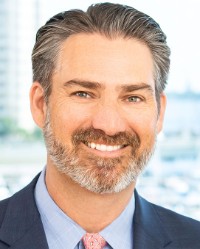
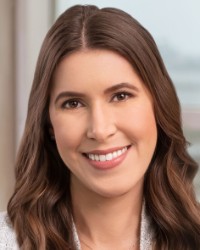
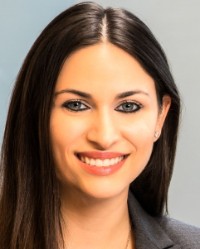
Cozen O'Connor delivers legal services on an integrated and global basis, with over 1000 attorneys in 32 cities across two continents. The lawyers counsel clients on their most sophisticated legal matters in all areas of the law, including litigation, corporate and regulatory law. The firm’s global insurance department is a recognised leader in insurance coverage and claims litigation, with over 150 dedicated insurance attorneys in 19 offices. The attorneys have experience in virtually every line of business, representing primary and excess insurers, reinsurers, third-party administrators, managing general agents, insurance brokers, agents and independent adjusting companies. The global insurance department has served as lead trial counsel or national co-ordinating counsel in complex coverage litigation for more than five decades. Cozen O’Connor’s global insurance department and numerous attorneys in the practice are recognised by Chambers & Partners USA.
Hot Topics in Insurance Law in the Sunshine State: Impacts of Florida Insurance Code Reforms on the Market and in the Courts, and the Expansion of AI
With the legislative reforms of 2022 and 2023 and the rise of artificial intelligence (AI), it is undeniable that the Florida insurance market and legal practice are remarkably different from just a few years ago.
Impact of 2022 and 2023 reforms – a recovering market
Florida is the seventh largest international insurance market, with a gross domestic product exceeding USD1.7 trillion. But for the last two decades, Florida’s insurance market was unwell, shackled by arguably the most aggressive insurance litigation environment in the United States. In 2022 and 2023, after numerous failed previous attempts, the Florida Legislature passed substantial reforms aimed at righting Florida’s insurance market.
What is very clear today is that Florida’s recent insurance reforms have been a success. The impacts of the 2022 and 2023 legislative actions in Florida are restoring consumer confidence in the insurance industry and attracting private insurance companies back to the state. Florida’s insurance department has reported that, to date, 17 new insurance carriers have entered the Florida market since the historic reforms (see House of Representatives, Insurance & Banking Subcommittee, Meeting Packet for 18 November 2025, at 3 (18 November 2025)). A shift towards a more competitive and consumer-friendly insurance market in Florida is now evident.
In November 2025, Florida Insurance Commissioner Michael Yaworsky presented to both insurance committees of the state legislature to report on the impact of the recent reforms. Based on the statistics presented, Yaworsky demonstrated to the House Insurance & Banking Subcommittee and the Senate Banking and Insurance Committee that the consumer and litigation reforms have been successful. The reforms have led to rate decreases in both property and automobile policies, more options for homeowners’ insurance and lower reinsurance rates. The reforms have further seen a return to profitability for insurance companies and the successful depopulation of the taxpayer-backed “insurer of last resort”, Citizens Property Insurance Corporation.
Yaworsky also provided data showing that the property insurance market as a whole is on the road to recovery. Florida’s insurance companies writing the state’s 7.6 million residential policies are now financially sound, with positive net income and underwriting gains, compared to 2017–22, when net income and underwriting gains had been negative in Florida for seven straight years. Average personal residential property insurance rates are decreasing, even despite inflation, and the average homeowner’s insurance rate requests are also dropping (see House of Representatives, Insurance & Banking Subcommittee, Meeting Packet for 18 November 2025, at 8 (18 November 2025)).
A review of data from Citizens Property Insurance Corporation also demonstrates the positive impacts of the legislative reforms. Citizens is Florida’s state-run “insurer of last resort”, and its policy count and litigation activity serve as a Florida insurance market health barometer. Since the reforms, Citizens has reduced its policy count from over 1.5 million to under 400,000, its lowest level in 14 years (see Citizens Market Accountability Advisory Committee, Conference Call of 19 November 2025 (meeting agenda and minutes), at 3 (19 November 2025) and Governor Ron DeSantis’s Press Release on Insurance Rate Relief (12 January 2026)).
With the decrease in policies, new claims have decreased significantly – down 80% from September 2024 to September 2025. New litigation and pending litigation are down 40% and 47%, respectively, for the same period (see Citizens Property Insurance Corporation, “Litigated Claims Update”, Claims Committee Meeting, at 6 (20 November 2025); and Citizens Claims Committee Conference Call of 11-20-25, Citizens Property Insurance Corporation (20 November 2025)). While the uneventful 2025 hurricane season will further contribute to less litigation, it is noted that this data reflects on the period before the 2025 season, before impacts of the 2025 season would come into play.
Reinsurance market developments
Florida’s property insurance market is unique because it is largely composed of small-to-medium-sized domestic insurers that rely heavily on reinsurance to manage their exposure to catastrophic events like hurricanes. Reinsurance costs have historically made up a large portion of premiums. To use the homeowner’s example, reinsurance comprises up to 40% of the cost of a homeowners policy (see Florida Reinsurance Costs Dropped After Legislative Reforms (6 October 2025)).
Florida also has a Hurricane Catastrophe Fund, or “Cat Fund”. The Cat Fund provides the initial layer of reinsurance for Florida property insurers. The remainder of reinsurance is obtained from the private global reinsurance market. Thus, the size of the Cat Fund dictates the size of the property reinsurance market in Florida.
In October 2025, the Cat Fund’s Advisory Council met and approved a plan for the 2026 hurricane season. The Fund is presently required by law to provide up to USD17 billion in claims but typically falls short of that requirement. The Fund makes up the difference by issuing bonds, which it pays for with assessments or surcharges, passed on to Florida property insurance policyholders via their carriers (see Citizens Property Insurance Corporation, Claims-Paying Capacity Estimates: October 23, 2025 (Florida Hurricane Catastrophe Fund “Bonding Capacity” Report)).
Recently, Florida legislative and industry players were beginning to urge the Florida Legislature to lower the Cat Fund’s retention point back to its 2010 level of USD4.5 billion (see Jeff Brandes & John Rollins, The Insurance Stability Lever the Florida Legislature Forgot, Florida Politics (16 October 2025)). This, in turn, would allow insurance companies to access more, and ideally less expensive, traditional market reinsurance, helping further reduce property insurance rates on Floridians.
Early judicial interpretation of Florida’s insurance reforms
The substantive changes in the laws are still making their way through the courts. However, even at this early stage, the reforms are impacting cases, even those involving claims and policies that incepted before the reforms.
One of the most significant amendments to Florida’s bad faith laws was the addition of Section 624.155(4)(a), which added a 90-day “safe harbour” investigation period for liability insurers. Pursuant to this section, “[a]n action for bad faith involving a liability insurance claim, including any such action brought under the common law, shall not lie if the insurer tenders the lesser of the policy limits or the amount demanded by the claimant within 90 days after receiving actual notice of a claim which is accompanied by sufficient evidence to support the amount of the claim”.
The applicability of this provision was at issue in Direct Gen. Ins. Co. v Creamer, No 3:23-CV-380-TJC-PDB, 2025 WL 2780245 (M.D. Fla. Sept. 30, 2025). There, the insured, Sean Creamer, was involved in a motor vehicle accident with Delvis Eason on 28 April 2019. Creamer was insured by an auto policy issued by Direct General Insurance Company (DGIC) with bodily injury liability coverage of USD10,000.00 per person. Eason’s fiancé reported the accident to DGIC but without any supporting documentation, and the adjuster began investigating and attempting to locate Creamer. On 20 May 2019, DGIC received the police report and tendered the USD10,000 policy limit to Eason, but Eason returned the check to DGIC. After additional back and forth, on 16 September DGIC reissued the policy limits check. Eason advised that the offer was being considered but acceptance would be conditioned on Creamer’s completion of a financial affidavit indicating that Eason had no other collectible assets.
Because of difficulties reaching Creamer, the affidavit was not completed, and on 15 November Eason filed suit against Creamer. The suit proceeded to trial, and on 29 March 2023, five days after the 24 March 2023 reforms went into effect, a jury returned an excess verdict in favour of Eason for USD1,250,000. Judgment was entered on 17 August 2023.
On 3 April 2023, DGIC filed a declaratory judgment action in federal court, seeking a declaration that DGIC properly and fully discharged its obligations of good faith in the handling of the claim, and a declaration that it was without liability to Eason and Creamer for any amount above the policy limits. DGIC argued that it was not liable because it tendered the policy limit 23 days after the accident, well within the 90-day safe harbour. Indeed, Section 30 of HB 837, through which the amendments were enacted, clearly states that the act applies to causes of action filed after 24 March 2023. However, HB 837 Section 29 states that “This act shall not be construed to impair any right under an insurance contract in effect on or before the effective date of this act. To the extent that this act affects a right under an insurance contract, this act applies to an insurance contract issued or renewed after the effective date of this act”. Because the policy was issued before 24 March 2023, Eason argued that the 90-day safe harbour did not apply.
The court sided with DGIC. It explained that Eason’s right to sue DGIC for bad faith accrued upon entry of judgment on 17 August 2023, which was after the statute’s effective date of 24 March 2023. Under Florida law, a cause of action for bad faith accrues when the insured is legally obligated to pay a judgment that is in excess of the policy limits. The court disagreed that a bad faith failure to settle claim was a contractual right contemplated by Section 29, particularly because Eason was not even an insured under the policy. Regardless, the court explained that even if Eason’s “right” to sue DGIC for bad faith can be construed as a contractual right contemplated by Section 29, this “right” did not arise until after 24 March 2023. Thus, there was no impermissible retroactive application of the law.
The Creamer ruling is consistent with other federal courts who have ruled on the same issue, such as Oxonian v GEICO Gen. Ins. Co., No 8:24-CV-1351-MSS-AAS, 2025 WL 555621 (M.D. Fla. Jan. 3, 2025); Dial v GEICO Gen. Ins. Co., No 8:23-CV-1650-VMC-TGW, 2024 WL 3470363, at *10 n.1 (M.D. Fla. July 19, 2024); and Chambers v Progressive Select Ins. Co., No 6:24-cv-141-JSS-DCI, 2025 WL 1665722 at *1 (M.D. Fla. June 12, 2025).
Similar issues have arisen in the first party context. Section 624.1551, as amended on 16 December 2022, states that “in any claim for extracontractual damages under s. 624.155(1)(b), no action shall lie until [1] a named... insured... has established through an adverse adjudication by a court of law that the property insurer breached the insurance contract and [2] a final judgment or decree has been rendered against the insurer. Acceptance of an offer of judgment under s. 768.79 or the payment of an appraisal award does not constitute an adverse adjudication under this section. The difference between an insurer’s appraiser’s final estimate and the appraisal award may be evidence of bad faith under s. 624.155(1)(b), but is not deemed an adverse adjudication under this section and does not, on its own, give rise to a cause of action”.
This provision was examined in In re Portofino Condo. Hurricane Sally Bad Faith Litig., No 3:25CV52-TKW-HTC, 2025 WL 1927500 (N.D. Fla. July 14, 2025). There, a group of condominium associations insured under a tower of coverage made a claim for damage following Hurricane Sally in 2020. Certain of the insurers made payments, but the associations disputed the damages and demanded appraisal. The award was issued in several parts from February to July 2023. Following the first portion of the award in February 2023, the defendant insurers paid their policy limits, but not interest, attorney’s fees or costs. In September 2024, the associations filed suit against the insurers, seeking bad faith damages under Section 624.155(1)(a) and (1)(b).
The court granted the insurers’ motion to dismiss the associations’ claims brought pursuant to Section (1)(b), finding that because the insurers paid their portion of the appraisal award before a court rendered a final judgment or decree finding that the insurers breached the insurance policy. It is noted that “the upshot of § 624.1551 is that an insured can no longer assert a bad faith claim under § 624.155(1)(b) if the insurer pays the appraisal award before a court has rendered a final judgment or decree finding that the insurer breached the insurance policy” (id at *5).
The associations argued that application of 624.1551 constituted an impermissible retroactive application of the law because the underlying claim involved 2020 policies and a 2020 date of loss. The court disagreed, explaining that the determinative point in time separating prospective from retroactive application of an enactment is the date the cause of action accrues. The earliest that the associations’ bad faith claims accrued was when the appraisal awards were entered in February to July 2023, which was after Section 624.1551 was in effect. Thus, there was no impermissible retroactive application of the law. The court’s decision was consistent with Isaacson v QBE Specialty Ins. Co. No 2:24-CV-715-SPC-NPM, 2024 WL 4544257, at *2 (M.D. Fla. Oct. 22, 2024). Importantly, though, where the bad faith clam accrued before the enactment of the law, courts have found that Section 624.1551 did not apply retroactively (see, eg, Vo v Scottsdale Ins. Co., No 1D2023-2228, 2025 WL 611505 (Fla. 1st DCA Feb. 26, 2025).
Impact of AI on Florida’s insurance market – regulation and accountability
As the market stabilises and carriers refocus on growth and efficiency, emerging technologies are playing an increasingly prominent role. AI, in particular, is reshaping key functions from underwriting to claims management, prompting both promise and concern. Regulatory attention has swiftly followed, making AI governance the next major frontier in Florida’s evolving insurance landscape.
Florida’s insurance industry is rapidly integrating AI into its operations. In a storm-prone state with elevated insurance costs, insurers promote AI as a tool to enhance efficiency, accuracy and speed in servicing policyholders. At the same time, regulators and lawmakers are scrutinising AI’s impact on fairness and accountability in critical decisions like claim denials.
Insurers in Florida, as in other jurisdictions, have long relied on data-driven algorithms. Today’s AI systems represent a natural evolution of that trend. Current market practices reflect a growing, albeit cautious, embrace of AI tools across various functions, including underwriting and pricing, claims handling and fraud detection.
AI and machine learning models analyse vast datasets to refine risk assessment and help underwriters calculate premiums with greater precision. In the aftermath of hurricanes and other disasters, insurers now deploy AI to triage and process claims at scale. These tools can extract insights from adjuster notes, evaluate photographic or drone imagery of property damage, estimate settlement ranges, and flag potentially fraudulent submissions for further review. The overarching promise is faster initial assessments, potentially accelerating claim payments and enhancing consistency in evaluation outcomes.
Insurance representatives have emphasised to Florida lawmakers that AI is being used to supplement, not supplant, human judgement. Nonetheless, growing public and political concern has prompted legislative intervention.
In response to these concerns, Florida lawmakers introduced House Bill 527, a measure that would require human oversight for any insurance claim denial involving AI. The bill reflects Florida’s early and assertive approach to regulating AI in the insurance sector. Florida is among the first states to pursue substantive legislation specifically addressing the use of AI in insurance, with HB 527 at the forefront.
Formally titled the “Mandatory Human Reviews of Insurance Claim Denials” bill, HB 527 was filed on 24 November 2025 and passed unanimously out of the House Insurance & Banking Subcommittee on 9 December 2025. A companion measure, Senate Bill 202, is concurrently advancing through Senate committees. The legislation addresses a central concern: that algorithms, when operating without meaningful human input, could improperly deny or underpay insurance claims.
As of December 2025, HB 527 has not yet become law but continues to advance in the Florida Legislature. Following subcommittee approval, a committee substitute (CS) was filed, and the bill is currently pending before the House Commerce Committee, its final stop before a full House vote. The Legislature will reconvene in January 2026 for the regular session, during which HB 527 must pass the House and Senate. If passed, the law would take effect on 1 July 2026.
HB 527 makes clear that insurers may use AI and algorithms to assist in processing claims and generating coverage recommendations. However, it establishes a requirement that a “carriers’ decisions to deny a claim or portion of a claim or reduce a claim be made by qualified human professionals”. Key provisions of HB 527 include the following.
- Human decision requirement: The bill authorises insurers to use AI in assisting claim evaluations, but it expressly prohibits any AI or algorithm from serving as the sole basis for denying or reducing a claim payment. A qualified human professional, such as a licensed adjuster, must independently review the facts, verify AI-generated outputs and confirm coverage determinations.
- Duties of human reviewers: The legislation outlines specific responsibilities for human reviewers, requiring them to independently assess the claim file, validate AI findings and exercise discretion in rendering the final decision.
- Documentation and transparency: HB 527 mandates that insurers using AI must document the specific role played by AI systems in claims denials or reductions, describe its use in internal claims manuals and make those materials available to regulators. Denial notices to policyholders must identify the human decision-maker and, where applicable, indicate whether AI contributed to the evaluation.
- Regulatory oversight and enforcement: The bill empowers the Office of Insurance Regulation (OIR) and Department of Financial Services (DFS) to monitor compliance through market conduct examinations and investigations. The Financial Services Commission is authorised to adopt implementing rules.
Florida’s legislative push has been shaped by real-world events and broader policy trends. Lawmakers have cited the 2024 fatal shooting of UnitedHealthcare’s CEO, reportedly triggered by a dispute involving AI-driven claim denials, as well as class-action litigation alleging that an insurer’s AI tool yielded a 90% error rate in health claim denials (see Estate of Gene B. Lokken et al. v UnitedHealth Group, Inc. et al., No 0:23-cv-03514-JRT-SGE (D. Minn. Nov. 14, 2023), Complaint ¶1). Closer to home, Florida’s average homeowners’ claim denial rate surged to 46.7% in 2024, largely due to Hurricane Milton losses, fuelling concerns that automated systems could amplify consumer harm during crises (see Florida Hurricane Season Strikes Insurance Industry in Turmoil, Weiss Ratings (Sept. 5, 2025)).
As Florida implements its AI regulations in insurance, several legal and compliance challenges will emerge for both regulators and insurers. The state’s insurance market stands at a critical juncture in 2026: AI offers potent tools to navigate Florida’s longstanding exposure to catastrophe risk and fraud, but it also raises concerns about removing human accountability from a process ideally rooted in trust, fairness and the restoration of policyholders. HB 527 reflects an evolving consensus: AI can assist and accelerate, but the ultimate judgement calls in insurance must remain human.
Cozen O’Connor
1801 N Military Trail
Suite 200
Boca Raton
Florida 33431
USA
+1 561 750 3850
+1 561 245 6209
jdickenson@cozen.com www.cozen.com
Trends and Developments
Authors
Cozen O'Connor delivers legal services on an integrated and global basis, with over 1000 attorneys in 32 cities across two continents. The lawyers counsel clients on their most sophisticated legal matters in all areas of the law, including litigation, corporate and regulatory law. The firm’s global insurance department is a recognised leader in insurance coverage and claims litigation, with over 150 dedicated insurance attorneys in 19 offices. The attorneys have experience in virtually every line of business, representing primary and excess insurers, reinsurers, third-party administrators, managing general agents, insurance brokers, agents and independent adjusting companies. The global insurance department has served as lead trial counsel or national co-ordinating counsel in complex coverage litigation for more than five decades. Cozen O’Connor’s global insurance department and numerous attorneys in the practice are recognised by Chambers & Partners USA.
