Sanctions 2026
USA – Washington, DC
Trends and Developments
Authors
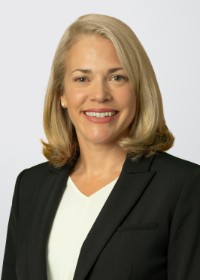
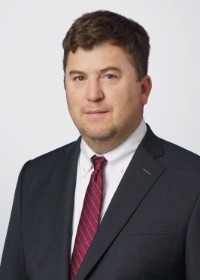
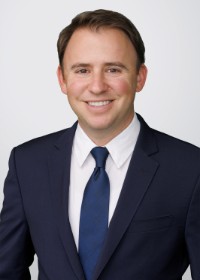
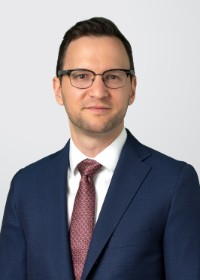
Holland & Knight LLP is a full-service global law firm with more than 2,200 attorneys across the United States and internationally, providing comprehensive legal counsel in litigation, corporate, real estate, regulatory and government matters. The firm’s sanctions practice, housed within its international trade and national security group, advises US and multinational clients on economic sanctions, export controls and enforcement risk. The attorneys regularly assist with the US Department of the Treasury’s Office of Foreign Assets Control (OFAC) compliance, licensing, internal investigations and cross-border transactions, and represent clients before key regulators including the Treasury Department and Department of Commerce. Recognised for its practical, business-focused advice, the team helps clients navigate complex regulatory frameworks, mitigate risk and implement effective global compliance programmes.
US Economic Sanctions: Top Trends for 2026
Economic sanctions have dominated the US foreign policy landscape in recent years, and 2026 is no exception. As national security challenges have grown in number and complexity, so too have the regulations administered and enforced by the US Department of the Treasury’s Office of Foreign Assets Control (OFAC), a small but powerful agency at the heart of US sanctions policymaking. Sanctions enforcement has remained a notable exception to a broader pull-back in regulatory enforcement activity during the second Trump Administration, with OFAC issuing five enforcement actions in 2026, roughly maintaining pace with the 14 public settlements or civil monetary penalties announced by OFAC in 2025. This article surveys the key enforcement and designation trends shaping US sanctions practice in 2026.
A Year of Geopolitical Flux: Rapidly Changing Sanctions Policy Towards Venezuela, Iran, Cuba, and Cartels
The sanctions landscape is in significant transition across multiple jurisdictions. The US government’s Venezuela sanctions programme remains in a state of flux following the January 2026 apprehension of President Nicolás Maduro, with the promulgation of multiple general licences authorising activities in the oil and gas, electricity and mining sectors, and relief efforts in the wake of a devastating earthquake, among other transactions. After months of escalating sanctions pressure on the actors involved in the illicit sale of Iranian oil, the United States and Iran entered into a fragile peace agreement calling for the end to all sanctions, and OFAC authorised the temporary production, delivery and sale of Iranian oil, petrochemical products and petroleum products. The United States also imposed additional sanctions on Cuba, targeting many foreign companies and banks that have had long-standing operations on the island despite the broad US embargo.
Venezuela: Maduro Out, General Licences In
The US military captured Venezuelan ruler Maduro in a nighttime raid on 3 January 2026. Hours later, President Trump promised that US oil and gas companies would soon return to Venezuela to invest in the deteriorating infrastructure. Since then, OFAC has issued over a dozen Venezuela-related general licences (GLs) focused on facilitating, among other things, US investment in the oil and gas, petrochemical, and minerals sectors. Most recently, OFAC issued a broad GL authorising transactions related to earthquake relief efforts.
Key authorisations include GL 46C (permitting established US entities to buy, sell, transport, store, and refine Venezuelan-origin oil), GL 47A (authorising the export of US-origin diluents to Venezuela), GL 48B (authorising goods, technology, and services necessary for oil and gas exploration and production), and GL 52A (authorising established US entities to engage in transactions with Petróleos de Venezuela, SA (“PdVSA”)). GL 51B extended authorisations to permit transactions ordinarily incident and necessary to the exportation, re-exportation, sale, resale, supply, storage, purchase, delivery, or transportation of Venezuelan-origin minerals, including gold, and GL 54A authorised certain transactions with CVG Compania General de Mineria de Venezuela CA (“Minerven”), a Venezuelan state-owned gold-mining company. GL 59 was issued to authorise the supply of certain items and services to the Consorcio Venezolano de Industrias Aeronáuticas y Servicios Aéreos, SA (“Conviasa”), Venezuela’s state-owned airline. More recently, GL 60 authorised earthquake relief efforts through to 23 October 2026. Many of these GLs are subject to various requirements, including that payments to sanctioned Venezuelan entities made in connection with certain GLs be deposited in US government-controlled accounts, as specified in Executive Order (EO) 14373.
Most of these new authorisations are subject to notable limitations and conditions, including that they exclude transactions involving persons or entities organised or located in Russia, Iran, North Korea, or Cuba, and in some cases, US or Venezuelan entities owned or controlled by persons in China. Strict reporting requirements often apply. As such, compliance teams navigating business in Venezuela must carefully track the conditions and limitations of each GL while ensuring compliance with reporting and record-keeping requirements.
Iran: Maximum Pressure and Early Attempts at Relief
For the first half of 2026, the Trump Administration pursued a “maximum pressure” campaign against Iran, combining aggressive sanctions with the use of military force. The administration’s reliance on sanctions appeared to change in mid-June, when the United States and Iran agreed to a fragile peace deal under which the US promised substantial sanctions relief. Accordingly, GL X, which OFAC published on 22 June 2026, provides a temporary waiver on sanctions restricting Iran’s oil, gas, and petrochemical sector.
From 22 June 2026 through to 21 August 2026, GL X has authorised transactions ordinarily incident to the production, sale, delivery or offloading of Iranian crude oil, petrochemical products or petroleum products that would otherwise be prohibited by numerous US sanctions programmes, including those designed to counter terrorism and the proliferation of weapons of mass destruction, as well as those imposed on Iran and Russia. Authorised transactions include the production, sale, delivery or offloading of such crude oil, petrochemical products or petroleum products, including transactions for the safe docking and anchoring of vessels carrying such crude oil, petrochemical products or petroleum products; the preservation of the health or safety of the crew of any such vessel; emergency repairs or environmental mitigation or protection activities relating to any such vessel or to such crude oil, petrochemical products or petroleum products held in storage; and services such as vessel management, crewing, bunkering, piloting, registration, flagging, insurance, classification and salvage. The authorisation extends to Iranian-origin crude oil, petrochemical products and petroleum products produced by some sanctioned entities.
Notwithstanding the breadth of sanctions risks mitigated by GL X, significant compliance and other risks remain for companies doing work in Iran. Specifically, the Islamic Revolutionary Guard Corps (IRGC) status as a Foreign Terrorist Organisation (FTO) continues to present significant risks under other US laws, including the Antiterrorism and Effective Death Penalty Act of 1996, which provides for criminal penalties for persons who knowingly provide “material support” to a designated FTO, and the Antiterrorism Act (ATA), which permits victims of acts of terrorism carried out by an FTO to bring civil lawsuits against persons who have provided substantial assistance to that FTO. Many US-linked companies and financial institutions will still likely decline to engage in Iranian oil trade due to these risks, particularly given the IRGC’s significant involvement in Iran’s oil and gas trade and its role as a de facto administrator of the Strait of Hormuz.
Furthermore, uncertainty about the viability of the MOU and the future of the US-Iran conflict, as well as the need for congressional support for extensions of longer-term sanctions relief, means companies must be prepared for potentially rapid shifts in US sanctions policy towards Iran going forward. These factors complicate the business decision-making process for both US and foreign firms considering relying on any new GLs.
In the lead-up to the most recent military hostilities and the implementation of GL X, OFAC and the US Department of State had published multiple rounds of designations targeting Iran. In February 2026, OFAC sanctioned over 30 individuals, entities and vessels enabling illicit Iranian petroleum sales and Iran’s ballistic missile and advanced conventional weapons production. In April 2026, OFAC targeted approximately 40 shipping firms and vessels operating as part of Iran’s shadow fleet, including the first designation of a major Chinese refinery directly purchasing Iranian crude, which marked a significant escalation in secondary sanctions risk for Chinese entities. OFAC also designated 35 entities and individuals overseeing Iran’s broader shadow-banking architecture in April 2026, targeting entities facilitating the movement of tens of billions of dollars tied to sanctions evasion. In May 2026, the Department of State designated additional entities in connection with trade in Iranian-origin petrochemical products.
Cuba: Escalation and Secondary Sanctions
On 1 May 2026, President Trump issued EO 14404 to authorise sanctions against a broad range of targets related to Cuba, including companies in key sectors of the Cuban economy and foreign financial institutions (FFIs) that process significant transactions with such blocked persons. Issued pursuant to the International Emergency Economic Powers Act (IEEPA), the EO raised immediate questions regarding how the new IEEPA sanctions would intersect with the long-standing US embargo on Cuba, which is premised on the Trading with the Enemies Act of 1917 (TWEA) and a patchwork of other laws, as implemented by the Cuban Assets Control Regulations (CACR), 31 C.F.R. Part 515.
EO 14404 authorises the imposition of blocking sanctions on foreign persons found to meet the following criteria:
- Key economic sectors – EO 14404 authorises blocking sanctions on persons determined to operate or have operated in the energy, defence and related material, metals and mining, financial services or security sectors of the Cuban economy, as well as any other sector that the Treasury Department may identify in consultation with the State Department. The US has employed similar sectoral sanctions in other sanctions programmes such as those with Russia and Iran. The EO does not automatically impose sanctions on all persons operating in the specified sectors but is intended to signal the elevated sanctions risks to foreign companies operating in such sectors.
- Cuban government entities – The EO also targets entities owned and controlled by the Cuban government, as well as those who act or purport to act on the Cuban government’s behalf; provide it with material assistance, sponsorship, support, goods and services; or serve as leaders and officials, as demonstrated by the State Department’s designation of Grupo de Administración Empresarial SA (GAESA)’s executive president. Many such persons are already subject to blocking sanctions under the CACR.
- Serious human rights abuse and corruption – Similar to other OFAC sanctions programmes, EO 14404 authorises the imposition of sanctions on persons responsible for or complicit in, or who have directly or indirectly engaged or attempted to engage in, serious human rights abuse or corruption in Cuba. OFAC was already authorised to impose such sanctions under the Global Magnitsky sanctions, a targeted authority promulgated in the first Trump Administration to target bad actors from any foreign jurisdiction.
- Ownership and control – As with most other IEEPA sanctions programmes, EO 14404 authorises sanctions on persons owned or controlled by persons blocked pursuant to the order, notwithstanding the fact that sanctions automatically apply to entities that are 50% or more owned by blocked persons, pursuant to OFAC’s long-standing 50 Percent Rule. In this case, however, the EO also authorises sanctions up the chain, targeting persons who own or control, directly or indirectly, persons blocked pursuant to the order.
- Other categories – As in other IEEPA sanctions programmes, EO 14404 authorises sanctions on persons determined to have provided material assistance or support to persons blocked under the EO, as well as those who act for or on behalf of such persons. The EO targets leaders, officials, senior executives or board members of such persons, and it authorises the imposition of sanctions on the adult family members of persons designated pursuant to the EO – a mechanism designed to ensure that sanctioned persons cannot evade US sanctions by hiding funds with or acting through a family member.
Notably, the EO has a carve-out indicating that its prohibitions “shall not apply to activities authorised by, and shall not affect the validity of, any license issued pursuant to” the CACR. On 7 May 2026, OFAC further clarified the EO’s carve-out with a broad Cuba-related GL 1, authorising all transactions prohibited by EO 14404 to the extent that they are authorised or exempt under the CACR.
On 7 May 2026, the State Department issued the first designations under EO 14404, sanctioning GAESA (the Cuban military-run conglomerate estimated to control 40–70% of the Cuban economy), its executive president, and Moa Nickel SA (a joint venture between Canada’s Sherritt International and a Cuban state-owned entity) for operating in the metals and mining sector. The State Department subsequently designated additional Cuba government ministries, including the Ministry of the Interior and several state-affiliated intelligence agencies, and a group of top Cuban government officials and their family members. On 11 June 2026, the State Department designated Union Cuba-Petroleo (“CUPET”), Cuba’s state-owned oil company.
Counterterrorism Pressure on Cartels
The Trump Administration’s use of counterterrorism and counternarcotics sanctions authorities to target cartels in the Western Hemisphere has expanded dramatically, and 2026 has seen this strategy extend to new geographies and organisations. This trend began in 2025 when President Trump signed an EO directing the designation of cartels and transnational criminal organisations as FTOs and Specially Designated Global Terrorists (SDGTs).
In 2026, this trajectory has continued. On 28 May 2026, Secretary of State Marco Rubio designated Brazil-based Primeiro Comando da Capital (PCC) and Comando Vermelho (CV) as both SDGTs and FTOs, effective from 5 June 2026, expanding the counterterrorism sanctions framework into South America’s largest economy. PCC and CV command thousands of members, operate throughout Brazil, and maintain networks extending across the Western Hemisphere, Africa and Europe. The designations carry immediate implications for any company with a US nexus, including financial institutions, fintech companies, and businesses in the tourism, consumer goods and extractives sectors, who may have counterparties, supply chains, or investment relationships touching Brazilian commerce in regions where PCC or CV operate.
In March 2026, US and Ecuadorian forces conducted joint military operations targeting “designated terrorist organisations”, illustrating that the counterterrorism framework is now operational through co-ordinated military action in the hemisphere. OFAC has continued to designate individuals and entities associated with cartels’ alternative revenue streams in 2026, including a timeshare fraud network led by a Mexican cartel. As noted above, the FTO designations carry criminal liability for parties providing “material support” extending well beyond the civil penalties that normally apply to SDN dealings and create risks of private litigation under the ATA. As a result, companies with operations in jurisdictions where FTOs are reportedly active (eg, Mexico, Colombia, Venezuela and Brazil) face heightened risk and should assess their exposure to designated entities that may be embedded in local economies.
Russia: Enforcement Coupled with Relief
Russia has featured prominently in OFAC’s enforcement actions in recent years, with over half of OFAC’s enforcement actions in 2025 relating to violations of US sanctions targeting Russia, including a landmark USD216 million penalty against a fund linked to a Russian oligarch. These actions, combined with the designations of Lukoil and Rosneft in October 2025, signalled a continued commitment to Russia sanctions even as the administration pursued diplomatic negotiations to resolve the war in Ukraine.
While active enforcement of sanctions in Russia has continued, the policy approach to Russia has included selective relief and a marked slow-down in the expansion of sanctions designation. In March 2026, the Trump Administration offered significant sanctions relief to the Russian oil and gas sector through a GL temporarily authorising the delivery and sale of Russian-origin crude oil and petroleum products that were already on the water, aimed at addressing rising oil prices following US and Israeli military operations in Iran.
OFAC’s Crackdown on “Gatekeepers”
OFAC has intensified its focus on professional service providers, including investment advisers, private equity firms, attorneys, accountants, and trust/corporate service providers, who fail to properly account for and mitigate sanctions risks. Recent enforcement actions have targeted players in private equity, venture capital, real estate, and legal markets, with OFAC emphasising that companies must “look beyond legal formalities to underlying practical and economic realities” (a theme addressed in further detail below). OFAC has signalled that professional intermediaries are often the critical choke-points through which sanctioned persons access the global financial system, and that these firms must undertake robust diligence that looks beyond mere corporate formalities. In several cases involving US-based private equity firms that invested funds on behalf of sanctioned persons, as well as actions against venture capital and real estate transaction participants, OFAC has warned that sophisticated financial actors cannot plead ignorance when a counterparty’s business structures or transaction patterns suggest potential links to sanctioned persons or their interests.
The trend towards gatekeeper accountability has continued in 2026, as OFAC signalled that advisers, attorneys, and service providers, including those who serve on the boards of sanctioned entities, and who facilitate sanctioned persons’ access to the US financial system, whether wittingly or through wilful blindness, can face significant civil liability.
Individual liability has featured prominently in recent enforcement actions involving “gatekeepers” and related personnel. Three publicly announced enforcement actions in 2025 were directed against individuals for dealings with sanctioned Russian oligarchs or their property, while an enforcement action announced in February 2026 was against an individual who allegedly provided managerial services to Syria in their role as an officer and board member for four Syrian real estate companies.
OFAC Enforcement Focuses on “Sham Transaction” Red Flags
In a new OFAC advisory on sham transactions and sanctions evasion, as well as in its public enforcement actions, OFAC warned companies about the risks of over-relying on corporate formalities, explicitly rejecting the idea that complex ownership structures or legal opinions can insulate firms from liability when the underlying economic or practical reality suggests that a transaction involves sanctioned persons or persons acting on behalf of sanctioned persons and entities.
OFAC has indicated that companies are expected to look through formal transaction mechanics in conducting due diligence to assess the presence of certain “red flags” signalling sham transactions or sanctions evasion. Such red flags may include overly complex corporate structures involving high-risk jurisdictions, commercially unreasonable terms, the involvement of family members of sanctioned persons, transfers of property from parties occurring near the time of their designation, and evasive responses from transaction counterparties about a blocked person’s involvement.
Increased Scrutiny of Non-Bank Financial Institutions and Digital Assets
OFAC’s enhanced scrutiny of non-bank financial institutions, including digital asset businesses, accelerated in 2026 through a combination of enforcement actions, new regulatory guidance, and designations targeting the crypto-sanctions nexus.
In January 2026, OFAC designated UK-registered digital asset exchanges in connection with illicit finance activity, further demonstrating that the agency’s enforcement reach extends to crypto-adjacent businesses regardless of where they are incorporated. Also in early 2026, the Financial Crimes Enforcement Network (“FinCEN”) published a Notice of Proposed Rulemaking establishing AML/CFT and sanctions compliance programme requirements for permitted payment stablecoin issuers, signalling that new categories of digital asset participants will face explicit regulatory obligations. The use of digital assets like stablecoins in sanctions evasion schemes was highlighted in detail in FinCEN’s advisory on the use of front companies, financial facilitators, and digital asset infrastructure by the IRGC to evade sanctions and launder proceeds, which was published in May 2026.
The regulations implementing the GENIUS Act, a law to establish a regulatory framework around stablecoins, are just starting to take shape, and concerns around the use of digital assets in sanctions evasion persist. As such, companies operating in the digital asset ecosystem must ensure they have robust, risk-based sanctions screening, transaction monitoring, and geolocation controls tailored to the unique compliance challenges of blockchain-based finance.
Targeting Shadow Fleets and Sanctions Evasion in the Maritime Sector
Sanctions evasion through maritime shadow fleets remains a top priority, with OFAC and allied regulators targeting tankers and facilitators that enable sanctioned oil and gas trade from Russia and Iran. In enforcement actions, OFAC continues to highlight the multiple types of sanctions-evasion red flags that companies’ compliance procedures need to be mindful of, including trans-shipment via third countries, AIS spoofing and vessel tracking manipulation; fraudulent or manipulated trade documentation; or the use of front companies, commercially implausible pricing, and documents referencing ports that do not export the stated commodity.
A substantial portion of sanctions designations across several sanctions programmes have targeted vessels, companies, and individuals directly or indirectly involved in the shadow fleet ecosystem. Sanctions targets in 2026 have included dozens of vessel service providers, shadow banking entities (eg, foreign currency exchanges), trading houses, vessel management and chartering companies, port terminal operators, independent oil refineries, and oil and gas trading firms, along with key management personnel at these entities. Geographically, the targets of these sanctions have reportedly been based or have operated in, Singapore, Hong Kong, China, the UAE, Oman, Iraq, the EU, the British Virgin Islands, and other locations in South and South-East Asia.
Advisories from both OFAC and FinCEN have emphasised that companies in the maritime and energy trading sectors should continuously monitor new trends in sanctions evasion and proactively adapt compliance protocols to address these risks. The use of stablecoin payments has been a major new area of red flags highlighted by FinCEN. Furthermore, in announcing a significant enforcement action against an Indian company that purchased Iranian oil, OFAC noted that the majority of the vessels involved in the apparent violations were later designated by OFAC, underscoring that the absence of a vessel from the SDN List does not immunise it from liability for transactions involving Iranian- or Russian-origin commodities transported by that vessel.
Sanctions Whistle-Blower Programme Takes Shape
In February 2026, FinCEN launched a dedicated webpage to confidentially accept whistle-blower tips on money laundering, sanctions violations, and other illicit finance activity, which follows an announcement in May 2025 by the US DOJ that identified sanctions evasion as a priority area for whistle-blower tips under its expanded Criminal Division Corporate Whistleblower Awards Pilot Program.
On 1 April 2026, FinCEN’s publication of its Notice of Proposed Rulemaking established a comprehensive framework for its whistle-blower award and protection programme, as mandated by the Anti-Money Laundering Act of 2020 and the Anti-Money Laundering Whistleblower Improvement Act of 2022. The programme covers violations of IEEPA, under which most OFAC sanctions are administered, meaning that sanctions violations of nearly any type are within the programme’s scope. The proposed programme would provide whistle-blowers with 10–30% of collected monetary sanctions in successful enforcement actions exceeding USD1 million, with a presumptive award at the 30% level when the total collected sanctions yield an award of USD15 million or less. The proposed rule also includes a waiting period intended to give companies the opportunity to assess potential violations and consider submitting a voluntary self-disclosure.
Holland & Knight LLP
800 17th Street NW
Suite 1100
Washington, DC 20006
USA
+1 202 955 3000
www.hklaw.com
Trends and Developments
Authors
Holland & Knight LLP is a full-service global law firm with more than 2,200 attorneys across the United States and internationally, providing comprehensive legal counsel in litigation, corporate, real estate, regulatory and government matters. The firm’s sanctions practice, housed within its international trade and national security group, advises US and multinational clients on economic sanctions, export controls and enforcement risk. The attorneys regularly assist with the US Department of the Treasury’s Office of Foreign Assets Control (OFAC) compliance, licensing, internal investigations and cross-border transactions, and represent clients before key regulators including the Treasury Department and Department of Commerce. Recognised for its practical, business-focused advice, the team helps clients navigate complex regulatory frameworks, mitigate risk and implement effective global compliance programmes.
