White-Collar Crime 2026
USA – Michigan
Trends and Developments
Authors
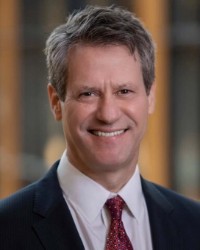
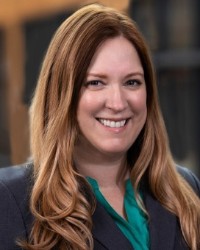
Dykema Gossett PLLC has a nationwide white-collar defence and government investigations practice which represents companies and individuals in government and internal investigations, white-collar criminal defence matters, and civil enforcement litigation. Dykema attorneys have helped many clients prepare for and respond to unannounced government visits, whistle-blowers and government investigations. The team, which includes approximately 20 attorneys firmwide, has secured back-to-back dismissals of federal indictments that made national headlines in 2025. It includes former high-level federal and state prosecutors with more than 100 years of collective government-side experience, including more than 200 trials and 400 appeals. This background gives it firsthand knowledge of how prosecutors at every level construct cases, how federal and state law enforcement agents conduct interviews, and which pressure points matter in negotiations.
Introduction: Michigan’s Enforcement Landscape
Michigan occupies a distinct position in the US white-collar enforcement landscape. Its automotive and manufacturing base, extensive cross-border commerce with Canada, substantial healthcare sector, and federal contracting create a mix of enforcement risks that differs from the country’s principal financial centres. Michigan’s enforcement environment in 2025 and 2026 involves not only an expansion of the type of conduct government authorities are investigating but also a change in who is investigating that conduct and what types of enforcement actions are being used to resolve it.
Resources for criminal white-collar enforcement have tightened as the Department of Justice (DOJ), US Attorney’s Offices and FBI have lost experienced prosecutors and agents to both attrition and a shift in federal priorities toward immigration and drug and violent crime enforcement. Rather than prosecuting less, DOJ has centralised and modernised its fraud capability and leaned on civil enforcement: it created a National Fraud Enforcement Division in April 2026, launched a data-driven FOCUS Initiative to work with whistle-blower “data miners”, and recorded a record USD6.8 billion in False Claims Act (FCA) recoveries in fiscal year 2025 – more than double the prior year’s total.
For Michigan companies, three areas illustrate where this shift matters most. Trade and customs compliance has become a leading source of exposure for the state’s automotive and manufacturing sectors. Healthcare remains the most persistent federal enforcement priority, but increasingly through cases where billing, regulatory compliance, quality of care and government-programme certifications intersect. The FCA is being used well beyond classic false billing to reach certifications made in connection with civil rights, cybersecurity, and customs and pandemic-relief eligibility. Running alongside these substantive trends is an energetic Michigan Attorney General (AG) who has used antitrust, Medicaid, consumer protection and public corruption authority to occupy space the federal government has left. In a number of these Michigan resolutions, involving both federal and state authorities, corporate co-operation and remediation – not just the underlying conduct – shaped the ultimate outcome.
For Michigan businesses, the practical result is an enforcement environment that has shifted from criminal liability toward civil, data-driven and multi-sovereign exposure.
Federal Enforcement Trends Affecting Michigan
A more centralised, data-driven DOJ
DOJ’s April 2026 creation of the National Fraud Enforcement Division formalised a shift toward centralising fraud enforcement and leaning more heavily on data. The Department’s Health Care Fraud Data Fusion Center generated leads behind the 2025 and 2026 National Health Care Fraud Enforcement Actions, and US Customs and Border Protection has expanded its use of AI tools to flag illicit transshipment. That data-driven approach produced one of the Eastern District of Michigan’s largest fraud prosecutions of the year: in May 2026, a Detroit man pleaded guilty to a decade-long, USD16 million Federal Student Aid scheme that used more than 1,200 fictitious “students” enrolled at over 100 schools across 24 states to obtain more than USD10 million in disbursements.
On the civil side, DOJ has developed a formal channel for outside whistle-blowers. On 30 April 2026, the Civil Division launched its FOCUS Initiative to triage complaints from sophisticated “data miners” who identify potential fraud from public data sets. DOJ reports that data miners have filed more than 45% of qui tam complaints since fiscal year 2024, and filings continued to accelerate into 2026. DOJ’s Civil Rights Fraud Initiative extends the same data mining approach into federal contractors’ employment and diversity practices.
A third trend has been DOJ’s emphasis on voluntary self-disclosure, which shifts investigative and remedial work onto companies themselves. Enforcement actions in Michigan – all discussed in the sections that follow – show how co-operation and self-identification of problems have shaped the government’s ultimate response. Taken together, these tools allow DOJ to cover more ground with fewer people, and the FCA, rather than criminal enforcement, has become the primary vehicle through which the government – directly or through private relators – tests corporate conduct involving government funds, contracts or certifications.
Trade, tariff and customs enforcement
Trade and customs enforcement has become one of the most significant white-collar risks for Michigan’s manufacturing and automotive sectors, and the FCA rather than felony charges has been the primary enforcement tool. DOJ’s Trade Fraud Task Force (the “Task Force”), launched with the Department of Homeland Security in August 2025 and including the Eastern District of Michigan among its participating offices, surpassed USD1 billion in civil and criminal recoveries by July 2026. DOJ also created a Global Trade & Commerce Enforcement Section within the Fraud Division to pursue import and trade fraud across the supply chain.
Michigan has produced two of the Task Force’s largest matters. On 18 December 2025, an equipment manufacturing company agreed to pay USD54.4 million to resolve FCA allegations that, from 2015 to 2024, it misclassified tungsten-carbide products, trans-shipped Chinese-origin goods through Taiwan to evade Section 301 duties, and distributed unmarked merchandise. The whistle-blower in that case received approximately USD9.75 million. Weeks earlier, a Michigan electronics manufacturer agreed to pay USD11.8 million to resolve allegations that it evaded anti-dumping and countervailing duties on Chinese extruded-aluminium components used in its electronics products from 2011 to 2023. That case’s whistle-blower received approximately USD2.3 million.
For Michigan manufacturers, importers and distributors, customs compliance is now a significant enforcement risk. Companies should closely review tariff classification, country-of-origin determinations, transshipment arrangements and the representations made by customs brokers and overseas vendors, given that a multi-year classification practice – as both cases discussed above show – can generate significant exposure once identified by a relator with access to import data.
Healthcare fraud: billing, compliance and quality of care converge
Healthcare fraud remains the single largest source of Michigan enforcement activity, and increasingly involves regulatory compliance and quality-of-care issues alongside billing fraud.
On 23 June 2026, the Eastern District of Michigan’s participation in the 2026 National Health Care Fraud Enforcement Action – a nationwide operation charging 455 defendants, including 90 doctors and other licensed professionals, and involving more than USD6.5 billion in alleged loss – produced criminal charges and civil resolutions in six Michigan matters. These included several pharmacy and prescription-drug fraud prosecutions ranging from roughly USD1.9 million to USD5.6 million in alleged loss. Separately, the Eastern District charged the CEO and medical director of a laboratory company, in July 2025, with fraudulently billing more than USD500 million for COVID-19 tests that were never properly performed. The defendants are alleged to have received more than USD50 million in payments.
On the civil side, Michigan providers resolved several notable FCA matters. A Michigan-headquartered physical therapy company that operates roughly 140 clinics in five states agreed in March 2026 to pay USD4.97 million over allegedly mischarged group-therapy sessions. The company self-identified the improper billing after learning of the investigation and implemented additional compliance controls, and its whistle-blower received USD919,356. A Michigan-based health care system agreed to pay USD1.9 million in 2026 for allegedly failing to timely reimburse patients for known overpayments from federal healthcare programmes – a reminder that the FCA reaches a provider’s post-payment conduct, not only its billing decisions. In addition, an Oakland County laboratory company paid USD6.49 million over COVID-test billing, while a drug testing company’s former CEO paid USD150,000 over allegedly falsified drug-test results submitted to Michigan Medicaid.
The FCA has also reached quality of care. In July 2025, the operator of six Detroit-area nursing homes paid USD4.5 million (USD3.42 million federal, USD1.08 million to Michigan) to resolve allegations of chronic understaffing and inadequate infection, fall and pressure-ulcer prevention, and agreed to a five-year Corporate Integrity Agreement with an independent quality monitor. This matter and the FCA settlements above involved both Michigan’s Health Care Fraud Division, which is the state’s federally certified Medicaid Fraud Control Unit, and federal authorities.
Providers should expect scrutiny to increasingly arise from statistical billing-pattern anomalies rather than from traditional whistle-blowers and should ensure they can promptly explain deviations from peer billing norms with contemporaneous documentation of medical necessity, coding, repayment practices and adequacy of care.
Government contracting, grants and pandemic-relief fraud
Government contracting and pandemic-era relief programmes continue to generate significant Michigan enforcement activity, some of which illustrate how co-operation shapes corporate outcomes. Five former executives of a Michigan Department of Transportation contractor were sentenced in November 2025 to prison terms of six to 15 months and ordered to pay USD4.57 million in restitution and USD4.07 million in forfeiture for a scheme that inflated costs and concealed true ownership to preserve the company’s disadvantaged-business-enterprise eligibility. The company itself avoided prosecution through co-operation: DOJ entered a non-prosecution agreement with the company in exchange for a USD1.1 million penalty, enhanced compliance controls and continued disclosure obligations. In April 2026 the Federal Highway Administration separately agreed not to pursue suspension or debarment provided the company submitted to three years of independent monitoring of its Michigan contracts.
Pandemic-relief fraud has continued to be a federal enforcement priority, increasingly through corporate FCA settlements over eligibility certifications. A Michigan automotive dealership group agreed in February 2026 to pay USD1.51 million after certifying Paycheck Protection Program (PPP) eligibility despite exceeding the 500-employee cap once its affiliates were aggregated. A second automotive dealership group and an automotive parts manufacturer resolved similar PPP eligibility allegations for USD1.5 million and USD1.8 million, respectively. On the criminal side, a Michigan man was charged in April 2026 with a USD5 million PPP scheme, and DOJ’s “Heartland Fraud Surge”, a 40-office initiative running from June to September 2026, produced six Michigan defendants and approximately USD8.2 million in alleged losses tied to PPP, disaster-loan and unemployment fraud.
Separately, a former Michigan Unemployment Insurance Agency employee pleaded guilty to a bribery conspiracy involving more than USD2.86 million in fraudulent unemployment payments.
These matters reinforce that certifications made in connection with government contracts, grants and pandemic-relief programmes remain a source of exposure – and that co-operation can impact whether a company faces prosecution and the amount of financial recovery the government seeks.
Civil rights, cybersecurity and federal certifications
DOJ’s Civil Rights Fraud Initiative has extended the FCA into federal contractors’ employment and diversity practices. A technology company paid USD17.08 million in April 2026 – the initiative’s first settlement – over a “diversity modifier” tied to bonus compensation and race- and sex-conscious hiring practices. An accounting firm paid USD21.5 million in a similar resolution in August 2026. Both were framed as false-certification cases: the question was not whether a diversity policy existed, but whether the company’s civil-rights compliance certification was accurate when made.
The same certification-based theory increasingly applies to cybersecurity representations, meaning Michigan companies receiving federal funds should treat every compliance certification as a factual assertion capable of supporting an FCA claim.
Corporate enforcement and voluntary self-disclosure
DOJ’s March 2026 Corporate Enforcement and Voluntary Self-Disclosure Policy (CEP) creates a framework for corporate criminal matters, providing for a declination where a company voluntarily self-discloses, fully co-operates and timely remediates, with no aggravating circumstances present. The instances of co-operation described above show what this looks like in practice: each company avoided the most severe available outcome by identifying and addressing problems before, or immediately upon, being confronted by investigators. Companies should structure internal investigations to reach a defensible understanding of the facts promptly, both to preserve CEP eligibility and to get ahead of parallel civil or state inquiries that may move on a different timeline.
Financial institutions, AML, sanctions and national security
The Bank Secrecy Act, anti-money laundering, sanctions and export-control enforcement remain active in Michigan, with DOJ increasingly emphasising compliance failures that are connected to transnational criminal organisations and national-security concerns. Michigan produced such a case in December 2025, when the FBI and the Eastern District disrupted a cryptocurrency exchange allegedly used since 2017 to launder more than USD70 million in proceeds from ransomware attacks and account takeovers targeting US healthcare organisations and critical infrastructure. The Department’s 2025 Foreign Corrupt Practices Act guidelines direct prosecutors toward bribery that “directly undermines” US national interests. Michigan companies with Canadian operations, foreign subsidiaries, or dual-use technology (ie, technology that can be used for both civilian and military purposes) should note that FCA liability for false export- or sanctions-compliance certifications is now a likely enforcement route.
Michigan Attorney General Enforcement Activity
Antitrust: concert tickets and generic drugs
Antitrust is an area in which state attorneys general have stepped into a space the federal government has de-emphasised. In May 2024, Michigan joined DOJ and roughly 30 other state and district attorneys general in suing two concert ticket sales companies for illegally monopolising the live-concert industry. When DOJ settled in March 2026, Michigan and roughly two dozen other states rejected the deal as inadequate and proceeded to trial without DOJ; on 15 April 2026, in a verdict widely described as a landmark antitrust victory, a jury found the companies liable for monopolising ticketing services and the large-amphitheatre market. A separate bench trial will determine remedies.
Michigan has pursued similar multistate antitrust claims in the pharmaceutical sector. In February 2026, Michigan joined USD17.85 million in settlements with two pharmaceutical companies over alleged generic-drug price-fixing conspiracies, and in August 2026 joined a USD400 million settlement in principle with a third pharmaceutical company over similar allegations. Together, these matters show the Michigan Attorney General pursuing complex multistate corporate antitrust claims.
Medicaid fraud
Michigan’s Health Care Fraud Division, a federally certified Medicaid Fraud Control Unit, has continued to expand its enforcement mandate. In January 2026, Michigan Attorney General Dana Nessel charged the owner and CEO of an autism and behavioural-health provider with nine felony counts of healthcare fraud for allegedly billing for services not rendered. In September 2026, Nessel announced Michigan’s participation, alongside Medicaid Fraud Control Units from ten other states, in a USD384 million national settlement in the US District Court for the Western District of Michigan over alleged manufacturing and quality-control deficiencies at Michigan and Arizona infant-formula plants. Michigan’s share was USD469,890.27.
Consumer protection
In April 2026, Nessel joined 23 other state attorneys general in publicly opposing a Consumer Financial Protection Bureau plan to reduce its supervision staff from 72 employees to one, warning the change would “place more burden on states to enforce consumer protection laws”. At the time, Nessel noted that Michigan’s own consumer protection statute contained “the strictest limitations in the country”, referring to then-existing Michigan Supreme Court precedent narrowing the Michigan Consumer Protection Act’s (MCPA) reach over regulated conduct. On 31 July 2026, however, the Michigan Supreme Court in Attorney General v Eli Lilly and Company (Docket No 165961) overruled that precedent and narrowed the exemption – strengthening the Attorney General’s ability to address conduct that would previously have fallen outside the MCPA.
Michigan has also used its consumer-protection and multistate settlement authority against larger, more sophisticated corporate defendants. In July 2026, Michigan joined a USD45 million, 46-state settlement with a financial services company over deceptive safety claims and inadequate fraud protection on its payment app, receiving USD936,540 and requiring the company to provide round-the-clock customer support and honour fraud-reimbursement obligations. Other 2025 and 2026 multistate recoveries included USD3.25 million from a lease-to-own financer, USD1 million from a membership retailer, Michigan’s roughly USD805,000 share of a nearly USD150 million auto manufacturer’s emissions-defeat-device settlement, and approximately USD436,605 from a DNA testing company’s data-breach settlement.
State grant fraud and public corruption
The Attorney General’s office has also pursued fraud involving state-appropriated funds and public officials, with no federal nexus required. On 6 May 2026, Nessel charged the founder of a business accelerator that received a USD20 million legislative grant with 16 felonies, including conducting a criminal enterprise, forgery and larceny by conversion, for allegedly diverting grant funds to personal expenses and forging invoices to conceal the diversion.
Separately, in an area once primarily the province of federal authorities, the Attorney General charged a former Michigan House Speaker in 2024 with 13 felony counts – including conducting a criminal enterprise, embezzlement from a non-profit, embezzlement by a public officer and conspiracy – arising from his alleged control of a 501(c)(4) social welfare non-profit and two allied Political Action Committees, through which he allegedly converted funds to personal use, sought reimbursement for trips never taken, and profited from subletting an apartment the non-profit had rented for him. Together, these prosecutions show Michigan’s Attorney General treating public and quasi-public fund diversion as a core enforcement priority.
Judicial Developments Affecting Enforcement
Several recent Supreme Court decisions bear on white-collar investigations and prosecutions generally, and on FCA litigation specifically.
In SEC v Jarkesy, 603 U.S. 109 (2024), the court held that SEC anti-fraud claims seeking civil penalties implicate the Seventh Amendment right to a jury trial, continuing to influence the government’s choice between administrative and judicial enforcement mechanisms.
In June 2026, the Court decided Abouammo v United States, 608 U.S. ___ (2026), unanimously holding that a prosecution under the falsification statute, 18 U.S.C. § 1519, must be tried where the defendant falsified the document, not where the investigation occurred – which is relevant for investigations involving Michigan companies with geographically dispersed operations or electronic records. The Court also decided Chatrie v United States, 609 U.S. ___ (2026), holding that law-enforcement access to historical Google Location History constitutes a Fourth Amendment search, significant for any investigation relying on geofence or location data.
Finally, the constitutional challenge to FCA qui tam litigation continued in 2026. On 1 September 2026, the Eleventh Circuit in United States ex rel. Zafirov v Florida Medical Associates, LLC, No 24-13581, rejected an Appointments Clause challenge to the FCA’s qui tam provisions, holding that relators do not occupy a continuing position established by law. The Sixth Circuit, which governs Michigan, previously reached the same conclusion – but given the FCA’s now-central enforcement role, the question is one to continue monitoring, including for the possibility of Supreme Court review.
Practical Implications for Michigan Companies
The 2025 and 2026 developments described above point to several practical lessons for Michigan companies.
First, trade and customs compliance has become one of the most consequential white-collar risks for Michigan’s manufacturing and automotive sectors. The Michigan settlements in this area resolved more than USD66 million in customs-duty allegations reaching back a decade or more and originated from whistle-blowers using import data rather than government audits. Companies should treat tariff classification, country-of-origin and anti-dumping/countervailing-duty compliance as core legal risks.
Second, the FCA is being used well beyond classic false billing claims. The settlements described above in this area all turned on the accuracy of a certification or representation, rather than a claim for services never rendered. Companies should verify the certifications they make to the government – regarding diversity practices, cybersecurity, care quality, programme eligibility, and others – with the same level of scrutiny traditionally reserved for billing compliance.
Third, DOJ’s reduced headcount in white collar and corporate fraud enforcement has been offset by centralisation and data. The National Fraud Enforcement Division, the FOCUS Initiative, and the Health Care Fraud Data Fusion Center allow the government – and, increasingly, private relators using public data – to identify targets that a smaller workforce could not find through traditional referrals alone.
Fourth, healthcare remains Michigan’s most consistent enforcement arena, but the theory of liability has broadened. The settlements described above in this area collectively show that billing accuracy, regulatory compliance, and quality of care are now treated as a single, interconnected compliance obligation under the FCA.
Fifth, co-operation and remediation are increasingly determining outcomes, not merely mitigating factors. Several co-operating companies in Michigan avoided corporate prosecution through non-prosecution agreements or secured resolutions well short of the maximum exposure alleged. DOJ’s Corporate Enforcement Policy formalises this incentive, and Michigan cases show it operating in practice.
Finally, Michigan’s Attorney General has shown both the willingness and capacity to fill space the federal government has left open – participating in a large antitrust verdict without DOJ, pursuing generic-drug antitrust and consumer-protection claims alongside other states, and expanding Medicaid, grant-fraud and public-corruption enforcement. Following the Michigan Supreme Court’s Eli Lilly decision, the Attorney General’s ability to bring these cases is now less constrained than it was even a year ago.
Conclusion
In Michigan’s white-collar enforcement environment in 2025 and 2026, healthcare billing, government contracting and customs compliance remain the areas of greatest exposure, much as in past years, but trade and tariff compliance has emerged as a new priority. The FCA is now being used to test regulatory certifications far beyond classic billing fraud. A leaner, more centralised and data-driven DOJ, an active whistleblower bar, and an assertive Michigan Attorney General now share responsibility for testing that conduct.
In-house counsel and senior management must consider not only whether a compliance programme covers a particular risk area, but which of several possible enforcers – federal criminal or civil, state criminal or civil, or a private relator armed with government data – is most likely to test a specific certification or transaction, and whether early co-operation would change the outcome if it did. That combination of questions, more than any single new rule or initiative, defines white-collar risk management in Michigan.
Dykema Gossett PLLC
39577 Woodward Avenue
Suite 300
Bloomfield Hills, MI 48304
Michigan
USA
+1 248 203 0700
+1 866 219 1641
ntrevino@dykema.com www.dykema.com
Trends and Developments
Authors
Dykema Gossett PLLC has a nationwide white-collar defence and government investigations practice which represents companies and individuals in government and internal investigations, white-collar criminal defence matters, and civil enforcement litigation. Dykema attorneys have helped many clients prepare for and respond to unannounced government visits, whistle-blowers and government investigations. The team, which includes approximately 20 attorneys firmwide, has secured back-to-back dismissals of federal indictments that made national headlines in 2025. It includes former high-level federal and state prosecutors with more than 100 years of collective government-side experience, including more than 200 trials and 400 appeals. This background gives it firsthand knowledge of how prosecutors at every level construct cases, how federal and state law enforcement agents conduct interviews, and which pressure points matter in negotiations.