Collective Redress & Class Actions 2025
Latin America-wide
Trends and Developments
Authors
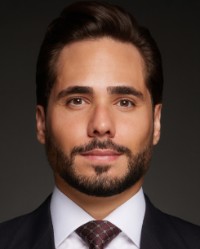




Malta Advogados Malta Advogados is a Brazilian law firm headquartered in Brasília, with offices in São Paulo, Curitiba and Teresina. It has a strong reputation in high-stakes constitutional and administrative litigation before Brazil’s superior courts, oversight bodies and key regulatory agencies. It is particularly noted for representing leading public sector associations, including those for federal and state judges and federal experts, in collective proceedings. The firm handles reputationally sensitive public civil actions and other collective proceedings involving administrative misconduct, constitutional law and human rights. Its practice is distinguished by an integrated approach, blending courtroom litigation with deep compliance and governance advisory. This model enables the firm to assist clients in managing systemic risks, including defending public officials and private companies in administrative misconduct and disciplinary proceedings, and advising on institutional compliance and ethics. Highly regarded for its strategic presence, the firm is a trusted partner for complex public law litigation, regulatory defence and corporate accountability matters.
The Steady Rise of Collective Action in Latin America
The redress of collective rights and interests in Latin America has entered a phase of heightened centrality and significant repercussions. What was once essentially a set of tools to ensure access to justice in proceedings involving multiple parties has evolved into a “structuring axis” of the regional legal ecosystem, endowed with high political and social sensitivity.
These tools play a fundamental role as vehicles for guaranteeing the exercise and redress of diffuse and homogeneous individual rights, which correspond to interests belonging to a broad group of people or arising from a common origin. However, unlike other models, the region has developed a “hybrid model”, characterised by the fact that, in several countries, collective representation is not limited to the actions of private lawyers representing multiple parties. It is more than that: the arrangement allows for broad active legitimacy, so that public entities (such as the Public Prosecutor’s Office), and also associations, trade unions and other organisations representing civil society, are able to initiate actions on behalf of the community they represent.
This model reflects the transition from a civil process marked by an individualistic and bipartite logic to a true constitutional model of process focused on the effective defence of transindividual rights, maximising access to justice and the structural protection of collective interests.
Instead of a single, centralised code, many countries, such as Brazil, are currently structured around a “collective microsystem”: several laws that interact with each other. Among these, the Public Civil Action Law (Lei da Ação Civil Pública; LACP) and the Consumer Protection Code (Código de Defesa do Consumidor; CDC) are particularly relevant, as their provisions establish a continuous normative dialogue.
This legal arrangement, built in a complementary manner over the last few decades, gives the judiciary a flexible and adaptable repertoire, being capable of responding proactively to contemporary challenges that emerge from complex litigation with significant political and social repercussions.
In the Brazilian context, the digital economy has become one of the biggest sources of collective dispute, driven both by the implementation of robust data protection legislation and by a new form of responsibility for digital platforms.
Laws such as Brazil’s General Data Protection Law (Lei Geral de Proteção de Dados Pessoais; LGDP) have turned incidents involving personal data into a massive source of collective disputes, seeking significant collective moral damages resulting from data breaches, improper sharing of information and cybersecurity failures.
At the same time, the liability of social media platforms is being redefined. An emblematic milestone occurred in Brazil when the Supreme Federal Court (Supremo Tribunal Federal; STF), in June 2025, redefined the liability regime for digital platforms.
The Court removed the rule that protected platforms from civil liability for third-party content, except after a court order, and established a new form of liability based on “systemic failure” in serious cases, increasing the exposure of platforms to potential legal disputes.
As a result, the Latin American digital economy now operates in an environment of greater accountability, in which collective protection is affirmed as a central tool for addressing technological risks and imposing higher standards of protection and digital governance.
Another recent example of this expansive application in Latin America is environmental and indigenous peoples’ rights. In Colombia, the Constitutional Court reviewed a lawsuit filed by 20 Awá indigenous reserves against companies, including Cenit SAS and Ecopetrol AS, due to pollution caused by successive oil spills in the Transandino Pipeline, a project connecting Colombia to the Pacific.
The spills compromised access to drinking water, territorial integrity and various fundamental rights of the community, such as to health, a dignified life, cultural identity, food and sovereignty. Given this scenario, the Court found that there were no adequate environmental management instruments, which made it impossible to assess the impacts on local infrastructure and contributed to the worsening of the armed conflict in the region.
As a result, the Court recognised the failure of local state agencies, such as the Ministry of the Environment, the National Environmental Licensing Authority and the Ministry of Defense, to prevent, mitigate and repair the identified environmental and humanitarian damage.
As a result, it ordered the suspension of operations on the pipeline until safety measures were implemented, drinking water was supplied, dialogue forums were created, effective environmental restoration took place, and a health plan for the affected communities was adopted.
In this context, the need for regulatory changes and adjustments to public policies related to environmental licensing was highlighted, especially in contexts marked by armed conflict.
It is in this same environment of seeking theoretical and pragmatic maturity that Brazil has taken an additional and unique step: the drafting of a Structural Procedure Code, an initiative that seeks to systematise, bring rationality and offer clearer parameters for conducting highly complex litigation, characterised by the need for gradual interventions, continuous monitoring and institutional rearrangements. Although the proposal is still under debate and development, its emergence already reveals a significant change in the way the country (and, consequently, its borders) understands and organises structural jurisdiction, reflecting the recognition that the effective protection of collective rights requires specific instruments of judicial governance.
Apart from this initiative – the consolidation of which could usher in a new level of institutionalisation of collective protection – the current landscape shows that Latin America has consolidated a model for the defence of collective rights that is pluralistic, institutionally robust and jurisprudentially dynamic, capable of responding, albeit with reservations, to the structural tensions that traverse the region.
The articulation between specific laws, an often-expanded active legitimacy, and judicial action sensitive to the collective and structural dimensions of conflicts has allowed the judiciary to take on an important role in restoring rights, correcting state omissions and constructing solutions aimed not only at repairing damage but also at transforming the conditions that produce it.
Overview of Collective Protection in Latin America
The Latin American landscape of collective disputes is marked by significant regulatory diversity, reflecting noticeably different profiles of action between jurisdictions, which requires compliance and defence strategies tailored to the specific regulatory, institutional and sociopolitical characteristics of each country. It is a pluralistic environment in which diverse models coexist, interact and evolve, albeit in a non-linear fashion. Below, some examples that illustrate the most important aspects of this diversity are analysed.
In Brazil, for example, the collective model is structured by an opt-out mechanism, according to which all potentially affected individuals can join the represented collective. Added to this is the leading role of public institutions, such as the Public Prosecutor’s Office, which is among the main entities authorised to propose collective actions, giving the system a markedly institutional vocation focused on protecting highly relevant social interests.
In Chile, on the other hand, the collective model is strongly focused on consumer protection, with the National Consumer Service (Servicio Nacional del Consumidor; Sernac) being one of the main actors in filing collective lawsuits. Chilean law grants broad rights to everyone in decisions rendered in such litigation, ensuring uniformity and comprehensiveness in the compensation for damages. At the same time, it gives individual consumers the possibility of “reserving rights”, a mechanism that allows them to choose to litigate separately if they believe it is more appropriate to their interests.
In Argentina, the class action system has a particularly unique structure. Although part of a civil law tradition, the class action model was largely built through case law. The cornerstone of this development was the Supreme Court of Justice (Superior Tribunal de Justiça; STJ) decision in the landmark Halabi case, ruled on in early 2009.
In this precedent, the Court established that the provisions of the 1994 Constitutional Reform must be operative and applied by the courts, even in the absence of specific procedural legislation. The Halabi case was also fundamental in that it set forth the minimum constitutional requirements of due process for the validity of class actions, establishing essential criteria such as:
- the need for a precise definition of the affected group;
- the guarantee of an adequate representative; and
- the possibility for those represented to exercise their right to opt out.
In Colombia, the system is distinguished by robust constitutional tools, including “Popular Actions”, which give any citizen the possibility of seeking the protection of collective rights, such as to the environment, public heritage and administrative morality. The dispute is often marked by its preventive nature, allowing the judiciary to determine the suspension of infrastructure or extractive projects, such as the aforementioned decision involving the Awá communities and the successive oil spills in the Transandino pipeline.
In Peru, the legal framework for class actions is still under development, and there is no formalised class action regime similar to those in other Latin American jurisdictions. The existing instruments focus on the protection of diffuse and collective interests, mainly in environmental and consumer issues, in which the National Institute for the Defense of Competition and Protection of Intellectual Property (Instituto Nacional de Defensa de la Competencia y de la Protección de la Propiedad Intelectual; Indecopi) plays an important role in the administrative sphere. In practice, collective litigation emerges in two main ways: through direct social and environmental conflicts, often led by social movements, or through transnational litigation aimed at holding multinational companies accountable.
At the same time, the domestic environment for collective legal disputes in Peru has become more restrictive. In April 2025, Law No 32,301 modified the structure and powers of the Peruvian Agency for International Cooperation (Agencia Peruana de Cooperación Internacional; APCI), requiring prior approval for civil society organisations (NGOs) to use international co-operation funds. The Inter-American Commission on Human Rights (IACHR) expressed concern about the measure, particularly because it establishes sanctions for the possible misuse of funds to finance legal actions against the Peruvian state, which, according to the IACHR, directly affects victims’ right of access to justice and creates barriers to the work of organisations that have historically played a central role in defending collective rights and in strategic litigation on issues of high social sensitivity.
Mexico, in contrast to other regional approaches, has taken a more cautious path in shaping its class action system. The country’s federal legislation, regulated in the Federal Code of Civil Procedure (FCCP), established a formal system, but one marked by a procedural option that distinguishes it significantly: the opt-in requirement. Under this mechanism, also known as voluntary representation, only individuals who expressly join the class action will be bound by the final judgment. This system tends to limit the potential size of claims and, consequently, the financial impact associated with them, making the class action litigation environment more restrained and less expansive than that observed in other Latin American jurisdictions.
The standing to bring a class action in Mexico is also restricted. The system confers standing on a specific set of entities, consisting of government agencies such as the Federal Consumer Protection Agency (Procuraduría Federal del Consumidor; Profeco), the Federal Attorney for Environmental Protection (Procuraduría Federal de Protección al Ambiente; Profepa), the National Commission for the Protection and Defense of Financial Services Users (Comisión Nacional para la Protección y Defensa de los Usuarios de Servicios Financieros; Consusef) and the Federal Economic Competition Commission (Comisión Federal de Competencia Económica; Cofece), as well as previously certified civil associations and groups of at least 30 individuals – a requirement that will be reduced to 15 with the entry into force of the new National Code.
Furthermore, although class actions in Mexico are applicable for the protection of diffuse, collective and homogeneous individual rights, they are limited to three areas: consumer relations, the environment and competition law. In practice, one of the most significant areas of activity has been concentrated precisely in the competition (antitrust) sphere, where Cofece has brought class actions seeking compensation for damages resulting from monopolistic practices – a topic analysed in greater depth below.
In short, despite the differences between national models, the examples show that collective protection has gained centrality throughout the region, establishing itself as an essential tool for protecting rights and addressing structural conflicts in Latin America.
The New Frontier of Risk: ESG and Climate Litigation
One of the most transformative trends in Latin America is the rise of litigation focused on ESG issues. Class actions have become the primary tool for seeking corporate accountability for environmental damage, human rights violations in supply chains and structural governance failures.
Latin America has become a global epicentre for climate litigation and actions aimed at a just transition, with companies in the energy, mining and agribusiness sectors facing unprecedented and growing judicial and social scrutiny. The goal of these class actions goes beyond compensation: they aim to force structural changes, with institutional adjustments and changes in business models.
This phenomenon is in line with what has been called “heterodox stakeholderism”, marked by the innovative use of legal tools by countries in the Global South to impose protections on broad stakeholders, such as the environment, local communities, workers and vulnerable groups. It is an approach that has been promoted to induce higher standards of corporate conduct and expand socio-environmental governance beyond the traditional limits of classic corporate law.
It has been observed that corporate behaviour tends to directly reflect the institutional capacity of each country. In the mining sector, for example, companies tend to adopt a more co-operative and dialogue-oriented stance in contexts where judicial and regulatory institutions are solid and predictable. In contrast, in environments marked by weak institutions, it is possible to identify greater resistance (or indifference) to community and socio-environmental demands, which often intensifies social tensions and increases the risk of collective conflicts.
For international companies, risks related to ESG factors have increased significantly. Recent EU regulations, such as the Corporate Sustainability Due Diligence Directive (CSDDD), have imposed due diligence obligations on global supply chains, requiring continuous monitoring of environmental, social and human rights impacts. This movement, however, has brought a new type of exposure, as sustainability reports disclosed by the companies themselves have been used by authorities and plaintiffs as central elements in class actions related to allegations of greenwashing, reinforcing the role of corporate discourse as evidence and amplifying the risks arising from inconsistencies between narrative and business practice.
It is clear that the rise of ESG litigation in Latin America reveals a scenario in which collective protection takes on strategic centrality, both for corporate accountability and for inducing structural changes. This is a movement that reinforces the convergence between socio-environmental governance, human rights and corporate accountability, consolidating the region as one of the most dynamic and observed hubs of contemporary global litigation.
Multilayered Accountability: Private Enforcement, Competition and Transnational Litigation
A growing risk trend in Latin America is the use of class actions as a private enforcement mechanism following administrative sanctions, creating a scenario of multiple fronts of accountability for companies.
The most significant development has occurred in the competition (antitrust) sphere: while historically, violations of competition rules were primarily dealt with in the administrative sphere, today it is established practice that condemnatory decisions by regulatory agencies serve as the basis for subsequent class actions (follow-on actions). The company’s exposure, therefore, unfolds in two layers: the administrative sanction and the subsequent collective compensation for the same fact.
In this regard, violations of competition rules, such as the formation of cartels, are generally dealt with primarily by administrative authorities, which impose fines and other regulatory measures. In recent years, however, there has been a growth in initiatives aimed at using class actions to seek civil compensation for these practices. Even so, this development does not occur automatically: in several Latin American countries, administrative condemnation is not sufficient, on its own, to generate the right to compensation.
A comparative study shows that Latin American civil courts, similar to what was observed in Europe before the 2014 Directive, continue to require full compliance with the requirements of ordinary civil procedure, especially with regard to proof of damage and causation.
An illustrative example is the case of the so-called cartel de los cuadernos in Colombia. After the investigation and administrative sanction conducted by the Superintendency of Industry and Commerce (SIC), a lawsuit was filed on behalf of consumers to claim compensation for damages suffered. The subsequent class action, however, was rejected on the grounds that success in the administrative sphere does not replace the need to prove, in the ordinary course of civil proceedings, actual damage and a causal link.
Furthermore, in Brazil, this logic of private enforcement also extends to the capital markets. In October 2025, the Chamber of Deputies approved a bill (still pending review by the Senate) that creates a class action mechanism for aggrieved investors, allowing them to sue administrators and controlling shareholders directly for corporate wrongdoing, with the aim of reducing companies’ “funding costs” and strengthening accountability in the corporate environment.
This scenario intensifies exponentially when damages cross borders. The reality of transnational litigation is demonstrated by high-profile cases involving Latin American companies. For multinational companies operating in the region, this creates immense procedural and strategic complexity, as there is a need to manage not only multiple defences under different laws, but also the uncertainty of how a collective judgment rendered in one country will be recognised and enforced in another, making risk management and contingency planning a global challenge.
The expansion of private enforcement and transnational litigation highlights an increasingly complex accountability environment in which companies face multiple risk fronts and growing interaction between administrative, civil and international spheres. This movement reinforces the need for integrated legal strategies and preventive and more robust corporate governance to deal with the new regulatory reality in the region.
Corporate Strategies for Mitigating Risks in Class Actions
For companies navigating this increasingly complex landscape, managing the risk of class actions has become a core corporate governance responsibility, requiring deep integration between legal, compliance and sustainability functions.
Compliance failures, whether in data privacy, environmental standards or ESG disclosure obligations, have become one of the main sources of high-impact class action litigation – so much so that robust integrity programmes are no longer just preventive measures against administrative sanctions, but have become essential strategic solutions, serving as the first line of defence to demonstrate diligence, good faith and proper governance in court.
On the other hand, given the growing workload of the judiciary, there is a significant movement towards alternative dispute resolution (ADR) mechanisms as an institutional response to increase efficiency and reduce hyper-judicialisation.
During the First Conference on Best Practices in Collective Remedies, the then-President of the STF, Justice Luís Roberto Barroso, emphasised that “consensual decisions” are essential to address the more than 227,000 collective actions currently pending. He noted that collective proceedings bring rationality to the system, but their effectiveness depends on investments in de-judicialisation, structured negotiation and consensual solutions.
These initiatives, combined with robust compliance programmes, now constitute the main structural responses for mitigating risk, strengthening governance and ensuring greater predictability in an increasingly sophisticated collective litigation environment.
Conclusion: Outlook for 2025–26
The Latin American landscape of class actions is moving towards greater institutional consolidation, albeit marked by significant asymmetries between countries. The growing integration of environmental, competition, digital, corporate governance and human rights issues demonstrates not only an expansion in the scope of class disputes, but also a qualitative leap in the sophistication of these litigations across the region.
At the same time, the densification of transnational connections – whether climatic, commercial, corporate or digital – reaffirms that Latin American collective conflicts now operate in a globalised legal ecosystem, in which domestic decisions can have significant extraterritorial repercussions.
For companies, investors and economic agents operating on the continent, the scenario requires a preventive, integrated and multilevel approach to compliance capable of anticipating regulatory, reputational and legal risks in different jurisdictions.
The prevailing trend points to an intensification of ESG litigation, the expansion of private enforcement, the strengthening of class actions involving digital law and the progressive consolidation of consensual dispute resolution mechanisms – elements that, taken together, define a scenario in which collective protection asserts itself as the central axis of accountability and governance in Latin America.
Malta Advogados
SHN QD 1 BL A, 2º andar
Edifício Le Quartier Hotel & Bureau
Brasília/DF
Brazil
+55 061 3033 6600
+55 061 3033 6600
contato@maltaadvogados.com www.maltaadvogados.com
Trends and Developments
Authors
Malta Advogados Malta Advogados is a Brazilian law firm headquartered in Brasília, with offices in São Paulo, Curitiba and Teresina. It has a strong reputation in high-stakes constitutional and administrative litigation before Brazil’s superior courts, oversight bodies and key regulatory agencies. It is particularly noted for representing leading public sector associations, including those for federal and state judges and federal experts, in collective proceedings. The firm handles reputationally sensitive public civil actions and other collective proceedings involving administrative misconduct, constitutional law and human rights. Its practice is distinguished by an integrated approach, blending courtroom litigation with deep compliance and governance advisory. This model enables the firm to assist clients in managing systemic risks, including defending public officials and private companies in administrative misconduct and disciplinary proceedings, and advising on institutional compliance and ethics. Highly regarded for its strategic presence, the firm is a trusted partner for complex public law litigation, regulatory defence and corporate accountability matters.
