Real Estate 2026 Comparisons
Contributed By Rajah & Tann Asia
Law and Practice
Authors


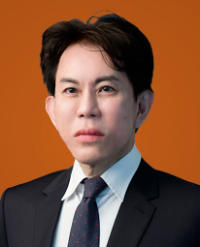



Rajah & Tann Asia was established in 2014 and is a leading full-service legal network in South-East Asia, comprising top-tier law firms across the region. With over 1,000 fee earners, the network is recognised for delivering seamless, high-quality legal advice on complex, multi-jurisdictional matters. Its real estate practice is regularly instructed by prominent real estate developers, property fund managers, corporates, investment platforms, trusts and REITs on some of the region’s most significant and sophisticated property transactions. The practice combines deep local market insight with strong regional co-ordination to support cross-border real estate strategies, and its capabilities span the entire asset life cycle, including acquisitions and disposals, development and redevelopment projects, joint ventures, structured investments and portfolio transactions across residential, commercial, hospitality, industrial and mixed-use assets. The lawyers at Rajah & Tann Asia are frequently involved in landmark transactions and large-scale projects, delivering commercially astute, execution-focused advice across the region.
1. General
1.1 Main Sources of Law
Singapore’s real estate law is primarily statute based, underpinned by a comprehensive land registration and planning framework. The Land Titles Act establishes a Torrens-style registration system under which legal title and registrable interests in land are created and perfected by registration, providing a high degree of certainty and reliability for property transactions. Land use and development control are governed by the Planning Act, administered through the Urban Redevelopment Authority’s statutory Master Plan zoning regime.
Property transactions are also influenced by the Conveyancing and Law of Property Act, which continues to apply to conveyancing matters not displaced by the Land Titles Act, including implied covenants in transfers for value unless excluded by agreement. Transaction costs and structuring considerations are shaped by the Stamp Duties Act, which imposes stamp duty on asset and share transfers and contains targeted reliefs and anti-avoidance provisions. Foreign ownership of certain categories of residential property is regulated under the Residential Property Act, while strata subdivision, management and collective sales are governed by the Land Titles (Strata) Act and the Building Maintenance and Strata Management Act.
These statutory regimes operate alongside common law and equitable principles developed by the Singapore courts, which generally take a commercially sensible approach in resolving real estate disputes.
1.2 Main Market Trends and Deals
Over the past 12 months, Singapore has continued to attract cross-border capital into stabilised core assets and platform-style acquisitions, supported by an efficient transaction ecosystem and widely used holding structures. International investors increasingly co-ordinate South-East Asia real estate strategies from Singapore, reflecting its regulatory predictability, depth of professional infrastructure and strong rule-of-law framework. This has reinforced the use of Singapore incorporated holding and acquisition vehicles in cross-border portfolio and platform transactions.
Private capital, including family offices and privately managed investment platforms, has become a more prominent feature of deal flow. This has complemented continued institutional participation by REITs, private equity sponsors and global asset managers. Transaction structures have increasingly favoured share and platform deals over direct asset acquisitions, driven by stamp duty efficiency, portfolio scale considerations and execution certainty.
Investor interest has continued to broaden beyond traditional office and retail assets. Digital infrastructure has remained active, with new capacity governed through a calibrated application framework focused on sustainability outcomes.
The industrial and logistics sector has also shown relative resilience, underpinned by third-party logistics demand, e-commerce linked occupiers and supply chain reconfiguration trends. At the same time, higher financing costs have sharpened underwriting discipline, with greater focus on asset quality, tenant strength, lease tenure and income durability.
Despite a higher interest rate environment, Singapore’s monetary framework and deep banking market have continued to support transaction activity, particularly for core and core plus assets. Deal execution has also become more digitalised, with electronic transaction management and data-driven diligence now standard features of institutional transactions. Overall, the market has favoured scale, operational resilience and assets aligned with long-term structural demand, rather than purely cyclical plays.
Headline transactions in 2025 and 2026 reflect this broader trend, including retail asset sales, Grade A office divestments, and the structuring of industrial portfolio and data centre platform investments.
1.3 Proposals for Reform
A number of regulatory developments implemented or announced in 2025 and 2026 are relevant to real estate investors and developers in Singapore, particularly in how assets are priced, and how due diligence is carried out and managed post acquisition.
Industrial Sector
In the industrial sector, enhancements to the Jurong Town Corporation (JTC)’s lease framework are intended to improve tenure certainty and renewal flexibility. These include adjustments to lease commencement mechanics for new developments and the introduction of earlier renewal windows and flexible lease extension options for eligible lessees. These changes are commercially significant for industrial, logistics and data centre assets, where remaining lease tenure is a critical underwriting factor. JTC has also issued a circular indicating that it would consider allowing mortgagees to exercise their power of sale within the assignment levy period without imposing a levy (subject to conditions).
Sustainability and Building Performance
Sustainability and building performance have also moved further into focus. Regulatory attention on energy performance has increased, with a stronger emphasis on audits, disclosure and retrofit planning for certain building types. This has implications for asset capital expenditure planning, compliance costs and transaction diligence, particularly for older commercial and industrial properties.
Strata Sector
In the strata sector, the government has indicated an ongoing review of management corporation frameworks, including proposals to enhance transparency around sinking fund adequacy for ageing developments. If implemented, these measures would affect transaction diligence and pricing assumptions for strata titled assets.
Retail Leasing
Retail leasing practices have also evolved following the implementation of the Lease Agreements for Retail Premises Act, which has become embedded in market practice for qualifying retail leases.
Enforcement of AML and Conveyancing Controls
Separately, heightened enforcement focus on anti-money laundering and conveyancing controls has reinforced the importance of robust transaction processes and documentation. Collectively, these reforms signal a continued emphasis on sustainability, transparency and execution discipline within Singapore’s real estate market.
2. Sale and Purchase
2.1 Categories of Property Rights
Land in Singapore is held under a system of tenure rather than absolute ownership. The principal categories of property interests encountered in commercial transactions are freehold estates, statutory grants in perpetuity and leasehold estates for fixed terms. Leasehold interests are common, particularly for state land and industrial properties, with unexpired lease tenure being a key underwriting consideration for investors and lenders.
For subdivided developments, Singapore recognises strata titles under which an owner holds title to an individual lot together with an undivided share in the common property. In addition to estates in land, registrable interests and encumbrances such as easements, restrictive covenants, mortgages and charges may subsist over property and are reflected on the land register.
Singapore’s Torrens-based registration system means that acquisition of title by adverse possession is generally incompatible with registered land. As a result, transactional focus is typically on registered title, lease tenure, planning compliance and encumbrance profile rather than historical possession risks.
2.2 Laws Applicable to Transfer of Title
Land Titles Act
Transfers and other dealings in registered land are governed primarily by the Land Titles Act, which establishes the land registration system administered by the Singapore Land Authority. Registration is mandatory to effect a transfer of legal title or registrable interest, and instruments must be duly executed, stamped and lodged for registration.
The Conveyancing and Law of Property Act and Stamp Duties Act
The Conveyancing and Law of Property Act continues to apply to conveyancing matters not displaced by the Land Titles Act, including implied covenants in transfers for value, unless excluded or modified by agreement. Stamp duty on conveyances and share transfers is imposed under the Stamp Duties Act and is a central consideration in transaction structuring.
Additional Statutory Overlays
Certain asset classes are subject to additional statutory overlays. Foreign ownership of specified residential property is regulated under the Residential Property Act. Strata subdivision and collective sales are governed by the Land Titles (Strata) Act, while industrial properties held under JTC leases are subject to lease-based approval and compliance requirements that materially affect transfer mechanics and deal structuring.
2.3 Effecting Lawful and Proper Transfer of Title
A lawful transfer of real estate in Singapore is effected by executing the prescribed instrument of transfer, paying the applicable stamp duty and registering the instrument with the Singapore Land Authority. Legal title does not pass on exchange of contracts; it passes upon registration of the transfer.
Singapore operates a fully electronic land registration system, and dealings such as transfers, mortgages and charges are lodged digitally. Registration is constitutive of title rather than merely evidential, and the registered proprietor holds indefeasible title subject only to limited statutory exceptions.
Title insurance is not a standard feature of Singapore real estate transactions, reflecting the robustness of the registration system and market reliance on register searches and legal due diligence. Transactional risk is instead managed through diligence, contractual allocation and, in some institutional deals, transaction risk insurance.
2.4 Real Estate Due Diligence
Due diligence in Singapore real estate transactions typically begins with title investigations against the land register to confirm ownership, encumbrances, caveats and restrictions on transfer. Planning searches are conducted to verify zoning, permitted use and development intensity, alongside checks on building approvals and regulatory compliance.
In institutional transactions, particularly those structured as share or platform deals, due diligence extends well beyond the property itself. Reviews commonly cover corporate structure, financing arrangements, tax position, material contracts, regulatory compliance and change of control implications. For industrial assets, compliance with JTC lease conditions and approved use restrictions is a critical diligence focus.
Vendor due diligence has become increasingly common in competitive sale processes and portfolio transactions; this is typically on a non-reliance basis. This approach can streamline execution, reduce duplication and provide greater certainty of scope, particularly for cross-border bidders operating under compressed timelines.
2.5 Typical Representations and Warranties
In direct asset sales, seller warranties are typically limited in scope and heavily qualified by disclosure. They commonly cover title, absence of undisclosed encumbrances, compliance with planning approvals and the absence of outstanding regulatory notices. Statutory implied covenants under the Conveyancing and Law of Property Act may apply but are frequently excluded or modified by agreement.
In contrast, transactions structured as share sales of property holding entities involve broader warranty packages, covering corporate matters, financial statements, tax compliance, material contracts and regulatory issues. Liability is usually subject to negotiated caps, baskets and survival periods, reflecting market practice for institutional transactions. Depending on the seller profile, fund sellers typically require limited recourse to warranties post closing.
Warranty and indemnity insurance is widely used in Singapore for private equity and fund exits, allowing sellers to achieve a cleaner exit while providing buyers with recourse to an insurer rather than the seller. The availability of W&I insurance has reinforced the trend towards share and platform transactions for large-scale real estate deals.
2.6 Important Areas of Law for Investors
Investors acquiring real estate in Singapore typically focus on a small number of legal areas that have a direct impact on pricing, execution certainty and post-completion risk. Stamp duty is a central consideration, particularly when choosing between an asset acquisition and a share or platform transaction, given the materially different duty outcomes that can arise. Foreign ownership restrictions are generally limited to certain categories of residential property but remain relevant at the structuring stage.
Planning non-compliance and lease breaches can trigger enforcement and rectification requirements that a buyer may have to address post completion, particularly where the buyer becomes the owner or occupier. For industrial assets, compliance with JTC lease conditions on use, subletting and control changes is a recurring diligence and structuring issue. Investors must also factor in anti-money laundering and customer due diligence requirements, which can affect transaction timelines, and where applicable, sector-specific regulatory screening for assets connected to designated critical infrastructure or services.
2.7 Soil Pollution or Environmental Contamination
Singapore does not have a single, US-style “contaminated land” statute. Environmental obligations are largely enforced through the Environmental Protection and Management Act (EPMA) and sector-specific requirements; regulators can require clean-up or remedial measures depending on the facts, and compliance obligations may fall on the person responsible and/or the occupier.
Environmental regulation instead focuses on preventing pollution and addressing contamination through sector-specific legislation and enforcement against occupiers of premises.
In practice, the principle of caveat emptor applies to commercial real estate transactions. Buyers therefore rely on environmental due diligence, specialist technical reports and contractual allocation of risk rather than statutory warranties. This is particularly relevant for industrial and logistics assets where historical activities may give rise to contamination risk. A buyer that becomes the occupier of contaminated land may face regulatory obligations even if the contamination pre-dates acquisition, underscoring the importance of early environmental assessment and appropriate contractual protections.
2.8 Permitted Uses of Real Estate Under Zoning or Planning Law
Permitted use and development potential are determined primarily by reference to the Urban Redevelopment Authority’s statutory Master Plan, which specifies zoning, use groups and development intensity for each parcel of land. Buyers typically confirm permitted use through planning searches and review of existing planning permissions, approved plans and any conditions attached to the property.
For assets with redevelopment or value-add potential, understanding the existing development baseline is critical. A proposed change of use or increase in gross floor area may trigger development charges payable to the state, which can materially affect transaction economics. Development agreements with public authorities commonly arise in the context of Government Land Sales (GLS) sites or large-scale integrated developments, where detailed development conditions are imposed and bind successors in title.
2.9 Condemnation, Expropriation or Compulsory Purchase
The Singapore government has statutory powers under the Land Acquisition Act to compulsorily acquire land for public purposes. Where land is acquired, compensation is assessed by the relevant authority based on prescribed valuation principles, and affected owners have access to a statutory appeal mechanism. Appeals against the Collector’s award may be brought to the Appeals Board (Land Acquisition) under the Land Acquisition Act, subject to prescribed timelines and procedures
Compulsory acquisition is a recognised feature of Singapore’s development landscape, particularly for infrastructure and public projects. From a transactional perspective, compulsory acquisition risk is generally treated as a background sovereign risk rather than a deal-specific concern, and is typically addressed through standard contractual provisions rather than bespoke structuring.
2.10 Taxes Applicable to a Transaction
Tax considerations play a significant role in structuring Singapore real estate transactions. Direct asset acquisitions attract buyer’s stamp duty on the transfer of immovable property, while transfers of shares in Singapore incorporated companies are subject to share transfer duty at a significantly lower rate. As a result, institutional transactions involving commercial or industrial assets are frequently structured as share or platform deals rather than asset sales.
Where residential property is involved, additional conveyance duties may apply to share acquisitions of property holding entities, including on changes of control or aggregated acquisitions over prescribed thresholds. These rules are technical and can result in substantial duty exposure if not identified early.
By way of headline rates, buyer’s stamp duty (BSD) on non-residential property is tiered up to 5% (and residential BSD is higher), while stamp duty on share transfers is 0.2% (as a headline rate) of the higher of consideration or value.
Stamp duty reliefs are available for qualifying intra-group restructurings, subject to conditions and anti-avoidance provisions.
From a market perspective, early tax and structuring advice is critical. The choice between asset and share structures, the sequencing of acquisitions and the availability of reliefs can have a material impact on transaction pricing and viability.
2.11 Legal Restrictions on Foreign Investors
Foreign investors generally face no restrictions when acquiring commercial and industrial real estate in Singapore. The primary statutory restriction relates to the acquisition of certain categories of residential property, particularly landed housing, which generally requires prior government approval.
Industrial properties held under JTC leases are subject to lease-based approval requirements, including restrictions on assignment, subletting and changes in ownership or control of the lessee. In addition, transactions involving assets or entities connected to designated critical sectors may trigger regulatory screening or notification obligations under Singapore’s investment control framework. These considerations are typically addressed as part of pre-signing diligence and structuring rather than treated as post-completion issues.
3. Real Estate Finance
3.1 Financing Acquisitions of Commercial Real Estate
Acquisitions of commercial real estate in Singapore are predominantly financed through senior secured bank debt provided by local and international banks. The major domestic banks remain active lenders, complemented by a wide range of international banks with Singapore branches. Loan-to-value ratios vary by asset class and asset quality, with shorter remaining lease tenure typically resulting in tighter leverage parameters.
For larger portfolio, platform or data centre transactions, financing structures are increasingly layered. Club loans and syndicated facilities are common, and mezzanine financing, preferred equity and other structured credit solutions are used to supplement senior debt where leverage or covenant constraints apply. Private credit funds managed from Singapore have become more visible participants in this segment.
REIT acquisitions are typically financed through a combination of bank debt and equity issuance, subject to regulatory leverage limits. Sustainability linked and green financing structures have also gained traction, particularly for industrial, logistics and data centre assets, reflecting both regulatory policy direction and investor ESG requirements.
3.2 Typical Security Created by Commercial Investors
The core security for real estate financing in Singapore is a registered mortgage over the property under the Land Titles Act, which confers statutory enforcement rights including a power of sale. For leasehold properties, including industrial assets held under JTC leases, the mortgagee’s rights are subject to the terms of the head lease and any required government consents.
In addition to the property mortgage, lenders typically take a debenture or charge over the borrower’s assets, assignments of rental income and material contracts, security over bank accounts and charges over shares in the borrowing entity or its holding companies. Cross-collateralisation and cross-guarantees are common in group or portfolio financings.
The security package is structured to align with the transaction structure and asset profile, with particular attention to lease restrictions, control change provisions and insolvency priority considerations.
3.3 Restrictions on Granting Security Over Real Estate to Foreign Lenders
Outside of practical concerns, there are generally no Singapore law restrictions on granting mortgages or other security over Singapore real estate in favour of foreign lenders. A foreign lender may take a registered mortgage under the Land Titles Act in the same manner as a domestic lender, and enforcement rights are not restricted solely because the mortgagee is foreign. Repayments to foreign lenders are generally permitted, although parties typically take tax (including potential withholding tax on interest, subject to treaty relief) and any sector-specific approvals that may apply to the underlying asset (eg, consent requirements under certain state lease regimes) into consideration.
3.4 Taxes or Fees Relating to the Granting and Enforcement of Security
Mortgages over Singapore real estate are subject to stamp duty at 0.4% of the loan amount secured, capped at SGD500 per mortgage instrument. This is payable on execution of the mortgage and must be paid before the mortgage can be lodged for registration. Registration fees payable to the Singapore Land Authority are comparatively modest.
On enforcement, there are no additional documentary taxes triggered by the exercise of a power of sale or the appointment of a receiver. Legal costs of enforcement are typically recoverable from the borrower under the terms of the mortgage and loan documentation.
3.5 Legal Requirements Before an Entity Can Give Valid Security
Before granting security, a Singapore entity must have the requisite corporate power under its constitution and must derive corporate benefit from the transaction. Directors are required to act in the best interests of the company and to consider solvency implications at the time the security is granted.
While financial assistance restrictions have been relaxed for private companies, they continue to apply in certain contexts involving public or listed entities. As a result, board approvals, solvency considerations and legal opinions confirming due authorisation remain standard in real estate financing transactions.
3.6 Formalities When a Borrower Is in Default
Where a borrower defaults, a mortgagee under a registered mortgage is generally entitled to exercise its statutory power of sale without obtaining a court order, provided the power of sale has arisen and become exercisable under the mortgage terms. The mortgagee must act in good faith and take reasonable steps to obtain the best price reasonably obtainable.
Court proceedings may be required in certain circumstances, such as disputes over debt recovery or where judicial management or liquidation proceedings are involved. In practice, many distressed real estate situations in Singapore are resolved through negotiated restructurings, extensions or consensual sales rather than formal enforcement. There are no continuing pandemic-related restrictions on enforcement activity.
3.7 Subordinating Existing Debt to Newly Created Debt
Priority between secured creditors may be altered by agreement through intercreditor arrangements or deeds of priority. Although registered mortgages rank in order of registration by default, this priority can be contractually reordered where all affected parties agree.
Structural subordination is also commonly used, particularly in transactions involving mezzanine financing, where junior lenders take security over shares rather than the underlying real estate. Intercreditor arrangements typically govern enforcement rights, standstill periods and the application of proceeds.
3.8 Lenders’ Liability Under Environmental Laws
Environmental legislation in Singapore generally targets occupiers of premises rather than lenders. A lender that merely holds security is unlikely to incur environmental liability unless it takes possession of the property or otherwise assumes a degree of control comparable to that of an occupier.
Accordingly, lenders typically manage environmental risk through diligence, covenants and insurance rather than by assuming operational responsibility for the asset.
3.9 Effects of a Borrower Becoming Insolvent
Under Singapore’s insolvency framework, certain transactions entered into prior to insolvency may be subject to challenge as unfair preferences or transactions at an undervalue. The timing and circumstances under which security is granted can therefore be relevant in distressed situations.
Automatic moratoriums may apply upon the commencement of certain insolvency processes, restricting enforcement action without court approval. While a properly registered mortgage generally remains enforceable, lenders must carefully consider the sequencing and timing of enforcement in light of insolvency rules and potential claw-back risks.
3.10 Taxes on Loans
Singapore does not impose a separate mortgage recording tax beyond the applicable stamp duty on security instruments. There are no current proposals to introduce additional taxes on real estate lending.
Interest payments to non-resident lenders may be subject to withholding tax, subject to reduction under applicable tax treaties, and this is typically addressed as part of the financing structure.
4. Planning and Zoning
4.1 Planning and Zoning Framework
Land use planning and development control in Singapore are governed by the Planning Act and administered by the Urban Redevelopment Authority (URA). The statutory Master Plan sets out permissible land uses and development intensity across Singapore and is reviewed periodically to reflect national planning priorities. It operates alongside the longer term strategic land use framework articulated through the government’s long-term planning process.
Development control is implemented through a system of written planning permission, which specifies approved use, gross floor area and development conditions. Other public authorities play complementary roles in regulating development, including the Building and Construction Authority (BCA) for building control, the Singapore Civil Defence Force for fire safety, and environmental and utilities agencies for sector-specific approvals. For industrial land, the JTC administers planning, leasing and compliance under its statutory mandate.
Development charges may be payable where a development proposal enhances the value of land beyond its existing approved use or intensity, and this is a key consideration in redevelopment and value-add transactions.
4.2 Development Process, Challenges and Enforcement
Development rights are obtained by applying to the URA for written planning permission under the Planning Act. For complex or large-scale projects, developers commonly engage in pre-application consultations with the URA and other relevant authorities to identify planning, design and infrastructure issues early in the process. Approved developments are subject to conditions that bind both the developer and successors in title.
Unlike some jurisdictions, Singapore does not provide a general statutory right for third parties to object to development applications. This contributes to a relatively predictable and efficient approvals process, although developments involving conservation buildings or sensitive sites are subject to enhanced scrutiny.
Planning controls are enforced through statutory powers vested in the URA, including stop-work orders, rectification requirements and financial penalties for unauthorised development. Appeals against planning decisions may be made to the minister, whose determination is final. From a transactional perspective, compliance with planning permissions and conditions is therefore a critical diligence and risk-management consideration.
5. Investment Vehicles
5.1 Types of Entities Available to Investors to Hold Real Estate Assets
Singapore offers a range of legal entities for holding real estate assets, with the choice of vehicle driven by tax efficiency, regulatory considerations, investor profile and exit strategy. The most commonly used holding structure is a private company limited by shares, which offers limited liability, familiarity to lenders and flexibility in financing and exit.
For fund‑based investments, limited partnerships and variable capital companies (VCCs) are frequently used. These structures allow for capital aggregation, investor segregation and alignment with institutional fund governance requirements. Trust structures, including listed and private real estate investment trusts, are also widely used for pooled real estate investments.
Industrial assets held under JTC leases are subject to specific eligibility and ownership requirements, which can constrain the choice of holding vehicle. As a result, vehicle selection is typically assessed at an early stage of transaction structuring and is not easily changed post acquisition.
5.2 Main Features and Tax Implications of the Constitution of Each Type of Entity
Private companies are taxed at the prevailing corporate income tax rate, with no separate capital gains tax regime, although gains from frequent or short-term disposals may be treated as income in certain circumstances. Dividend distributions are generally tax exempt under Singapore’s one-tier corporate tax system.
Limited partnerships are commonly used for fund structures due to their tax transparency, allowing income to be taxed at the investor level rather than at the entity level. VCCs provide additional flexibility for fund managers through umbrella and subfund structures, segregation of assets and liabilities, and access to tax incentive schemes for qualifying funds.
Trust structures, including REITs, are designed for pooled investment and benefit from tax transparency where statutory distribution requirements are met. The choice between corporate, partnership and fund vehicles therefore involves a holistic assessment of tax outcomes, regulatory obligations, investor expectations and financing requirements.
5.3 REITs
Singapore has one of the most established REIT markets in Asia, offering both listed and private REIT structures. REITs are commonly used for income‑generating commercial, industrial and logistics assets and are accessible to both domestic and foreign investors.
Key features of the REIT framework include mandatory income distribution, regulatory leverage limits and oversight by licensed managers and independent trustees. These features support investor protection and market stability, while providing issuers with access to capital markets and a scalable platform for asset acquisition and recycling.
The REIT structure remains an important component of Singapore’s real estate investment landscape, particularly for institutional sponsors seeking long‑term capital and liquidity.
5.4 Minimum Capital Requirement
There is no statutory minimum capital requirement for private companies, limited partnerships or VCCs incorporated in Singapore. Capitalisation levels are instead driven by commercial considerations, lender requirements and regulatory thresholds applicable to specific investment structures.
Listed REITs are subject to exchange listing requirements, including minimum market capitalisation and public float thresholds, rather than fixed paid-up capital rules.
5.5 Applicable Governance Requirements
Governance requirements vary depending on the chosen investment vehicle. Private companies are governed by their constitutions and the Companies Act, with directors subject to fiduciary duties and ongoing filing and disclosure obligations, including beneficial ownership reporting.
REITs are subject to a regulated governance framework involving a licensed REIT manager, an independent trustee and compliance with securities and exchange rules. VCCs must be managed by licensed or regulated fund managers and are subject to tailored corporate governance and reporting obligations reflecting their fund-specific role.
These governance frameworks are a key consideration for institutional investors and lenders when assessing investment and execution risk.
5.6 Annual Entity Maintenance and Accounting Compliance
Annual maintenance and compliance costs vary by structure and complexity. Single-asset private companies typically incur relatively modest corporate secretarial, accounting and filing costs, with audit requirements depending on size and activity.
In contrast, fund vehicles and REIT structures involve higher ongoing compliance costs due to regulatory reporting, audit, valuation and governance requirements. These costs are generally factored into fund economics and platform level underwriting rather than assessed on an asset-by-asset basis.
6. Commercial Leases
6.1 Types of Arrangements Allowing the Use of Real Estate for a Limited Period of Time
The principal arrangement permitting occupation of real estate in Singapore without ownership is a lease or tenancy, which grants exclusive possession for a defined term. Leases exceeding seven years must be registered to take effect as legal interests, while shorter tenancies may operate contractually without registration. An unregistered lease exceeding seven years may, depending on the facts, operate in equity but will not take effect as a registered legal interest.
Singapore law also recognises licences to occupy, which do not confer exclusive possession and are commonly used for serviced offices, co-working arrangements and short-term occupations.
Easements and rights of way, which permit limited use rather than occupation, may also be created and registered against title.
6.2 Types of Commercial Leases
Commercial leases in Singapore are largely bespoke and negotiated by reference to asset class and tenant profile. Common structures include gross leases, where the landlord bears most outgoings, and net or triple net leases, where the tenant assumes responsibility for property tax, maintenance and insurance.
Ground leases are also used, particularly for long-term development arrangements, under which the tenant constructs improvements at its own cost, with reversion to the landowner at the end of the lease term.
6.3 Regulation of Rents or Lease Terms
Commercial rentals and lease terms in Singapore are generally freely negotiated, and there is no overarching rent-control regime applicable to commercial property. Lease terms, including rent, incentives, security deposits and permitted use, are determined by market dynamics and bargaining power.
Retail leases for qualifying premises (tenure ≥ one year) are now subject to the Lease Agreements for Retail Premises Act, which imposes mandatory fair-dealing requirements and restricts certain lease provisions.
Outside this framework, landlord standard forms remain prevalent but are routinely negotiated in practice, particularly for anchor tenants and long-term occupiers.
6.4 Typical Terms of a Lease
Commercial office leases typically have initial terms of three years, often with renewal options. Retail leases in managed malls commonly run for three years without automatic renewal rights, while industrial and logistics leases frequently span three to five years, with longer terms used for build-to-suit projects.
Tenants are generally responsible for internal maintenance and non-structural repairs, while landlords retain responsibility for structural elements and common areas. Rent is usually payable monthly in advance, although quarterly payments may be agreed for larger tenancies.
6.5 Rent Variation
Rent is commonly fixed for the duration of the initial lease term. In longer term leases, rent escalation may be structured through fixed step-ups, indexation or periodic market rent reviews, depending on asset class and tenant profile.
Turnover rent arrangements are frequently used in retail leasing, particularly in shopping malls, where a percentage of gross turnover is payable in addition to base rent.
6.6 Determination of New Rent
Where leases provide for rent review or escalation, the methodology is specified in the lease. Market rent reviews typically involve independent valuation, with disputes resolved by an appointed valuer whose determination is binding.
At lease renewal, rent is negotiated afresh between the parties, and tenants have no statutory right to renew at a regulated rent.
6.7 Payment of VAT
Singapore imposes a goods and services tax (GST) which applies to the rental of commercial real estate where the landlord is GST registered. Residential leases are exempt from GST. GST on commercial rent is generally recoverable by GST-registered tenants, making it cost neutral for many business occupiers. GST has been 9% since 1 January 2024.
6.8 Costs Payable by a Tenant at the Start of a Lease
At lease commencement, tenants typically pay a security deposit equivalent to one month per year of tenure (generally capped at 12 months), together with the first rental payment in advance. Stamp duty on the lease instrument is customarily borne by the tenant.
Fit-out costs are a significant upfront consideration, particularly where premises are delivered in a base-build condition. Landlords may offer rent-free periods or fit-out contributions as commercial incentives.
6.9 Payment of Maintenance and Repair
In multi-tenanted buildings, the cost of maintaining and repairing common areas is usually recovered through service charges or management fees apportioned by floor area or share value.
For strata-titled developments, maintenance is administered by the management corporation, with owners contributing to management and sinking funds.
6.10 Payment of Utilities and Telecommunications
Utilities such as electricity and water are typically metered and billed directly to tenants, or charged through sub-metering arrangements managed by the landlord. Telecommunications services are generally procured directly by tenants from their preferred providers.
6.11 Payment of Property Taxes
Property tax is assessed on the property owner, but landlords commonly recover this cost from tenants through service charges or as a separately identified pass-through under the lease.
6.12 Insurance Issues
Landlords typically insure the building against standard property risks, while tenants are responsible for insuring their contents, fit-out works and business interruption risk. Lease provisions commonly require tenants to comply with the landlord’s insurance requirements.
Many business interruption claims faced coverage and causation challenges for pandemic-related claims, depending on policy wording and exclusions, and pandemic-specific relief measures have fully expired.
6.13 Restrictions on the Use of Real Estate
Leases ordinarily restrict use to permitted purposes specified in the lease. Use outside the permitted scope requires landlord consent and must also comply with planning approvals under the Planning Act.
For industrial premises held under JTC leases, additional use restrictions apply and are actively enforced.
6.14 Tenant’s Ability to Alter and Improve Real Estate
Tenants may carry out non-structural alterations with landlord consent, which is typically not unreasonably withheld. Structural works and alterations affecting building services usually require express consent and regulatory approvals.
Tenants are commonly required to reinstate premises at lease expiry, and reinstatement obligations can represent a material cost consideration.
6.15 Specific Regulations
Certain asset classes are subject to additional regulatory requirements. Industrial premises are regulated through JTC lease conditions, retail premises are subject to licensing regimes for specific trades, and hotels require licensing under sector-specific legislation.
6.16 Effect of the Tenant’s Insolvency
Upon a tenant’s insolvency, statutory moratoriums may restrict a landlord’s ability to enforce lease remedies without court approval. Insolvency practitioners may disclaim onerous leases, terminating future obligations while preserving the landlord’s right-to-prove for losses.
Security deposits and guarantees therefore play a critical role in mitigating insolvency risk, and their structuring is an important diligence consideration for landlords.
6.17 Right to Occupy After Termination or Expiry of a Lease
Commercial tenants in Singapore do not enjoy statutory security of tenure. Upon lease expiry or termination, the tenant has no right to remain in occupation unless a new lease is agreed.
Landlords may recover possession through contractual or court-ordered processes where tenants fail to vacate.
6.18 Right to Assign a Leasehold Interest
Assignment and subletting are typically prohibited without landlord consent, subject to negotiated exceptions. Assignments to affiliated entities are often permitted on simplified terms.
For industrial premises, JTC approval may also be required for assignments or substantial subletting.
6.19 Right to Terminate a Lease
Landlords are entitled to terminate a commercial lease by forfeiture where the tenant has breached a material lease condition – typically non-payment of rent or a breach of a user covenant – and has failed to remedy the breach within the notice period prescribed by the lease. The right of re-entry must be exercised in accordance with the lease terms and applicable law. Tenants may apply to the court for relief from forfeiture.
Tenants’ rights to terminate before expiry are limited to those expressly provided in the lease – typically a break clause exercisable at a specified date upon giving a minimum period of notice.
The conditions for valid exercise of a break clause are strictly construed by the Singapore courts, and tenants must ensure full compliance with all the conditions precedent to the exercise. Where forfeiture is sought for a breach of covenant other than non-payment of rent, the law imposes an additional procedural requirement before the landlord may re-enter: the landlord must first serve a notice under Section 18 of the Conveyancing and Law of Property Act specifying the breach, requiring it to be remedied within a reasonable time and, if capable of quantification, requiring the payment of compensation. Failure to serve a valid Section 18 notice before exercising the right of re-entry will render the forfeiture wrongful, and practitioners acting for landlords must ensure strict compliance with the procedural requirements before advising their clients to re-enter.
6.20 Registration Requirements
Leases for terms exceeding seven years must be registered against the title of the landlord’s property to take effect as a legal interest binding on third parties. Registration is effected by lodging the lease instrument with the Singapore Land Authority. Stamp duty is payable on the lease before it can be registered. Shorter-term leases need not be registered but take effect as equitable interests only.
Stamp duty on a lease is calculated at 0.4% of the total rent for leases of four years or less, and 1.6% of the average annual rent for leases of more than four years. The duty is customarily borne by the tenant.
6.21 Forced Eviction
A landlord may forfeit a lease and recover possession from a defaulting tenant by peaceable re-entry – provided the premises are unoccupied – or by court order. For occupied premises, court proceedings for a writ of possession are required. The Singapore courts have the power to grant injunctions and warrants of possession, and enforcement of a court order for possession can typically be effected within a few weeks of the order being granted, in the absence of an application for relief from forfeiture by the tenant.
There are no ongoing pandemic-related eviction moratoriums in Singapore. All pandemic-related protections for commercial tenants have expired.
6.22 Termination by a Third Party
A lease may be terminated by the government through compulsory acquisition under the Land Acquisition Act 1966. Where the landlord’s land is compulsorily acquired, both the landlord’s and the tenant’s interests are acquired, and compensation is assessed separately for each. The tenant is entitled to compensation for the value of its leasehold interest and any disturbance losses, which is assessed by the Collector of Land Revenue.
Compulsory acquisition proceedings typically proceed to completion within six to 12 months of the declaration of acquisition, though the compensation assessment and any appeals may extend the overall process. Tenants should ensure that their leases include appropriate provisions for the sharing of compulsory acquisition compensation.
6.23 Remedies/Damages for Breach
In the event of a tenant’s breach and termination of a commercial lease, the landlord’s primary remedies are to recover arrears of rent and other sums due under the lease, to claim damages for loss of future rent (subject to a duty to mitigate by re-letting the premises), and to enforce any security deposit or guarantee. There are no statutory caps on a commercial landlord’s damages for breach of lease in Singapore.
Security deposits in commercial leases are typically held as cash, equivalent to two to three months’ rent, and are refundable at the end of the lease subject to deductions for outstanding liabilities and reinstatement costs. Letters of credit as security deposits are less common in Singapore than in some other markets but are used for higher-value commercial transactions.
7. Construction
7.1 Common Structures Used to Price Construction Projects
Singapore construction contracts are priced on either a lump sum (fixed price) or a measurement basis. Lump sum contracts – most commonly using the Singapore Institute of Architects (SIA) Conditions of Building Contract or the Real Estate Developers’ Association of Singapore (REDAS) form for residential projects – fix the contract sum at the outset, with variations priced at agreed rates or by agreement. Measurement contracts price the works by reference to a bill of quantities, with the final contract sum determined by measurement of works executed.
Design-and-build contracts are widely used for commercial, industrial and data centre projects, particularly where speed of delivery and single-point accountability are priorities. Under a design-and-build arrangement, the contractor assumes responsibility for both design and construction, and the contract price is typically fixed at the outset. GLS sites with specific development requirements frequently specify design-and-build delivery.
7.2 Assigning Responsibility for the Design and Construction of a Project
Under a traditional procurement route, the employer engages a professional design team (architect, structural engineers and mechanical, electrical and plumbing (MEP) engineers) separately from the main contractor. The design team is responsible for design, and the contractor is responsible for constructing the works in accordance with the design. Responsibility for design defects lies with the design team, while construction defects are the contractor’s responsibility.
Under a design-and-build arrangement, design and construction responsibility is unified in the contractor. The employer’s requirements document defines the scope, and the contractor develops and executes the design to meet those requirements. This simplifies the allocation of responsibility but places a premium on the quality of the employer’s requirements and the robustness of the contractor’s design development process.
Management contracting and construction management arrangements are less common in Singapore but are used for complex or phased projects where early contractor involvement in the construction programme is advantageous.
7.3 Management of Construction Risk
Construction risk in Singapore is managed through a combination of contractual provisions and insurance. Key contractual devices include:
- indemnities from the contractor in favour of the employer for third-party claims arising from the contractor’s works;
- performance bonds provided by the contractor’s bank or surety, typically at 5% to 10% of the contract sum, cashable on demand or on proof of contractor default;
- retention as a percentage of each progress payment withheld until practical completion and the expiry of the defects liability period;
- liquidated damages for delay; and
- limitations of liability capping the contractor’s aggregate liability under the contract, often excluding consequential or indirect losses.
Limitation of liability clauses are enforceable in Singapore, subject to the Unfair Contract Terms Act and the requirement that they be reasonable in the circumstances. Exclusion of consequential loss is standard practice in commercial construction contracts.
7.4 Management of Schedule-Related Risk
Schedule risk in Singapore construction contracts is primarily managed through liquidated damages (LD) clauses, which provide for a pre-agreed daily or weekly sum to be deducted from payments due to the contractor for each day of delay beyond the contractually agreed completion date. LD clauses are enforceable in Singapore, provided the pre-agreed sum is a genuine pre-estimate of the employer’s loss and not a penalty. Singapore courts apply the test of whether the amount was a genuine pre-estimate at the time of contracting.
Extension of time provisions allow the contractor to claim additional time – but not additional money – for delays caused by specified neutral events such as exceptionally adverse weather, variations ordered by the employer and other events listed in the contract. For delays caused by the employer, the contractor is entitled to additional time and, in some contracts, additional money by way of prolongation costs.
7.5 Additional Forms of Security to Guarantee a Contractor’s Performance
Bonds
Performance bonds are the most common additional security obtained from contractors in Singapore. On-demand bonds – cashable without proof of breach – are standard for public sector projects under the BCA’s standard public sector conditions.
For private sector projects, conditional bonds (requiring proof of breach before they can be cashed) are more commonly negotiated by contractors, though on-demand bonds are accepted where the employer has sufficient bargaining power. The enforceability of on-demand performance bonds has been extensively litigated in Singapore, and the courts have consistently upheld the right of the beneficiary to call on an on-demand bond without establishing breach, subject to the fraud exception.
Contractors who seek to restrain an unconscionable call face a high threshold under Singapore law, and the Court of Appeal’s decisions in this area – including on what constitutes unconscionable conduct – are a significant body of jurisprudence that both employers and contractors should understand before entering into bonding arrangements.
Alternative Arrangements
Parent company guarantees are frequently required where the contracting entity is a special-purpose company within a larger construction group. Escrow arrangements holding a portion of the contract sum are less common but are used for very large or complex projects. Letters of credit are occasionally used as an alternative to performance bonds for international contractors.
7.6 Liens or Encumbrances in the Event of Non-Payment
Singapore does not have a statutory construction lien regime equivalent to mechanics’ lien legislation in the USA or builders’ lien legislation in some other common-law jurisdictions. Contractors and subcontractors do not have a statutory right to register a lien against the property in the event of non-payment.
The primary remedy available to contractors for non-payment is the adjudication process under the Building and Construction Industry Security of Payment Act 2004 (SOPA). Adjudication determinations are typically issued within several weeks of the adjudication application, with the adjudicator required to complete their determination within a set period after the adjudication conference. Adjudication determinations are binding and enforceable as judgments of the court unless set aside by the High Court on limited grounds.
7.7 Requirements Before Use or Inhabitation
Before any building in Singapore can be occupied or used, a temporary occupation permit (TOP) or a certificate of statutory completion (CSC) must be obtained from the BCA. The TOP is granted when the BCA is satisfied that the building is substantially completed and safe for occupation, and it permits occupation before all works are fully completed. The CSC is the final certificate confirming full compliance with the Building Control Act.
In addition to the TOP/CSC, occupiers of commercial and industrial premises must obtain the relevant approvals from the URA (for change of use, if applicable), the Singapore Civil Defence Force or SCDF (for fire safety certification) and the National Environment Agency or NEA (for environmental licensing, where applicable). Data centres and telecommunications facilities require additional approvals from the relevant regulatory authorities. Occupation without a valid TOP or CSC is an offence under the Building Control Act.
8. Tax
8.1 VAT and Sales Tax
Singapore does not impose a separate real estate transfer tax. Instead, transactions may attract GST (for non-residential property) and stamp duties under the Stamp Duties Act.
GST at 9% is payable on the sale of non-residential real estate if the seller is GST-registered and the transaction does not qualify as a transfer of a going concern (TOGC). If the sale qualifies as a TOGC under the GST (Transfer of Business as a Going Concern) regulations, no GST is chargeable on the sale.
For the sale of residential property, the sale is an exempt supply for GST purposes and no GST is chargeable regardless of the seller’s GST registration status. BSD applies to all real estate transfers as described in 2.10 Taxes Applicable to a Transaction. Sellers and buyers should both take GST advice early in commercial property transactions to confirm the GST treatment and ensure the transaction structure achieves the desired tax outcome.
8.2 Mitigation of Tax Liability
The primary method of mitigating stamp duty on large real estate portfolios is to structure acquisitions as share purchases rather than direct asset purchases, taking advantage of the 0.2% share transfer duty rate compared to the non-residential BSD rate of up to 5% on direct asset transfers. This structural preference is now the default for institutional transactions involving non-residential assets.
Intra-group restructurings may attract relief under Section 15 of the Stamp Duties Act, subject to the conditions described in 2.10 Taxes Applicable to a Transaction. The use of Singapore-domiciled holding structures may also facilitate access to reduced withholding tax rates on distributions to investors, depending on the investor’s jurisdiction and the applicable double taxation agreements. GST optimisation – including structuring a sale as a TOGC where possible – is another area where early planning can yield material savings.
8.3 Municipal Taxes
Singapore levies property tax as a national (rather than municipal) tax on the annual value of all properties. There are no additional municipal rates or local authority taxes applicable to commercial occupiers in Singapore. Property tax rates for owner-occupied non-residential properties and non-owner-occupied non-residential properties differ, with non-owner-occupied properties subject to a flat rate on annual value.
8.4 Income Tax Withholding for Foreign Investors
Singapore taxes income on a territorial basis – only income arising in or derived from Singapore is generally subject to Singapore income tax. Foreign investors receiving rental income from Singapore property are subject to income tax in Singapore at the prevailing corporate rate (17% for companies) or at the applicable individual income tax rates, with obligations on the Singapore payer to withhold tax at source in certain circumstances.
Gains from the disposal of Singapore real estate are not generally subject to capital gains tax in Singapore, as Singapore does not have a capital gains tax regime. However, gains that are characterised as income: for example, where the IRAS determines that the seller is carrying on a trade in property, are subject to income tax at the prevailing corporate rate tax of 17%. The characterisation of property disposal gains as income or capital is a facts-and-circumstances analysis in which the Inland Revenue Authority of Singapore (IRAS) applies criteria broadly analogous to the badges of trade – relevant factors include:
- the frequency and number of similar transactions;
- the length of the holding period;
- the nature of the taxpayer’s business;
- the source and purpose of acquisition funding;
- whether the property was acquired with a resale intention; and
- the circumstances that prompted disposal.
Investors who acquire and dispose of multiple properties over a compressed holding period – even through Singapore-incorporated vehicles – should obtain a considered view on the income-versus-capital characterisation before disposal, as a successful challenge by the IRAS can result in a material and unexpected tax liability on the full gain.
Distributions from Singapore REITs may be subject to withholding tax depending on the investor category; concessionary rates have been provided for qualifying non-resident non-individual investors.
8.5 Tax Benefits
Singapore does not allow depreciation deductions on the capital cost of real estate for income tax purposes in the same way as some other jurisdictions. However, certain capital allowances are available on qualifying plants and machinery used in the production of income. Industrial building allowances may be available for qualifying industrial buildings, subject to the conditions under the Income Tax Act.
For qualifying funds holding real estate – including VCCs and limited partnerships managed by Monetary Authority of Singapore (MAS)-licensed managers – the Section 13O and Section 13U tax incentives provide exemption from Singapore income tax on specified income, including rental income and gains from the disposal of qualifying investments. These incentives are subject to conditions relating to minimum assets under management, local business spending and the employment of investment professionals in Singapore, and represent a significant tax benefit for institutional fund structures.
Rajah & Tann Asia
9 Straits View
#06-07 West Tower
Marina One
Singapore 018937
+65 6535 3600
info@rajahtann.com www.rajahtannasia.com
Law and Practice in Singapore
Authors
Rajah & Tann Asia was established in 2014 and is a leading full-service legal network in South-East Asia, comprising top-tier law firms across the region. With over 1,000 fee earners, the network is recognised for delivering seamless, high-quality legal advice on complex, multi-jurisdictional matters. Its real estate practice is regularly instructed by prominent real estate developers, property fund managers, corporates, investment platforms, trusts and REITs on some of the region’s most significant and sophisticated property transactions. The practice combines deep local market insight with strong regional co-ordination to support cross-border real estate strategies, and its capabilities span the entire asset life cycle, including acquisitions and disposals, development and redevelopment projects, joint ventures, structured investments and portfolio transactions across residential, commercial, hospitality, industrial and mixed-use assets. The lawyers at Rajah & Tann Asia are frequently involved in landmark transactions and large-scale projects, delivering commercially astute, execution-focused advice across the region.