Construction Law 2026
Taiwan
Trends and Developments
Authors
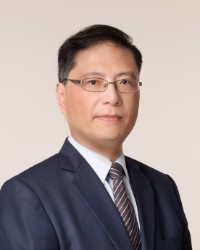


Liang & Partners Law Offices is a leading law firm in Taiwan, with around 60 lawyers and staff. The firm is widely recognised for its top-tier construction practice, advising both international and local clients on complex construction matters, particularly in the infrastructure and energy sectors. Liang & Partners covers the full spectrum and timeline of clients’ potential risk exposure and profit protection, from tender evaluation, entity formation and contract negotiation to project financing, PPP/PFI structuring and long-term risk management through dispute prevention and resolution, including litigation, mediation and international arbitration. Other key practice areas include fund formation, asset management regulation, real estate and infrastructure investment vehicles, corporate M&A and employment law. In addition to representing private entities in cross-border matters, Liang & Partners also works closely with government authorities on policy development and comparative legislative research, including initiatives related to financial regulation, government procurement and infrastructure policy, and arbitration law.
The construction sector in Taiwan, as in many jurisdictions, has been affected by recent global economic and political developments. Regional conflicts and trade wars have contributed to significant increases in construction costs.
Despite these challenges, both the central and local governments in Taiwan continue to promote major development projects, including those in the energy sector, the semiconductor and AI industries, urban renewal and railway infrastructure. As the competent authority for public construction, the Public Construction Commission (PCC) has also issued a number of interpretations and guidelines to facilitate a more reasonable allocation of the risks arising from increases in construction costs. As a result, the construction sector in Taiwan remains active and continues to expand.
This article reviews recent developments in Taiwan’s construction sector as of 2026, focusing on the primary construction project categories, the construction regulatory landscape, common construction disputes, and the available dispute resolution mechanisms.
Primary Construction Project Categories
Energy
The rapid development of the AI industry has created substantial demand for energy. The central government has therefore continued to promote offshore wind farm projects in Taiwan’s coastal waters, LNG receiving terminals and gas-fired power plants. Existing power plants are undergoing expansion and generator upgrades. The feasibility of restarting decommissioned nuclear power plants is also under review. As available sites for large-scale solar power facilities are close to saturation and face increasing public opposition, policy focus has shifted towards energy-saving and energy-storage facilities.
Transportation
The central government has completed planning for the extension of the high-speed rail link to Yilan County in eastern Taiwan; preparatory work for procurement and tendering is in progress. Feasibility studies are also ongoing for a further extension to southern Taiwan, with the long-term goal of completing a round-island high-speed rail network.
Terminal 3 at Taoyuan International Airport has been completed and partially opened, with tendering and construction of the main terminal buildings, runways and surrounding airport infrastructure continuing.
The Danjiang Bridge project across the Tamsui River estuary, tendered by the Ministry of Transportation and Communications, was completed and opened in May 2026. The Danjiang Bridge was the final project designed by architect Zaha Hadid and is currently the world’s longest single-tower cable-stayed bridge, carrying both road traffic and light rail. It is now a landmark in northern Taiwan and a major public infrastructure project combining engineering and architectural design.
Local governments – including Taipei, New Taipei, Taoyuan, Taichung, Tainan and Kaohsiung – continue to procure metro and light rail projects and related extensions. In connection with metro development and demand for commercial real estate, station areas are being developed under transit-oriented development (TOD) models.
Private sector
NVIDIA, a global leader in AI chips, selected the Technology Park in Taipei city as the site for its Taiwan headquarters in 2025. Construction planning is scheduled to begin in 2026, and the project is expected to become an important global hub for AI innovation.
NVIDIA, TSMC and other AI and semiconductor companies are also building research centres, data centres and manufacturing facilities across Taiwan. These projects have contributed significant construction output, and have also driven the development of surrounding infrastructure and commercial projects.
Taiwan’s government has also made measurable progress on urban renewal and the redevelopment of ageing, structurally unsafe buildings. These programmes, designed to reduce earthquake risk, have spurred large-scale commercial and residential construction projects – now accounting for a significant share of Taiwan’s overall construction output.
To address the ageing population, the government is promoting the construction of elderly and long-term care facilities across Taiwan through PPP arrangements. Several sizeable projects have already been signed or are currently in the procurement stage. To encourage private investment, recent amendments to the Act for Promotion of Private Participation in Infrastructure Projects now allow for a “paid PPP” model (known as the Private Finance Initiative, or PFI), under which the government may purchase services directly from private providers. Eligible projects include wastewater and water supply systems, pollution control, transportation infrastructure, utility tunnels, labour welfare facilities, and healthcare facilities.
Construction Regulatory Landscape
Government Procurement Act
The PCC (the competent authority under the Government Procurement Act) introduced several measures in 2025, the effects of which began to materialise from 2026 onwards. These measures are summarised below.
PCC interpretations on price adjustment clauses
The PCC has issued interpretations requiring government agencies to revise their contract price adjustment clauses to reflect the sharp rise in construction costs driven by recent global volatility. Key guidance includes the following.
- Advance payments and temporary works costs should not be deducted when calculating price adjustment amounts.
- Price adjustment payments should apply uniformly across all contract items, without distinction based on the type of work (civil or mechanical/electrical), origin of materials (domestic or imported) or nature of procurement (goods or works).
On the issue of extension costs arising from time extensions, the PCC also advised agencies to calculate such costs using the proportional method. During the COVID-19 pandemic period, the applicable proportion could be adjusted upward when appropriate.
Major amendments to the Government Procurement Act
The PCC has published a draft amendment to the Government Procurement Act for public consultation. The proposed amendments include:
- streamlining the “most advantageous tender” evaluation procedure;
- requiring agencies to follow the PCC’s model contract templates as a default when entering into procurement contracts; and
- strengthening penalties for non-compliant contractors.
At the same time, the draft introduces a contractor exemption provision. Where a contractor can demonstrate that it had reasonable internal compliance and supervisory mechanisms in place and that it did not obtain any unlawful benefit, it may be exempt from suspension penalties. This is intended to address industry concerns that the existing regime results in collective punishment for the wrongdoing of a single individual. Following the public consultation period, the PCC has been incorporating feedback into the revised draft, with the aim of submitting the draft amendment to the Legislative Yuan by the end of 2026.
Revised model contract templates
The PCC has revised and implemented its model procurement contract templates. In addition to incorporating the updated price adjustment calculation formula described above, the revised turnkey contract template now expressly provides that, where the scope of turnkey works remain unchanged, the fixed lump sum contract price shall apply regardless of whether the actual quantities of work performed are greater or lesser than those set out in the agency-approved bill of quantities. This aligns the model contract template with the fundamental principle of lump sum turnkey contracting.
Act for Promotion of Private Participation in Infrastructure Projects
Taiwan has promoted PPP through the enactment of the Act for Promotion of Private Participation in Infrastructure Projects. The following major amendments to the Act were made at the end of 2022, and implementation has gradually taken effect through 2025 and 2026.
- Expanding the scope of eligible PPP projects to green energy, digital infrastructure (eg, AI) and resource recycling facilities.
- Introducing new PPP models in addition to the commonly used build-operate-transfer (BOT), operate-transfer (OT), rehabilitate-operate-transfer (ROT) and build-own-operate (BOO) models, including (paid or unpaid) rehabilitate-transfer-operate (RTO), rehabilitate-own-operate (ROO) and government-paid public service procurement (ie, paid PPP). With respect to the paid PPP model, the law specifically provides that where a public infrastructure project is determined through policy evaluation to be necessary, of priority and urgent, and where it is confirmed to be more efficient than government-led construction and operation, the competent authority may, during the operation phase of the project, purchase all or part of the public services provided by the private entity. This significantly enhances the incentive for private investment in public infrastructure.
- The Ministry of Finance has established a contract performance mediation mechanism by creating a mediation committee. This committee provides neutral recommendations for resolving investment contract disputes between private entities and procuring authorities from the perspective of the competent authority. Since its establishment, the system has effectively resolved numerous disputes.
Project financing through securitisation
Taiwan’s financial regulatory authority, the Financial Supervisory Commission, has completed its review of asset securitisation as a financing channel for both private and public construction projects. Beyond traditional commercial real estate, the framework is being extended to cover renewable energy projects such as offshore wind and solar power, urban renewal developments, and PPP projects with higher self-liquidating ratios. This arrangement may become an important funding channel for construction projects in the future. The amended provisions under the Securities and Real Estate Investment Trust and Securities Investment Consulting Act are expected to pass the Legislative Yuan in 2026, although whether the scope will broadly extend to different types of public infrastructure is yet to be observed.
Common Construction Disputes
Due to the impact of the COVID-19 pandemic, the Russia–Ukraine war, the Israel–Hamas conflict, escalating US–China trade tensions and tariff wars, and the extreme volatility in energy prices caused by the US-Iran war and the blockade of the Strait of Hormuz in early 2026, Taiwan has faced significant construction cost inflation, considering the country is highly reliant on imported construction materials and foreign labour. In late 2025, Taiwan promulgated new regulations governing the disposal of surplus construction materials, implementing electronic monitoring systems to strictly control their movement. This has increased both the costs and operational time required for disposal sites, resulting in a significant rise in earthwork disposal expenses. The delays caused by earthwork disposal operations have also led to schedule delays on many construction projects. As a result, construction disputes in Taiwan in recent years have concentrated around the following issues:
- price adjustment disputes;
- disputes arising from force majeure events;
- extension of time claims; and
- disputes over costs arising from such extensions.
Under Taiwan’s Civil Code, even where the contract terms are unclear, the doctrine of “change of circumstances” allows for reasonable adjustments to contract prices and schedules in the types of construction disputes mentioned above.
Furthermore, construction contracts in Taiwan are governed by standard forms. In addition to the model contract templates promulgated by the PCC, larger project owners – including CPC Corporation, Taiwan Power Company, the Railway Bureau, the Freeway Bureau and the Department of Rapid Transit Systems of various local governments – typically issue contracts based on their own long-established standard terms. While the content of these contracts varies, many incorporate FIDIC framework provisions or specific FIDIC clauses, given the extensive body of case precedents available for resolving construction disputes under FIDIC. As a result, engaging a law firm in Taiwan with substantial experience in handling construction disputes can help ensure effective and appropriate resolution – allowing investors to achieve a reasonable return on their investment.
Dispute Resolution Mechanisms
In Taiwan, construction disputes are generally resolved through PCC mediation, arbitration or litigation.
PCC mediation
For public procurement projects, contractors may apply for mediation before the PCC’s Complaint Review Board for Government Procurement. Recently, the PCC has engaged a group of young and neutral legal scholars and lawyers to serve as mediators. Mediation procedures have also been simplified, and efficiency has improved. Therefore, despite being an administrative mediation process under government authority, the outcomes are not biased in favour of the government and can be trusted by foreign contractors.
However, for contracts procured by municipal governments, disputes are submitted for mediation to the Procurement Appeal and Mediation Committee established by the respective municipal government. As these mediation committees are subordinate units of the municipal governments themselves, they tend to take into account the position of the contracting authority during mediation proceedings, and may therefore not fully meet contractors’ reasonable expectations of fairness.
In addition, the PCC encourages government agencies to establish “dispute resolution groups” comprising external experts to provide recommendations on construction disputes. This mechanism is similar to the internationally recognised dispute review board (DRB) system. In a series of disputes arising from a turnkey contract for the electromechanical works of the Airport MRT, the approach was used to resolve dozens of contractual disputes. The PCC is also currently in discussions with larger procuring government agencies, aiming to introduce this dispute resolution mechanism to replace mediation and litigation, thereby accelerating construction dispute resolution.
Arbitration
The Taiwanese government is currently reviewing the Arbitration Law of the Republic of China (ROC) with a view to adopting the UNCITRAL Model Law on International Commercial Arbitration (the “Model Law”). Even prior to formal legislative amendments, the Chinese Arbitration Association, Taipei (CAA) – Taiwan’s leading arbitration institution – has taken proactive steps by establishing an arbitration court, implementing case management rules consistent with the Model Law and ICC procedures, and offering proceedings in English or a bilingual format. These efforts are designed to align Taiwan’s arbitration practices with internationally recognised standards.
Under the Taiwanese Arbitration Law, arbitral awards must be rendered within six months of the tribunal’s formation, with a possible extension of up to three additional months. This statutory time limit makes Taiwan’s arbitration process faster than in many other Asian jurisdictions.
Litigation
Construction litigation in Taiwan is generally time-consuming and often requires input from technical experts serving as third-party examiners. To address this, the Taipei District Court has established a specialised construction division in charge of construction-related disputes. Nevertheless, due to the inherent complexity in construction cases, the Judicial Yuan continues to promote the use of ADR mechanisms such as mediation, arbitration and DRB whenever possible.
Conclusion
Overall, Taiwan’s construction industry continues to thrive despite global economic volatility. The Taiwanese government has been promoting a fair and efficient construction environment, as part of policies designed to facilitate the participation of foreign companies in construction projects in Taiwan.
Liang & Partners Law Offices
7F., No.19, Sec. 2
Dunhua S. Rd.
Da’an Dist.
Taipei City 10681
Taiwan (R.O.C.)
+886-2-2755-6595
+886-2-2708-2946
divd@liang-law.com.tw www.liang-law.com.tw
Trends and Developments
Authors
Liang & Partners Law Offices is a leading law firm in Taiwan, with around 60 lawyers and staff. The firm is widely recognised for its top-tier construction practice, advising both international and local clients on complex construction matters, particularly in the infrastructure and energy sectors. Liang & Partners covers the full spectrum and timeline of clients’ potential risk exposure and profit protection, from tender evaluation, entity formation and contract negotiation to project financing, PPP/PFI structuring and long-term risk management through dispute prevention and resolution, including litigation, mediation and international arbitration. Other key practice areas include fund formation, asset management regulation, real estate and infrastructure investment vehicles, corporate M&A and employment law. In addition to representing private entities in cross-border matters, Liang & Partners also works closely with government authorities on policy development and comparative legislative research, including initiatives related to financial regulation, government procurement and infrastructure policy, and arbitration law.
