Power Generation, Transmission & Distribution 2026
Middle East
Trends and Developments
Authors
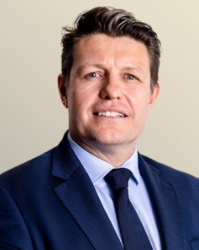
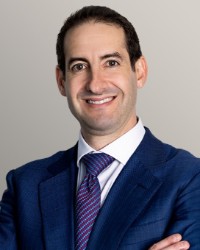
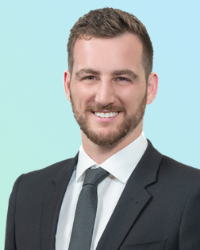
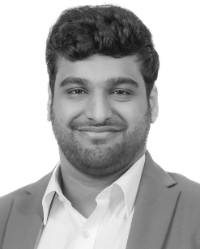
King & Spalding LLP is an international law firm with more than 350 dedicated energy lawyers spanning the firm’s global offices, and serves the Middle East out of its Abu Dhabi, Dubai and Riyadh offices. The firm’s power practice delivers end-to-end legal support across the full life cycle of energy projects – from development, financing and construction through to operation and dispute resolution. With deep experience in both conventional and renewable power, the team advises on solar PV and battery energy storage systems, independent power producer projects, power purchase agreements, grid infrastructure and regulatory matters. The firm is consistently ranked Band 1 by Chambers in multiple energy-related categories. Recent experience includes advising on landmark power and renewable energy projects in the UAE and Saudi Arabia, including solar-plus-storage developments and data centre power infrastructure. The team is recognised for its technical fluency, commercial insight and ability to structure bankable transactions across complex regulatory frameworks.
Solar-Plus-Storage and Rapidly Rising Electricity Demand: Two Forces Reshaping Power
The power sectors of states within the Gulf Cooperation Council (GCC) and wider Middle East are experiencing a rapid growth in the demand for electricity. Grids and generation mixes are being reshaped by the rapid adoption of new renewables as countries strive to meet their emissions reduction and net-zero commitments. All the while, the expansion of existing industrial processes and the construction of new AI and digital infrastructure are creating a huge spike in demand for dispatchable electricity.
On the generation side, many countries are deploying solar photovoltaic (PV) generation and battery energy storage systems (BESS) (both as part of new solar PV projects and as standalone capacity for energy grids) at record scale and record-low cost. On the demand side, major energy consumers are continually looking for greener electrons to meet their energy demands as they:
- divest or decommission ageing captive power assets to optimise their balance sheets (for example, EGA has recently entered into agreements to sell the 3.1 GW power generation assets at its Al Taweelah facility to a joint venture made up of TAQA and DUBAL Holdings); and
- adapt to meet increasingly stringent emissions reduction/net-zero requirements in their industries as a result of new regulations and state-specific commitments.
The existing demand of industrial consumers (eg, ADNOC, EGA and Saudi Aramco) is also being multiplied by a surge of investment in the construction of AI data centres which have already created an enormous additional demand for fully dispatchable power, a need that is forecast to increase further in the coming years.
Historically, servicing the demand for a reliable baseload would have been provided by thermal generation, predominantly natural gas, and in the short-medium term this solution is continuing to be used out of necessity while renewable capacity increases. However, the development of thermal generation capacity is creating a tension with the ambitious decarbonisation and net-zero commitments set by most GCC member states.
In order to meet their net-zero commitments, much of the growth in energy demand will need to be serviced by renewable and low-carbon energy sources. In a region with abundant sunshine but moderate wind and limited hydro resources, solar PV is proving the technology of choice for many Middle Eastern countries. The UAE has committed to net zero by 2050 and, through its Energy Strategy 2050, to adding a greater share of clean power to its generation mix, while Saudi Arabia’s Vision 2030 framework also targets sourcing around half of its electricity from renewables by 2030, an effort spearheaded by its sovereign wealth fund, Public Investment Fund (PIF). The result is a rapid acceleration in the number of solar PV and BESS projects being procured around the region – a trend that shows no signs of slowing.
This analysis draws primarily on trends and examples from the Kingdom of Saudi Arabia (KSA) and United Arab Emirates (UAE) (as the two largest markets in the region); however, these trends are not confined to these markets and are playing out across the Middle East at varying degrees of pace and scale.
Solar and storage: from inexpensive electrons to fully dispatchable, round-the-clock power
In Dubai, the Mohammed bin Rashid Al Maktoum Solar Park is the world’s largest multi-phase single-site solar park developed on the independent power producer (IPP) model, with a planned capacity of over 7 GW (originally 5 GW) by 2030 and investment totalling more than USD13 billion. Its sixth phase (1.8 GW) achieved a levelised cost of energy of 1.6215 US cents per kWh, the lowest recorded at the park. In Abu Dhabi, the 2 GW Al Dhafra project was contracted at USD0.0132 per kWh and is one of the largest single-site facilities in operation.
Abu Dhabi’s single power procurer, Emirates Water and Electricity Company (EWEC), which had set a target of at least 10 GW of solar capacity by 2030 has now revised this target upwards to over 17.5 GW and is currently procuring a series of 1.5 GW plants, including Al Zarraf and Khazna. These projects are structured using the well-established Abu Dhabi procurement model: the state retaining a majority stake while foreign consortia (for example EDF with Korea’s KOWEPO at Al Zarraf) take minority equity, an approach that de-risks financing and keeps tariffs low.
Saudi Arabia is delivering its build-out through the National Renewable Energy Programme (NREP), overseen by the Ministry of Energy, with the Saudi Power Procurement Company (SPPC) acting as the single buyer that signs the power purchase agreements. The PIF has been mandated to deliver around 70% of the national renewable energy target (achieved mainly through PIF-backed Acwa) and has repeatedly set global tariff records. This single-buyer, PIF-anchored model is the engine behind the Kingdom’s rapid, low-cost expansion. The programme has consistently delivered record low tariffs, including a record of about USD0.0104 per kWh at Al Shuaibah and a solar floor near USD0.01297 per kWh in Round 5 (3.7 GW). Round 6 (October 2025) covered around 4.5 GW of solar and wind, and Round 7 (2026) is targeting roughly 5.3 GW of awards; however, many more large-scale projects will be required to meet the PIF’s Vision 2030 goals (which will require approximately 130 GW of new capacity).
The same trend of low-cost solar PV generation remains true across the GCC. Qatar’s 800 MW Al Kharsaah plant was contracted at around USD0.01567 per kWh (with the price at financial close being USD0.01449 per kWh). Oman has also tendered utility-scale solar IPPs such as Adam and Sinaw to be developed on a build-own-operate basis under Oman’s Vision 2040, and Kuwait has launched bidding for the 500 MW Al Dibdibah/Al Shagaya IPP, although these renewables programmes have not progressed at the same pace as those of other, more highly capitalised countries in the region.
Solutions to existing problems – intermittency and distance
Using solar PV creates a new problem: the assets over-produce in the middle of the day and generate no energy after sunset. All the while, the net load on the grid rises sharply in the evening as solar output falls (the “duck curve” phenomenon). Historically that evening peak has been met by gas (through natural gas-fired peaking plants), but the green energy commitments will impact the viability of this solution in the future. Because solar PV assets require a lot of space, they are often located in remote desert areas and transmitting electricity over large distances to load centres creates an efficiency problem. A portion of the energy is lost as heat during transmission, with losses increasing in proportion to the distance travelled and the resistance in the transmission lines.
The advent of larger-scale BESS has begun to address this by providing reserves and grid stability. Storage is therefore the technology that turns intermittent sources of power generation, such as solar energy, into fully dispatchable power sources. It can also be deployed as a captive asset to ensure that a facility can constantly draw on sufficient power from a nearby source, despite the generation asset being some distance away.
Alongside increasing storage capacity to address the intermittency issue, markets are also heavily investing in improving the efficiency of their transmission grids. Abu Dhabi, for instance, is upgrading high-voltage lines to stabilise a solar-heavy grid. These kinds of initiatives are playing an increasingly important role in determining how much solar energy can actually be dispatched once it has been generated.
The regional grid is being reinforced to match. The GCC Interconnection Authority has established a regional grid which gives member states a route to trade surplus power across borders. The Authority has recently announced plans to upgrade the transfer capacities to Kuwait and the UAE to 3.6 GW and around 3.5 GW, respectively, by early 2027. It is also adding a direct 400 kV link to Oman. However, cross-border electricity trade still remains small, almost wholly on a non-cash basis, with Oman being the only country to have a spot market for electricity.
The UAE’s round-the-clock flagship
In January 2025, Masdar and EWEC launched the world’s first gigascale “round-the-clock” project, pairing a 5.2 GW (DC) solar plant with a 19 GWh BESS to deliver 1 GW of baseload power 24 hours a day. It is considered the largest combined solar-and-storage facility of its kind in the world, and is explicitly positioned to demonstrate the potential for supplying reliable, clean power to emerging AI and advanced-technology loads. Separately, EWEC is procuring multiple new BESS facilities (such as its 400 MW Wahat Al Zaweya BESS), designed to provide operating reserves and network flexibility. Together these projects mark a decisive shift from solar PV electricity being seen as a cheap, but intermittent, supplement to a largely fossil-fuel powered energy grid, to it forming the backbone of a renewable-fuelled grid that provides around-the-clock capacity.
Saudi Arabia’s storage tenders
Saudi Arabia has also moved quickly to build a dedicated storage market in recent years. In November 2024, SPPC launched the Kingdom’s first standalone BESS tender for 2 GW/8 GWh across four equally sized 500 MW/2,000 MWh (four-hour) sites, on a build-own-operate basis with 15-year storage services agreements. A total of 33 local and international bidders prequalified, including Masdar and Acwa, among others.
A second group of projects followed in April 2026, comprising six further 500 MW/2,000 MWh projects totalling 3 GW/12 GWh, again on a build-own-operate model. These tenders support a national ambition to have installed roughly 48 GWh of BESS storage by 2030. Assets are already coming online: the Bisha facility (500 MW/2,000 MWh, supplied by China’s BYD) has been described as the world’s largest single-phase storage project, and the Saudi Electricity Company connected 7.8 GWh across three southern sites in December 2025.
Commercial and legal takeaways
There are a number of key takeaways in light of these market developments. First, IPP and build-own-operate structures, underpinned by long-term offtake from a single government-owned buyer, remain the backbone of the market and are the main driver of low tariffs. Second, standalone storage is emerging as a distinct asset class, remunerated through availability or capacity-style storage services agreements rather than energy sales, which changes revenue modelling, bankability and risk allocation. Third, co-locating solar and storage (for example, the round-the-clock project or the Adam project) raises new issues to consider on grid connection, dispatch priority, metering and how firm-capacity obligations are documented.
Data centres: the demand shock testing (and powering) the grid
While solar-plus-storage is transforming supply, AI data centres are transforming demand. Both the UAE and Saudi Arabia are competing to become leading regional, and global AI hubs and are attracting tens of billions of US dollars from global technology companies and sovereign investors. These facilities are creating some of the largest single electricity loads either country has ever connected, which places power procurement at the centre of the commercial and, consequently, legal analysis. For context on the scale, some of the electricity loads being envisaged in data centre projects currently being procured would have exceeded the total installed renewable capacity of most GCC countries as recently as a few years ago.
The UAE’s flagship data centre development is Stargate UAE, led by Abu Dhabi’s G42 with OpenAI, Oracle, Nvidia, Cisco and SoftBank, envisaged as a 1 GW compute cluster in the broader UAE-US 5 GW AI campus, with the first 200 MW expected to come online this year. Alongside it, Microsoft’s USD15.2 billion commitment to the UAE includes a 200 MW data centre expansion delivered through G42’s Khazna, building on a USD1.5 billion Microsoft–G42 partnership. Other deals include a USD544 million hyperscale facility by du with Microsoft and a USD1 billion cloud expansion by AWS with e&.
The power implications are significant. Wood Mackenzie’s March 2026 report estimates that UAE data centres consumed about 3 TWh in 2025 (roughly 2% of national electricity demand of 173 TWh) and will more than double to over 6 TWh by 2030. However, data centres could account for a far larger share of demand and may require additional gas-turbine capacity if more optimistic growth scenarios become feasible. EWEC itself may be planning further gas-turbine projects, including the Taweelah C CCGT, to provide additional flexibility.
KSA’s national AI champion is HUMAIN, a PIF company launched in May 2025, which plans to develop around 1.9 GW of data centre capacity by 2030, scaling to 6.4 GW by 2034, and has struck partnerships with Nvidia, AMD, Groq and Qualcomm. In November 2025, AMD, Cisco and HUMAIN agreed to form a joint venture to deploy up to 1 GW of AI infrastructure by 2030, starting with a 100 MW phase in 2026. DataVolt has also signed a USD5 billion agreement with NEOM to build a 1.5 GW “net-zero AI factory” at Oxagon, intended to run entirely on renewable energy, with a first phase due by 2028. DataVolt (a Vision Invest subsidiary) and HUMAIN have also announced a multi-gigawatt data centre pipeline.
Activity is spreading across the wider GCC too, with the wider GCC data centre market estimated to grow from about USD3.48 billion in 2024 to USD9.49 billion by 2030. Special economic zones in Qatar, Bahrain and Saudi Arabia are all being used by those countries to offer lower power prices and streamlined permitting for digital infrastructure to incentivise investors to bring projects to their jurisdictions. However, data centre capacity remains concentrated primarily around the UAE and KSA.
Role of regulations in shaping how this demand will be met
Global hyperscalers typically seek to decarbonise their operations by signing long-term corporate power purchase agreements (PPAs) directly with independent power projects, a model frequently used in the US and Europe. However, the regulatory environment in Middle Eastern jurisdictions generally does not permit corporate or virtual PPAs, which leaves operators relying on either their own captive assets or power procured from the local state-backed offtaker. Data centre operators may seek supply from the regulated grid (there are differentiated tariff structures for industrial and other consumer categories, including a special cloud computing tariff which may support data centre power procurement) or self-generation on site (for example, in Abu Dhabi, it is possible to obtain a “self-supply” generation licence to operate captive electricity generation infrastructure).
As in many other jurisdictions, co-located BESS and gas-fired power are emerging in the GCC as effective “behind-the-meter” options for high-density loads like data centres and these options are likely to work in tandem with countries’ own grid-scale renewable initiatives as developers consider the most feasible ways to power their new assets.
Why the two trends reinforce each other
A more direct connection may be emerging between clean power and data centres. While EWEC and other state-backed single buyers are expected to remain at the centre of the majority of large-scale power procurement structures, large, creditworthy data centre operators with a huge demand for long-term energy supplies are fast becoming anchor customers for large-scale captive solar PV and BESS assets around the Middle East. These customers’ demand provides steady, long-term offtakes, making gigawatt-scale projects bankable in the absence of a traditional state-backed single buyer. As a result, new projects of this kind are being developed at pace across the Middle East to meet demand as countries look to establish themselves as regional data centre hubs.
This works to the benefit of hyperscalers (generally major technology companies). Many of these companies have adopted their own net zero and sustainability commitments, bringing the procurement of clean power into sharp focus. Since data centres come with natural resources risks (water scarcity, pollution, increased heating and noise in the environment, among others), we understand that companies tend to be more cautious about matters within their relatively direct control, which usually includes power procurement. Regions which offer low-carbon sources of power become more attractive as a result and data centre investments tend to follow.
Regional resilience and geopolitical considerations
Power sectors around the region are also being shaped by a renewed focus on resilience and energy security in response to the ongoing geopolitical instability associated with the conflict in Iran. The disruption to key transit routes like the Strait of Hormuz and the Red Sea has acted as a catalyst for GCC states to fundamentally reassess how their energy is transported and how energy resilience can be maintained over the medium to long term.
Alongside significant investment in infrastructure aimed at bypassing maritime chokepoints, there is a parallel push to strengthen domestic power generation, transmission and distribution networks to improve resilience and continuity of supply in the face of external threats.
Events of the last few months have altered how governments and corporates approach energy planning. Traditional assumptions of stable geopolitical conditions and efficient, just-in-time delivery are being replaced by a more defensive posture, with greater focus on redundancy, flexibility and long-term resilience. This shift is influencing investment patterns across the region, and is expected to do so for several years to come, but is leading to a sustained pipeline of opportunities across the sector as existing infrastructure is strengthened and new infrastructure is added to the network to provide added resilience and redundancy.
Going forward
The rapid growth of solar (with an ambitious pipeline, backed by fundamentals) and the advent of solar-plus-battery are exciting developments in the renewable energy landscape of the GCC. A few things to keep an eye out for include:
- growth in captive power project development, as data centre operators and other large industrial consumers seek dedicated power supply arrangements outside the traditional single-buyer model;
- potential regulatory reforms that would permit the use of “wheeling” structures (the transmission of electricity from a generator to a specific consumer over the public grid), which are currently prohibited in most regional jurisdictions but which could unlock new power procurement models if liberalised;
- tenders and pricing of solar projects in the UAE and KSA to identify if the downward trajectory of prices will settle or continue and to assess the speed at which the project pipeline materialises;
- development of the round-the-clock project, which could set a new precedent for solar-plus-battery projects and herald a rapid scale-up of this technology in the GCC region;
- interest and investments in data centres in the GCC to indicate the potential strain on the power sector in the near future and the upgrades to the power grid which would be necessary;
- potential role of natural gas as a backstop and the consideration given to the risk of stranded assets if the anticipated growth of data centres does not materialise; and
- any opportunities arising from supply chain-proofing initiatives which GCC countries may start for energy security.
For clients looking to undertake power projects in the GCC, particularly in the UAE and Saudi Arabia, solar PV plus BESS assets are making clean power cheaper and helping to overcome intermittency issues at the same time that data centres are creating an insatiable, growing demand for large base loads of energy. This is creating clear incentives to expedite large-scale solar PV plus BESS projects, and to upgrade or expand transmission infrastructure. Many countries in the Middle East, and particularly in the GCC, are seeking to create investor-friendly environments (including in terms of access to clean power), while also furthering their own clean-energy ambitions, which will continue to create opportunities to capitalise on the ongoing wave of energy and technology investments.
King & Spalding LLP
Level 15, Al Sila Tower
Abu Dhabi Global Market Square
PO Box 130522
Abu Dhabi
United Arab Emirates
+971 4377 9985
Bhundt@kslaw.com Kslaw.com
Trends and Developments
Authors
King & Spalding LLP is an international law firm with more than 350 dedicated energy lawyers spanning the firm’s global offices, and serves the Middle East out of its Abu Dhabi, Dubai and Riyadh offices. The firm’s power practice delivers end-to-end legal support across the full life cycle of energy projects – from development, financing and construction through to operation and dispute resolution. With deep experience in both conventional and renewable power, the team advises on solar PV and battery energy storage systems, independent power producer projects, power purchase agreements, grid infrastructure and regulatory matters. The firm is consistently ranked Band 1 by Chambers in multiple energy-related categories. Recent experience includes advising on landmark power and renewable energy projects in the UAE and Saudi Arabia, including solar-plus-storage developments and data centre power infrastructure. The team is recognised for its technical fluency, commercial insight and ability to structure bankable transactions across complex regulatory frameworks.
