Product Liability & Safety 2026
USA – California
Trends and Developments
Authors
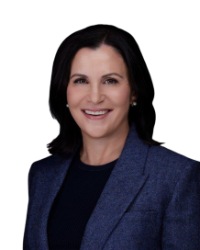



Buchalter, LLP is a full-service law firm with more than 600 attorneys across 15 offices, providing comprehensive counsel across approximately 35 practice areas and industry groups. This breadth allows the firm to guide clients through all stages of their business and legal needs with a deep understanding of industry-specific risks. Buchalter’s products liability group is widely recognised as a cornerstone of the US product liability bar. The group serves clients across virtually all industries, from heavy industrial equipment, automotive, to consumer products, food, beauty/cosmetics, children’s products, apparel/textile and chemicals, offering a fully integrated perspective on product risk, compliance, and litigation exposure. Clients rely on the team for matters involving exceptional complexity and sensitivity, from regulatory compliance and risk mitigation to litigation, trial, appeals, managing complex MDLs, class actions, and catastrophic injury claims. The group has a strong track record in high-stakes litigation, internal investigations, and regulatory counselling, and is ranked Band 3 nationwide by Chambers.
Product Liability in 2026: Regulatory Ambiguity, Enforcement Expansion, and the California Proving Ground
Introduction
There is a pattern running through nearly every consumer product liability matter the firm handles right now: governmental agencies are erecting regulatory frameworks faster than they are filling them with science. The United States Food and Drug Administration (FDA) has new authority over cosmetics, but no finalised test method for asbestos in talc. It has action levels for lead and arsenic in food for infants and small children only, but nothing yet for cadmium or mercury for the same age group or for these four heavy metals in the general population. It acknowledges per- and polyfluoroalkyl substances (PFAS) in cosmetics but declines to set limits. The Occupational Safety and Health Administration (OSHA) has a permissible exposure limit (PEL) for respirable crystalline silica, but according to the plaintiffs’ bar, no meaningful enforcement infrastructure behind it.
Into every one of these gaps steps consumer counsel willing to define the standard through litigation ‒ typically in California, and typically under legal standards that rely heavily on vague and changeable understandings as to what a “reasonable consumer” allegedly understands.
To mitigate risk effectively, companies should proactively manage regulatory compliance, marketing/labelling review, and litigation defence as a whole with the following principles in mind.
Heavy Metals in Food: The FDA and California Trends, and Overlap with Proposition 65
Four heavy metals ‒ lead, arsenic, cadmium, and mercury ‒ are very much on the menu recently for federal and state regulators, particularly in foods consumed by infants and young children. These metals are ubiquitous in the food supply, coming from the air, soil, and water. Depending on the applicable law, they are sometimes considered toxic at concentrations so low ‒ parts per billion ‒ that some laboratories cannot quantify them reliably due to issues of cross-contamination and testing limits.
All four heavy metals are California Proposition 65 (“Prop 65”) listed substances and are frequently the subject of 60-day notices of violation for foods consumed by all ages. In terms of the science, standards, and enforcement actions, however, FDA regulation of these metals operates independently of Prop 65 enforcers, namely, the California Attorney General and private enforcers claiming to act in the public interest. A food company thus can be compliant with one regulatory regime and exposed to liability under the other ‒ a dynamic that recurs, as discussed below, across cosmetics, consumer goods, and virtually every product category where trace chemicals are at issue.
FDA’s “Closer to Zero” initiative
Under this initiative, the FDA is developing science-based “action levels” ‒ the concentration of a metal at which the agency may treat a food as adulterated ‒ for these heavy metals in foods for infants and young children. In this regard, the FDA has finalised action levels for lead in fruits, yoghurts, vegetables, meats, and dry infant cereal, in addition to existing levels for the general population of these heavy metals for example in bottled drinking water. The FDA also has established “toxicity reference values” representing a safe upper limit for certain food categories, which values do not necessarily involve the enforcement priority of an action level.
The initiative’s focus on infants and young children understates its reach because the FDA defines the foods broadly to include yoghurt, certain snack chips, fruit, and vegetable products that adults may also consume. Also, even without an action level, the agency can establish a “case-by-case” corrective level for a food consumed by the general population based on toxicological and consumption data it may have considered under the initiative. Such enforcement inquiries can arise through biannual food facility audits, the FDA’s own testing, or reports to the FDA, with enforcement ranging from warning letters to potential recall investigations.
The FDA has acknowledged enforcement flexibility by taking into account “unintended consequences,” such as eliminating from the marketplace foods that have significant nutritional benefits. This policy is an opportunity for a well-prepared company to advocate against a recall or limit its scope. Food attorneys and scientists can help in this regard.
State-level regulation
Many states, like California, essentially defer much of their food safety enforcement to the FDA, but are beginning to take a more active role that may portend regulation to come. California’s Assembly Bill 899, for example, requires manufacturers of food products for children two and under to test regularly for these four metals and publish results on their websites, accessible also via a package QR code. The law sets no concentration standards, but makes this test data available to any consumer, federal regulator, or Prop 65 enforcer as a basis for future action.
The federal–state disconnect on Prop 65
There is no direct indication that the FDA and Prop 65 enforcers regularly share information or co-ordinate regarding heavy metals. The Prop 65 “safe harbours” and FDA action levels, as well as each regime’s toxicological and exposure calculations, can differ significantly. Of course, the FDA’s publication of heavy metal testing results can influence the efforts of Prop 65 enforcers, and a Prop 65 lawsuit conceivably could bring an adulteration situation to FDA’s attention, in notable cases.
Testing protocols and supply chain management: the foundation of any defence
Regardless of differences between state and federal law, food companies can and should have in place a reliable, commercially reasonable testing protocol and supply chain management programme for these heavy metals. At concentrations measured in parts per billion, a reliable testing protocol at a minimum would involve use of reputable laboratories accredited for approved testing methodologies, with the ability to generate test results across production lots with appropriate margins of error. This type of testing protocol may be more rigorous than routine checking of ingredient certificates of analysis, but can substantially minimise enforcement risk and strengthen legal defences.
As discussed below, the same enforcement and testing challenges recur in cosmetics (talc, PFAS, fragrance allergens) and across consumer products where trace contaminants drive both regulatory and litigation risk.
The short-form warning is no longer short ‒ and the implications are not simple
Turning to Prop 65 across all categories of products, enforcement volume remains high, with over 5,000 notices filed in 2025, but the targets often shift. Over the past several years, industry observers have watched the focus cycle through heavy metals, phthalates, PFAS, bisphenols, diethanolamine, and newer chemicals. Product categories rotate too ‒ foods, supplements, cosmetics, apparel, consumer goods with coatings or plastic components. As enforcement targets rotate, the tools companies have relied on to manage that risk are changing too.
Warning strategies have also grown harder to manage, and the reason is structural, not incremental. Effective 1 January 2025, the Office of Environmental Health Hazard Assessment (OEHHA) finalised amendments to the Prop 65 safe harbour regulations that fundamentally change what a short-form warning must say. The old short-form was two words and a website: “⚠ WARNING: CANCER ‒ www.P65Warnings.ca.gov.” No chemical name required. That brevity ‒ combined with the ability to comply without disclosing what chemical triggered the warning ‒ made the short-form warning the default choice for manufacturers, distributors, and retailers across virtually every product category.
That is over. Under the amended regulations (California Code of Regulations, Title 27, Section 25603(b)), the short-form must now identify at least one listed chemical by name for each applicable endpoint ‒ cancer, birth defects or reproductive harm. A carcinogen-only warning, for example, must now read: “⚠ WARNING: Cancer risk from exposure to [name of chemical]. See www.P65Warnings.ca.gov” or “⚠ WARNING: Can expose you to [name of chemical], a carcinogen. See www.P65Warnings.ca.gov.” Products triggering both endpoints must name a chemical for each. Businesses may also use “CA WARNING” or “CALIFORNIA WARNING” in place of “WARNING” ‒ a concession to companies selling nationally that want to signal the warning is California-specific.
There is a three-year transition period. Products manufactured and labelled before 1 January 2028 may continue to use the old short-form language with an unlimited sell-through ‒ meaning those products can remain on shelves indefinitely. But any product manufactured on or after that date must carry the revised warning.
OEHHA also expanded the short-form’s availability to food products, which were previously limited to long-form warnings only. That change matters for the heavy metals and PFAS issues discussed above: food companies that previously had no short-form option now have one, but it requires chemical-name disclosure that many would prefer to avoid.
The practical consequences of these changes are more complicated than they appear.
Under the old regime, a generic “cancer and reproductive harm” warning gave plaintiffs little to work with beyond the warning’s existence. Naming a specific chemical on the label ‒ say, lead, or perfluorooctanoic acid (PFOA) ‒ hands a false advertising plaintiff exactly the factual hook needed to build a consumer deception claim. “The company knew the product contained lead. It said so on the label. Yet it marketed the product as ‘clean’ and ‘safe for children.’” That is not a hypothetical; it is the structure of complaints that are already being seen. The warning intended to provide safe harbour under Prop 65 becomes the factual predicate for a Consumer Legal Remedies Act (CLRA) claim.
Where a product contains multiple listed chemicals ‒ common in foods, cosmetics, and supplements ‒ the regulation requires disclosure of only one per endpoint. But the selection has consequences. Naming lead may invite scrutiny from the heavy metals enforcement pipeline, while naming PFOA can trigger the PFAS-related concerns. Choosing a less well-known chemical may create the risk that a plaintiff will argue the company deliberately concealed the presence of the more dangerous substance. There is no neutral choice, and the regulation offers no guidance on selection criteria.
Three years sounds generous. It is not. Companies need to audit their entire product portfolio, determine which chemicals trigger warnings for each stock-keeping unit (SKU), co-ordinate label changes across packaging, websites, product pages, and third-party retail platforms, and align with downstream retailers, which have their own 60-day window to update online warnings after a manufacturer changes label content. For companies with hundreds or thousands of SKUs, that is a major operational undertaking that needs to start now, not in 2027.
Silica: An Epidemic of Litigation
At a recent conference, a plaintiffs’ attorney called it “The Asbestos Lawyers’ Full Employment Act.” It drew an uncomfortable laugh, but the point landed.
The plaintiffs’ bar has spent years looking for the next mass toxic tort. Asbestos litigation, after decades of battle and immeasurable cost, is winding down. Silica litigation looks like the heir apparent.
The product and the problem
Natural stone slabs have served as countertop material for centuries. With rising costs, limited supply, and demand for variety that quarried stone cannot satisfy, the market shifted toward engineered stone ‒ products made by combining crushed stone with binding agents to form solid slabs that can substitute for granite or marble.
Neither natural nor engineered stone slabs are ready for installation. Fabrication ‒ cutting, grinding, edging, polishing ‒ is required to fit each slab to its application. Plaintiffs allege that fabrication workers inhale high concentrations of respirable crystalline silica during this process, causing chronic silicosis and related diseases. For engineered stone, the claims extend further to proposed exposure to metals used as pigments, polymeric resin binders, and volatile organic compounds (VOCs) released during cutting.
Silicosis has some documented incidence in this industry. As demand for stone countertops surged, fabrication expanded into smaller shops operating in warehouse settings with minimal attention to training, ventilation, wet-cutting protocols, or protective equipment. The plaintiffs’ side argues that no engineering controls or personal protective equipment (PPE) actually prevent disease. That claim is debatable, but it cannot be debated that poor working conditions can cause genuine harm.
The regulatory landscape
OSHA’s 2016 Respirable Crystalline Silica Standard set a PEL with provisions for exposure assessment, medical monitoring, and recommended controls. Higher and more strict standards have been written and proposed in multiple arenas, including of course California. Plaintiffs counter that the standards are poorly enforced and that the focus on PPE and engineering controls cannot establish a safe exposure level. The tension between existing and proposed regulation and plaintiffs’ claims that the regulation is inadequate mirrors what is seen in other sectors: a regulatory framework exists, but the plaintiffs’ bar treats it as a floor, not a ceiling, and litigates the gap.
The numbers
California, predictably, is the epicentre. Roughly 550 silicosis cases have been filed in the state, most consolidated into a Coordinated Proceeding in Los Angeles County Superior Court covering matters from the San Francisco, Los Angeles, San Diego, and Orange County courts. With an estimated 1,300-plus fabrication shops in California, and workers who have moved between multiple shops over decades, the pipeline of new filings shows no sign of slowing.
The defendant pool is strikingly broad. Plaintiffs have named manufacturers of artificial and natural stone (domestic and international), wholesale distributors, big-box retailers, local and regional retailers, interior designers, and even manufacturers of the tools and PPE used in fabrication. A typical case names around 50 defendants, many of whom appear in nearly every filing.
For those outside California who may take comfort in these numbers, such comfort may be misplaced. Cases have been filed in Oregon, Washington, and Nevada, with smaller numbers in other states. Those filings will grow.
Plaintiffs have framed silicosis as an “epidemic” specific to stone fabrication, arguing that engineered stone products are fundamentally defective. Whether that characterisation withstands scrutiny is debated. That the litigation itself has become epidemic is not.
The Modernization of Cosmetics Regulation Act: Cosmetics Regulation Without a Rulebook
If the heavy metals discussion above illustrates how regulatory gaps create dual-track enforcement risk, the Modernization of Cosmetics Regulation Act (MoCRA) demonstrates something arguably worse: a single regulator building an entire oversight regime while leaving the most consequential scientific questions unanswered.
MoCRA provided the FDA oversight authority over the cosmetics and personal care industry for the first time, including facility registration, product listing, adverse event reporting, records access, and recall power. The FDA has yet to outline the scientific and technical benchmarks necessary to operationalise these tools. The result is a system where companies must build testing, substantiation, and documentation frameworks that can withstand scrutiny in an environment where the rules are still being written, and where regulatory ambiguity itself has become a primary source of risk and possible litigation.
Talc and asbestos
This disconnect is apparent in the agency’s handling of talc and asbestos risk. Although MoCRA directed the FDA to establish standardised testing methods for asbestos in talc-containing cosmetics, the agency withdrew its proposed rule in late 2025, citing methodological limitations and lack of consensus. The result is a regulatory minefield wherein companies remain responsible for ensuring product safety, but no uniform federal testing standard (or ban) exists to define what “asbestos-free” means. This places the burden squarely on manufacturers to adopt defensible testing protocols, while simultaneously exposing those protocols to challenge in both regulatory and litigation contexts. The testing-as-defence problem described for heavy metals in food exists here in an even more acute form, because at least in food, the FDA has begun publishing action levels or toxicological reference values. In talc, there is nothing.
PFAS
PFAS present the same structural problem. The FDA’s 2025 Report to Congress acknowledged PFAS in certain cosmetics but concluded that toxicological and exposure data are insufficient to set safety thresholds or restrictions. The agency declined to establish limits, bans, or standardised testing methodologies, instead identifying significant gaps in toxicological and exposure data. This creates a familiar MoCRA dilemma: the statutory obligation to maintain “adequate substantiation of safety” is fully operative, yet there is no clear benchmark against which substantiation will be evaluated. In practice, companies must define their own testing thresholds and risk assessments ‒ decisions that are inherently vulnerable to second-guessing by regulators and plaintiffs. Meanwhile, states are not waiting: California, Washington, Oregon, and others have enacted their own bans or disclosure requirements, creating a patchwork that companies must navigate alongside the federal vacuum.
PFAS will reappear in the discussion of false advertising below, as the absence of a federal standard has not prevented plaintiffs from arguing that consumers reasonably expect “clean” or “non-toxic” products to be PFAS-free. This regulatory gap does not insulate companies from litigation; it funds it.
Fragrance allergens
The same pattern extends to fragrance allergens, where MoCRA directs the FDA to mandate disclosure but the agency has yet to finalise a rule identifying covered allergens, concentration thresholds, or testing expectations. Companies are left relying on supplier certifications, internal assessments, and EU standards while anticipating a rule that may ultimately align with, or diverge from, EU-style disclosure structures. Simultaneously, fragrance-related adverse events remain reportable, and the FDA retains authority to access substantiation data, exposing the irony that the obligation to report exists even though the framework for preventing the reportable event remains undefined.
What this means in practice
Collectively, these developments reflect a structural shift. MoCRA has created a model informed system without fixed scientific guardrails. Compliance is no longer a static inquiry into defined requirements; it is a process of building substantiation frameworks capable of withstanding scrutiny in an evolving regulatory environment where ambiguity is a source of risk. As a result, companies must build and revisit their compliance programmes to comply with the current regulatory landscape, predict and solve for future implementations, adhere to state legislatures filling gaps, and anticipate plaintiffs leveraging compliance ambiguities in their favour.
False Advertising and the Litigation Machine
The regulatory ambiguity running through each of the preceding sections does not just create compliance headaches. It creates litigation theories. And nowhere is that more apparent than in California false advertising law.
Claims under the CLRA, the Unfair Competition Law (UCL), and the False Advertising Law (FAL) have evolved well past the straightforward cases of a company making an allegedly false or misleading claim on a label. The current wave of litigation is built on omission- and implication-based theories that reframe technically compliant conduct as misleading, transforming regulatory gaps into affirmative litigation shakedowns.
The reverse-engineered complaint
An emerging trend is the shift from express claims to implied representations. In food and beverage, terms such as “natural,” “healthy,” or flavour descriptors are challenged based on regulatory nuances. In dietary supplements, structure-function claims are attacked where surrounding marketing or testimonials suggest disease-related benefits. The inquiry has shifted from what is stated to what a reasonable consumer is alleged to infer from the totality of messaging.
In cosmetics and personal care products, claims such as “clean,” “non-toxic,” “hypoallergenic,” and “clinically tested” are paired with omission theories tied to ingredient profiles, trace contaminants, or emerging chemicals of concern, including PFAS. In the absence of harmonised federal standards under MoCRA, plaintiffs are effectively defining what constitutes “a reasonable expectation of safety and disclosure” through litigation. This is where the overlap with the issues discussed above becomes concrete. The same PFAS that the FDA declined to regulate in cosmetics becomes the basis of a false advertising claim. The same heavy metal that falls below the FDA’s action level but above a Prop 65 safe harbour becomes the predicate for both a 60-day notice and a consumer class action. The regulatory gap is not just a compliance problem; it is the raw material for the complaint.
Claim drift and consumer inference
Medical devices and software as a medical device (SaMD) face a parallel risk through claim drift. Plaintiffs allege that marketing claims extend beyond cleared or approved indications for use, invoking FDA intended use principles under Title 21 of the Code of Federal Regulations, Section 201.128 (“21 C.F.R. § 201.128”). Plaintiffs argue that labels or marketing campaigns violate the intended use of the product and deceive the average consumer. The doctrinal shift is from what a company said to what a “reasonable” consumer allegedly understood.
Portfolio-wide risk
In practice, the consequence is that false advertising exposure is no longer about one product or one claim. Once a theory gains traction ‒ where a court allows a “non-toxic” challenge to survive a demurrer based on trace PFAS detection ‒ that theory is deployed against every brand making a similar claim. Companies must evaluate claims not only for technical compliance but also for how promotional content can be reframed in threatened litigation under the guise of alleged consumer deception.
When Compliance Collides: Lessons from the Front Lines
Everything discussed in the preceding sections converges in the day-to-day experience of companies trying to sell regulated products in California and nationally. The common thread is that risks which used to be manageable in isolation now compound. PFAS detection in a cosmetic, a silica exposure claim against a stone manufacturer, an adverse event report filed under MoCRA or a Prop 65 notice about lead in a food product surfaces information that the FDA or a false advertising attorney may find worth pursuing particularly in the absence of clear, consistent regulatory safe harbours.
What works
In practice, this means three things. First, treat chemical compliance, advertising review, and Prop 65 strategy as one integrated function ‒ not three departments that meet after a complaint arrives. Second, track what the plaintiffs’ bar is filing, not just what regulators are publishing; enforcement trends forecast litigation theories, and the lag time between the two is shrinking. Third, pressure-test every consumer-facing claim against the only question that matters in California: not “Is this technically accurate?” but “What will a plaintiff argue a reasonable consumer understood this to mean?”
The patterns across every topic in this article ‒ point in the same direction. Federal regulators are setting the table without filling in the menu. State enforcers and private plaintiffs are writing it for them. The companies that recognise this early and build their compliance, marketing, and litigation strategies accordingly will spend far less time reacting, and far less money defending, than those that do not.
Buchalter, LLP
18400 Von Karman Avenue, Suite 800
Irvine, California 92612-0514
USA
+1 949 760 1121
+1 949 720 0182
mpineda@buchalter.com www.buchalter.com
Trends and Developments
Authors
Buchalter, LLP is a full-service law firm with more than 600 attorneys across 15 offices, providing comprehensive counsel across approximately 35 practice areas and industry groups. This breadth allows the firm to guide clients through all stages of their business and legal needs with a deep understanding of industry-specific risks. Buchalter’s products liability group is widely recognised as a cornerstone of the US product liability bar. The group serves clients across virtually all industries, from heavy industrial equipment, automotive, to consumer products, food, beauty/cosmetics, children’s products, apparel/textile and chemicals, offering a fully integrated perspective on product risk, compliance, and litigation exposure. Clients rely on the team for matters involving exceptional complexity and sensitivity, from regulatory compliance and risk mitigation to litigation, trial, appeals, managing complex MDLs, class actions, and catastrophic injury claims. The group has a strong track record in high-stakes litigation, internal investigations, and regulatory counselling, and is ranked Band 3 nationwide by Chambers.
