Sanctions 2026
Japan
Trends and Developments
Authors
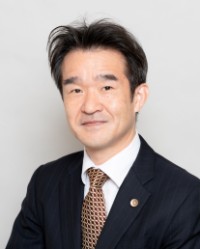

Oh-Ebashi LPC & Partners is a full-service law firm with over 180 attorneys and its main offices are in Tokyo and Osaka. It was originally established in Osaka in 1981 but now has an equivalent-sized operation in Tokyo. Oh-Ebashi LPC & Partners was the first Japanese law firm to open an office in China and, together with its Nagoya office and Jakarta desk, currently has offices in five locations. Its legal practice covers a broad range of fields, including corporate/M&A, risk management and compliance, IP law, life sciences, restructuring/insolvency, competition and antitrust/consumer protection, dispute resolution, finance and insurance, employment law, administration/regulatory law and tax law. The firm also provides an international practice, a China/Asian practice, a private practice and a pro bono practice.
Introduction
Japan’s sanctions regime mainly comprises financial sanctions, trade sanctions and travel sanctions. For implementation of these measures – particularly financial and trade sanctions – Japan relies principally on the Foreign Exchange and Foreign Trade Act (FEFTA) rather than a standalone “Sanctions Act”. More precisely, the FEFTA supplies the core, transaction-based framework, and is complemented by several measure specific statutes, including the “Act on Special Measures Concerning Freezing of Assets Implemented by Japan in Light of the United Nations Security Council Resolution 1267”, “Act on Special Measures Concerning Cargo Inspections Conducted by the Government Taking into Consideration United Nations Security Council Resolution 1874” and “Act on Special Measures Concerning Prohibition of Entry of Specified Ships into Ports”. In addition, sanctions concerning the entry and exit of persons are implemented under statutes outside the FEFTA, notably the Immigration Control and Refugee Recognition Act. Together, these instruments form the basic legal infrastructure through which Japan operationalises sanctions.
Furthermore, while the FEFTA sets out the fundamental principles, the detailed operational provisions are established through Cabinet Orders, Ministerial Orders and Ministerial Notices. Accordingly, when confirming the specific procedures for implementation of sanctions, it is necessary to review not only the FEFTA but also the relevant Cabinet Orders, etc.
Under the FEFTA, sanctions are implemented through a comprehensive set of regulatory tools that govern, inter alia:
- financial sanctions:
- payments – restrictions on remittances and settlement of obligations; and
- capital transactions – permission requirements for loans and other cross-border capital transactions; and
- trade sanctions – approval/permission requirements for goods, services, and technology transfers.
At the basic level, the FEFTA adopts a “minimum necessary control” principle based on the foundation of free international transactions. Restrictions on transactions are imposed to the minimum extent necessary to control or co-ordinate foreign transactions to maintain peace and security in Japan and in the international community.
In the context of sanctions measures, the FEFTA regulations are applied when necessary to:
- fulfil Japan’s obligations under a treaty or any other international agreement that it has concluded (eg, United Nations Security Council (UNSC) obligations);
- contribute to international efforts towards international peace in concert with like-minded states (eg, the G7, the EU and the USA); or
- implement Cabinet decisions safeguarding national peace and security.
Legal and Institutional Framework
The chapters of the FEFTA relevant to sanctions include those governing payments, capital transactions and trade. The FEFTA also applies to acts conducted outside Japan if they involve Japanese residents or agents/employees of Japanese companies acting in relation to their assets or business.
As for the institutional framework, three ministries – MOFA, MOF and METI – effectively co-operate in the domestic implementation of sanctions.
The Ministry of Foreign Affairs (MOFA) designates individuals and entities subject to sanctions, while actual enforcement measures are carried out by the Ministry of Finance (MOF) and the Ministry of Economy, Trade and Industry (METI). The consolidated list of individuals and entities subject to sanctions is available on MOF’s website (available only in Japanese). MOF is primarily responsible for financial sanctions – ie, asset freezes, payment restrictions, other capital market measures, and restrictions on certain transactions for services between a resident and non-resident, whereas METI principally oversees trade sanctions on goods and technology as well as a part of payment and capital transactions – eg, directly associated with import/export transactions, and transactions concerning the transfer or establishment of rights to use mining rights and industrial property rights. To facilitate smooth implementation, both MOF and METI publish guidance materials for financial institutions and companies.
Japan’s Unique Characteristics in Sanctions Policy
Single statute implementation of multiple measures
Japan’s sanctions regime is distinctive because it consolidates control over payments, capital transactions, and trade in goods, services and technology within a single statute – the FEFTA. This structure enables Japan to apply sanctions measures to specific transaction types more consistently and efficiently. Authorities can freeze or restrict payments, approve or halt capital transactions, and ban trade in goods, services and technology – all under one coherent legal framework.
By contrast, the USA provides separate statutes such as the International Emergency Economic Powers Act (IEEPA) and Trading with the Enemy Act, operationalised primarily through the Office of Foreign Assets Control (OFAC). US sanctions are often implemented via executive orders and regulations targeting specific sectors or actors.
The EU adopts Council Decisions and Regulations on sanctions under the Common Foreign and Security Policy (CFSP). These measures are directly applicable across member states but require national implementation legislation for penalties.
Multi-track approaches beyond UNSC resolutions
Japan’s sanctions framework is not limited to implementing UNSC resolutions. It also provides flexibility to adopt measures under coalition-based commitments among like-minded states and to impose autonomous sanctions. This adaptability enables Japan to participate in, for instance, G7-led initiatives, such as the co-ordinated price cap on Russian crude oil and petroleum products. These measures are enforced through the FEFTA’s permission/approval requirements and payment restrictions, ensuring that Japan can operationalise coalition-based commitments within its domestic legal system.
UNSC-based sanctions implemented by Japan
As of June 2026, the following Japanese sanctions to implement UNSC resolutions are currently in place: Taliban (2001), Terrorists (UNSC Resolution 1373 framework, 2001), Iraq (former regime, 2003), Democratic Republic of the Congo (2005), Sudan (2006), North Korea (initial measures in 2006; expanded in 2009 and onwards), Somalia (2010), Libya (Gaddafi regime, 2011), Central African Republic (2014), Yemen (2014), South Sudan (2015), Iran (reactivated in 2025 through the UNSC “snap-back” mechanism), Mali (2020) and Haiti (2022).
Japan’s coalition-based and autonomous sanctions
In addition to implementing UNSC resolutions, Japan exercises flexibility to adopt sanctions under coalition agreements with like-minded states such as the EU and the USA, and to impose autonomous measures. Key examples of coalition-based sanctions include those in respect of former Yugoslav President Slobodan Milošević and related persons (2001), North Korea (2009 and 2013), former Syrian President Al Asad and related persons (2011), the Crimea Annexation/Eastern Ukraine destabilisation (2014), Russia (2022), Belarus (2022) and Israeli settlers (2024). Japan also enforces autonomous measures, notably comprehensive import and export bans against North Korea (2006 and 2009).
MOF provides a list of individuals and entities subject to asset freezes and other measures under the aforementioned sanctions, as noted above.
Enforcement Mechanisms
Permission and approval mechanism under the FEFTA
Payments
Any payment subject to sanctions measures requires prior permission, mainly from the Minister for Finance. In practice, Japanese banks must verify the purpose of the transaction, review counterparties and beneficial owners, and request supporting documentation to ensure compliance with payment regulations, including those under the FEFTA.
Capital transactions
Activities such as deposits, trusts, loans and the issuance or acquisition of securities that fall under sanction measures mainly require permission from the Minister for Finance before execution.
Trade ban
The import or export of goods or technology subject to sanction measures requires prior approval from the Minister for Economy, Trade and Industry, while the export of services from a resident to non-resident subject to sanction measures requires prior permission from the Minister for Finance.
Supervisions and inspections
Payment transactions
MOF has issued the Guidelines on Compliance with the FEFTA for Foreign Exchange Dealers, which set out its interpretation and expectations under the FEFTA. These guidelines require foreign exchange dealers (including banks) to establish robust internal compliance systems to ensure adherence to the FEFTA obligations. In practice, MOF may receive reports of suspicious transactions from banks operating under these compliance frameworks.
Trade
Customs inquiries/inspections under the Customs Act often serve as the starting point for investigations into potential violations of sanctions measures. These inquiries/inspections can trigger further inquiries into prohibited exports or imports.
In addition to the above, Japanese parties involved in transactions may voluntarily notify authorities of activities that could fall under sanctions, supporting proactive compliance and enforcement.
Enforcement
Administrative measures
Authorities may impose the following administrative actions for violations of sanction measures:
- order to suspend service transactions – an administrative order prohibiting the conduct of service transactions for a period of up to one year;
- order to suspend import/export of goods – an administrative order prohibiting the import or export of goods for a period of up to one year (or up to three years in cases involving violations of Japan’s autonomous sanctions measures imposed by Cabinet decision);
- order to prohibit assuming an executive position – an administrative order prohibiting a violator from assuming any executive position (such as representative, director, executive officer) in the relevant company for the same period of the above suspension;
- formal warnings – written warnings to companies or individuals for non-compliance; and/or
- publication of enforcement actions – disclosure of the names of violators to deter future violations.
Criminal penalties
In addition to the administrative sanctions, violations of sanctions measures under the FEFTA may result in criminal consequences.
Engaging in financial transactions (payments and capital transactions) and transactions for services without the required permission may lead to:
- imprisonment for up to three years; and/or
- a fine of up to JPY1 million.
If three times the value of the transaction exceeds JPY1 million, the maximum fine increases to three times the transaction value.
Conducting trade in goods and technology (import or export transactions) without approval may result in:
- imprisonment for up to five years; and/or
- a fine of up to JPY10 million.
If five times the value of the transaction exceeds JPY10 million, the maximum fine increases to five times the transaction value.
Case Studies: Russia, North Korea and Iran
Russia: multi-channel controls and anti-circumvention
In response to Russia’s invasion of Ukraine, Japan has repeatedly expanded sanctions measures under the FEFTA in co-ordination with the G7, the EU and the USA, including asset freezes, payment restrictions, restrictions on outward investment in a Russia-related company, trade (import/export) restrictions and market prohibitions (such as restrictions on issuance by specified sovereign and quasi-sovereign actors). MOFA has frequently updated its consolidated sanction lists since 2022.
In December 2022, Japan implemented the G7 price cap on Russian crude oil and petroleum products, prohibiting maritime services and payments above the cap. This measure was operationalised through the FEFTA’s payment permission regime and co-ordinated METI/MOF Notices. On 12 September 2025, Japan lowered the price cap from USD60 per barrel to USD47.6 per barrel.
METI provides detailed guidance on its Russia sanctions page, including G7/GECC materials enumerating “Common High-Priority Items” which are prohibited from export. METI has also published resources highlighting the risks of evading sanctions and the need for countermeasures, including red flags and case studies of circumvention through third-country exports.
Japan also imposes similar sanctions on Belarus, and imposes trade restrictions on goods originating in Ukraine (limited to those originating in the Autonomous Republic of Crimea or the city of Sevastopol since 2014 as well as in the self-proclaimed Donetsk People’s Republic or the Luhansk People’s Republic since 2022) aligned with coalition-based measures.
Recent enforcement examples
On 16 December 2025, METI issued a formal warning to RED BARON Co, Ltd, for exporting motorcycles to Russia without obtaining the required ministerial approval between 2022 and 2024. METI directed the company to strengthen export control compliance, clarify internal procedures, and implement measures to prevent recurrence. Under Japan’s sanctions on Russia pursuant to the FEFTA, exporting motorcycles valued at over JPY600,000 to Russia requires prior approval from the Minister for Economy, Trade and Industry. RED BARON Co, Ltd, circumvented this requirement by routing exports through third countries such as South Korea, triggering the above warning action.
In addition to the above, unauthorised export of personal watercrafts and used motorcycles to Russia led to convictions in 2024 and the same for passenger cars in 2025. In the former case, METI issued an order to the company concerned and its representative director (a Russian national) prohibiting the export of goods for a period of one year and prohibiting its representative director from assuming any executive position in the relevant company for the same period of the above prohibition.
METI has also highlighted further cases in its compliance guidance materials to illustrate common pitfalls and the importance of strict adherence to the FEFTA requirements, as outlined below.
- Case 1: transshipment to Russia via a third country – Exports to Russia are restricted under Japan’s sanctions regime. In this case, regulated goods were shipped to Russia via a third country. The exporter mistakenly believed that sanctions only applied to direct exports to Russia and failed to confirm the interpretation with METI. Under the FEFTA, if the goods are ultimately destined for Russia, the destination is considered Russia – even if routed through another country. Exporting to a third country for onward shipment constitutes a transshipment export, which violates the relevant sanctions under the FEFTA.
- Case 2: misinterpretation of luxury goods threshold for passenger vehicles – An exporter was aware that passenger vehicles and similar luxury goods exceeding JPY6 million per unit were restricted under Russia sanctions, but misinterpreted the threshold as the purchase price rather than the export value. The exporter proceeded with a direct shipment to Russia. METI clarified that the “amount per unit” for luxury goods sanctions was calculated based on the total value under the export contract divided by the number of units, or, if different, the FOB price at the Japanese port of export at the time of shipment. Passenger cars and goods vehicles with engine displacement exceeding 1,900 cc, hybrid engine passenger cars and similar vehicles are subject to these measures.
North Korea: UNSC-based and own autonomous sanction measures
For North Korea, Japan is implementing both UNSC-driven sanctions and Japan’s own autonomous measures.
UNSC-based measures
Japan enforces all measures mandated by UNSC resolutions, including:
- asset freezes – individuals and entities designated by the Security Council or its sanctions committee;
- export bans – all arms, luxury goods, aviation fuel, new helicopters and vessels, crude oil (annual ceiling: 4 million barrels or 525,000 tonnes), petroleum products (annual ceiling: 500,000 barrels), machinery, electrical equipment, transport equipment, iron and steel, base metals, and more;
- import bans – all arms, specific natural resources (coal, iron, iron ore, copper, nickel, silver, zinc, lead and lead ore), marine products (including fishing rights), textiles, agricultural products, machinery, electrical equipment, earth and stone, timber, vessels, etc; and
- other restrictions – personnel exchanges, port calls by North Korean vessels, and related activities.
Japan’s own autonomous measures
Beyond UNSC obligations, Japan imposes stricter controls:
- export ban – since 2009, the export of all items to North Korea (including those from a third country) requires prior approval from the Minister for Economy, Trade and Industry; and
- import ban – since 2006, the import of all items from North Korea requires prior approval from the Minister for Economy, Trade and Industry.
The approval for the above items is not granted except in rare cases of limited exceptions. Further, entry into Japan by North Korean nationals is generally prohibited. All North Korean vessels and any foreign vessels that called at a North Korean port are prohibited from entering Japan. The reporting threshold for carrying means of payment to North Korea has been lowered from the equivalent of over JPY1 million to JPY100,000.
These measures have been repeatedly extended, most recently in April 2025, when Japan decided to continue them until 13 April 2027.
Recent enforcement example
On 15 March 2024, METI issued a formal warning to an individual who imported alcoholic beverages that originated in North Korea as hand luggage without obtaining the required ministerial approval. This violated Japan’s blanket import ban in place since 2006. METI’s press release reiterated that the ban applies to all goods of North Korean origin or shipped therefrom, with no personal effects exception for hand-carried items in the absence of prior approval. Furthermore, the unauthorised import of freshwater clams from North Korea in violation of trade sanctions led to a conviction in 2025.
In addition, on 24 March 2026, METI issued an order against an individual who had imported freshwater clams originating from North Korea via China or South Korea without obtaining approval from the Minister for Economy, Trade and Industry. The order (i) suspended the individual’s import activities for a period of three years and (ii) prohibited the individual from assuming any executive position in a company engaged in import operations for the same period. Japanese authorities have previously taken enforcement action against the smuggling of clams originating from North Korea, which is among the more common types of sanctions violations in Japan.
Furthermore, METI has introduced other enforcement examples in its published materials, including the following.
- Case 1 – An order for daily necessities was received from an acquaintance residing in North Korea, declared to customs as being exported to China, and subsequently re-exported to North Korea.
- Case 2 – At a business meeting held in China, the purchase of North Korean seafood products was agreed upon after being introduced by a Chinese company, and the goods were subsequently imported into Japan via China.
On 29 May 2026, Japan, together with other like-minded countries, such as the USA, Australia, Canada, France, Germany, Italy, New Zealand, South Korea and the United Kingdom, as well as the European External Action Service (EEAS), issued a joint statement on ensuring the effective implementation of UN sanctions against North Korea. This joint statement calls upon the North Korea Sanctions Committee (Committee 1718) to review information regarding sanctions violations and take appropriate measures concerning five vessels identified as having been involved in clear violations of UN Security Council resolutions prohibiting North Korea’s exports of coal and iron ore, as well as seven vessels that were submitted to the Committee in December 2025 for designation under UN Security Council Resolution 2321 and are currently under review.
Iran: nuclear-related measures and sectoral restrictions
Japan implements sanctions against Iran pursuant to UNSC resolutions. In September 2025, Japan reactivated sanctions under the UNSC “snap-back” mechanism, reinstating measures previously eased under the Joint Comprehensive Plan of Action. Key measures include the following.
- Asset freezes – Assets of designated entities and individuals involved in Iran’s nuclear and missile development programmes shall be frozen.
- Investment prohibition measures – Certain capital transactions and foreign direct investment by Iranian persons into shares or other interests in Japanese companies operating in sectors designated as “Sectors Subject to Measures Prohibiting Investment by Iran Related to Nuclear Technology, etc” under MOFA’s Notice (promulgated on 28 September 2025) are principally prohibited. Such transactions require either prior permission or notification (in principle, they are prohibited) under the FEFTA.
- Measures to prevent fund transfers – Payments made for the purpose of contributing to activities designated by MOFA’s Notice (promulgated on 28 September 2025) as “Activities related to Iran’s proliferation-sensitive nuclear activities and development of nuclear weapon delivery systems subject to measures to prevent the transfer of funds” and “Activities related to the supply of major conventional weapons, etc, to Iran” shall be subject to permission.
- Import bans – Imports of weapons and nuclear-related items originating from Iran require prior approval from the Minister for Economy, Trade and Industry.
Oh-Ebashi LPC & Partners
2F, Kishimoto Building
2-2-1 Marunouchi
Chiyoda-ku
Tokyo 100-0005
Japan
+81 3 5224 5566
+81 3 5224 5565
general_toiawase@ohebashi.com www.ohebashi.com/en/
Trends and Developments
Authors
Oh-Ebashi LPC & Partners is a full-service law firm with over 180 attorneys and its main offices are in Tokyo and Osaka. It was originally established in Osaka in 1981 but now has an equivalent-sized operation in Tokyo. Oh-Ebashi LPC & Partners was the first Japanese law firm to open an office in China and, together with its Nagoya office and Jakarta desk, currently has offices in five locations. Its legal practice covers a broad range of fields, including corporate/M&A, risk management and compliance, IP law, life sciences, restructuring/insolvency, competition and antitrust/consumer protection, dispute resolution, finance and insurance, employment law, administration/regulatory law and tax law. The firm also provides an international practice, a China/Asian practice, a private practice and a pro bono practice.
