Venture Capital 2026
South Korea
Trends and Developments
Authors
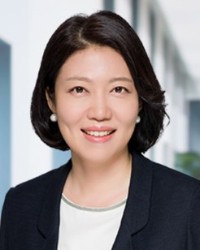
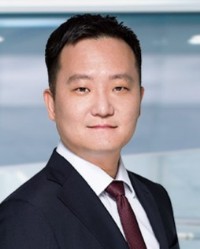

Shin & Kim is a leading Korean law firm, consistently ranked as a Band 1 firm in the Chambers Asia-Pacific Guide 2026 across core categories including Corporate/M&A, Banking & Finance, and Technology, Media and Telecommunications. Shin & Kim was the first large-scale Korean firm to establish a dedicated Innovation Centre in Pangyo, the country’s leading technology cluster, to provide tailored legal services to the venture ecosystem. The firm’s Venture Capital team includes over 40 professionals supported by its ICT Startup Support Centre (founded in 2017), offering specialised expertise in regulatory sandboxes and complex fund formation. With strategic offices in Singapore and Indonesia, the team possesses robust capabilities in assisting domestic and international clients with cross-border transactions and multi-jurisdictional investment structures. The team regularly advises global venture capital firms, unicorn-stage portfolio companies, and sovereign wealth funds, including Korea Venture Investment Corporation (KVIC), on complex investment structuring and cross-border mandates.
Market Overview: Resilience and Structural Maturation
The South Korean venture capital ecosystem entered 2026 on the back of a year of strong investment momentum and significant regulatory evolution. In 2025, new venture investment volume reached KRW13.6 trillion, representing the second-highest level in the market’s history – behind only the record KRW15.9 trillion in 2021. More importantly, the number of individual investment cases reached an all-time high of 8,542, representing a 14.0% increase in volume year-on-year. This suggests that whilst individual ticket sizes may have moderated in certain sectors, the breadth of entrepreneurial activity remains exceptionally high.
In parallel, new venture fund formation reached KRW14.3 trillion in 2025, a 34.1% increase on the prior year. A critical shift has occurred in the capital base: private-sector commitments now account for approximately 80% of total fund formation, led by pension funds and corporate investors, which grew by 165.0% and 61.5% respectively. This represents a significant maturation of the market, moving away from its historical over-reliance on government policy funds towards a more self-sustaining private ecosystem.
The Unicorn Landscape and the “Barbell” Trend
In the South Korean market, a “unicorn” is formally defined as a privately held start-up company with a valuation exceeding KRW1 trillion. As of early 2026, the number of domestic unicorn companies has grown to 27, following four new entrants in 2025: Rebellion and FuriosaAI in the AI semiconductor design space, BeNow in cosmetics manufacturing, and Galaxy Corporation in the AI-powered entertainment technology sector. A defining structural trend is the “barbell” distribution of capital across the investment cycle. Capital is heavily concentrated at the two extremes of the development spectrum: seed-stage start-ups continue to benefit from robust early-stage funding programmes, whilst late-stage pre-IPO companies with demonstrated technical and commercial viability attract significant late-stage commitments. The middle stages of the cycle, by contrast, remain relatively under-served. AI remains the undisputed engine of this growth: AI-focused companies accounted for 65% of the total venture investment value in 2025, a significant increase from 46% the previous year.
KVIC and the K-Invest Hub: Streamlining Foreign Capital Entry
Central to the government’s strategy to position South Korea as a global venture investment hub is KVIC. To eliminate traditional barriers for international investors, in particular the fragmented reporting requirements under the Foreign Exchange Transactions Act, KVIC launched the Global Venture Investment Integrated Reporting Centre, or K-Invest Hub, in late 2025.
The Hub provides a unified portal for foreign investors to handle all foreign exchange and investment reporting, which previously required separate, time-consuming filings with the Bank of Korea and multiple commercial banks. Through a memorandum of understanding with KB Kookmin Bank and dedicated legal partners, the K-Invest Hub offers standardised, digitalised reporting services. This reform allows foreign investors to make capital contributions in US Dollars directly to Korean venture funds without mandatory conversion to KRW, materially mitigating currency risk and administrative friction.
The BDC Framework: A New Frontier for Investment
The implementation of the Business Development Company (BDC) framework on 17 March 2026 represents a landmark legal development. BDCs are exchange-listed, closed-end investment vehicles designed to broaden access to venture capital for retail investors, who were previously largely excluded from private venture fund returns.
BDCs must invest at least 60% of their total assets in “main target companies”, which include unlisted venture firms, KONEX-listed companies, and KOSDAQ-listed companies with market capitalisations under KRW200 billion. To maintain portfolio stability, secondary venture fund units and KOSDAQ shares each count towards the 60% minimum only up to a cap of 30% of total assets. Beyond equity, BDCs are permitted to provide direct loans to portfolio companies, subject to a limit of 40% of total assets.
Currently, securities firms are excluded from BDC licensing due to concerns over potential conflicts of interest between their proprietary accounts and the management of customer assets. However, the inclusion of venture capital firms and other investment managers as eligible BDC operators is expected to significantly deepen the pool of domestic risk capital.
Regulatory Reforms: The 2026 VIPA Updates
The 2026 amendments to the Venture Investment Promotion Act (VIPA) provide meaningful operational flexibility across three areas.
- Extended Investment Window: Effective July 2026, the mandatory investment period for venture capital firms is extended from three to five years. Previously, managers were required to make at least one investment per year for the first three years following registration. The new framework requires one investment within three years and a second within five years, reducing the pressure on new managers who may need more time for fund formation.
- AUM-Based Compliance: Investment obligations are now calculated based on a firm’s total Assets Under Management (AUM) rather than individual funds. This permits tactical capital allocation across a manager’s entire portfolio, allowing for more conviction-based investing in a manager’s top assets.
- CVC Exit Flexibility: Corporate Venture Capital (CVC) units now have a nine-month grace period to divest shares if a portfolio company is absorbed into the same large business group. This prevents forced sales at depressed valuations, allowing for a more orderly adjustment to group-level shareholding requirements.
Investment Documentation and the Rise of SAFEs
Korean venture practice continues to align with global standards through the growing use of Simple Agreements for Future Equity (SAFEs). VIPA expressly permits SAFEs, providing a lighter-weight alternative to traditional convertible preferred stock at the seed and early stages. Whilst standardisation is led by the model forms published by the Korea Venture Capital Association, these documents are increasingly being customised to include US-style covenants and information rights as domestic founders target global markets.
Exit Strategies: IPO Dynamics and Secondary Markets
The IPO market remains the primary exit route, with KOSDAQ serving as the hub for technology listings. In 2025, 84 companies listed on the KOSDAQ, with aggregate market capitalisation at IPO pricing reaching KRW15.3 trillion, the highest level since 2021. However, a structural tension remains: total recovery proceeds in 2025 reached KRW3.1 trillion, whilst the cumulative stock of invested capital outstanding stands at approximately KRW32 trillion.
This gap has accelerated the institutionalisation of the secondary market. Specialised secondary funds, often backed by KVIC’s fund-of-funds, now provide critical pre-IPO liquidity. Because these transactions are often fund-to-fund transfers, warranty and indemnity (W&I) insurance has become a standard tool to protect buyers against undisclosed liabilities when the selling fund is nearing its liquidation date.
National Security and Technology Protection
Finally, investors must account for the 22 July 2025 amendments to the Industrial Technology Protection Act. The Ministry of Trade, Industry and Resources now mandates prior approval for any foreign M&A involving “National Core Technologies” in sectors such as semiconductors, batteries, and biotech. The punitive damages cap for technology leakage has been raised to five times actual damages, and the criminal standard for liability has shifted from a purpose-based to a knowledge-based standard, significantly increasing the risk profile for cross-border transactions in sensitive sectors.
Conclusion
The South Korean market in 2026 offers a more accessible and flexible environment than in prior cycles. The combination of KVIC’s K-Invest Hub, the BDC framework, and VIPA reforms reflects a clear policy intent to foster a mature, private-sector-led ecosystem. However, this opening is balanced by heightened scrutiny of technology protection, requiring a more sophisticated strategic calculus for all participants in the Korean venture market.
Shin & Kim LLC
23F, D-Tower (D2)
17 Jongno 3-gil
Jongno-gu
Seoul 03155
Korea
+82 2-316-4114
+82-2-756-6226
shinkim@shinkim.com www.shinkim.com
Trends and Developments
Authors
Shin & Kim is a leading Korean law firm, consistently ranked as a Band 1 firm in the Chambers Asia-Pacific Guide 2026 across core categories including Corporate/M&A, Banking & Finance, and Technology, Media and Telecommunications. Shin & Kim was the first large-scale Korean firm to establish a dedicated Innovation Centre in Pangyo, the country’s leading technology cluster, to provide tailored legal services to the venture ecosystem. The firm’s Venture Capital team includes over 40 professionals supported by its ICT Startup Support Centre (founded in 2017), offering specialised expertise in regulatory sandboxes and complex fund formation. With strategic offices in Singapore and Indonesia, the team possesses robust capabilities in assisting domestic and international clients with cross-border transactions and multi-jurisdictional investment structures. The team regularly advises global venture capital firms, unicorn-stage portfolio companies, and sovereign wealth funds, including Korea Venture Investment Corporation (KVIC), on complex investment structuring and cross-border mandates.
